
The UK Government has launched its clean electrification roadmap at the same time as the Prime Minister has outlined plans to invest in two offshore wind farms.
The roadmap outlines how the government will reach clean electrification, including investment in renewables, the Warm Homes Plan and the Clean Energy Jobs Plan to create new roles in the sector.
The Clean Energy Industries Sector Plan will target at least a doubling of investment in frontier clean energy industries to over £30 billion a year by 2035, with a further £700 million for Great British Energy, the UK’s publicly owned energy company, to invest in clean energy supply chains.
Meanwhile, the Clean Industry Bonus aims to to encourage renewable energy developers to invest in UK supply chains, through £204 million of public investment, awarded alongside auctions for new renewable electricity projects, has leveraged £3.4 billion of private investment in British factories, ports and supply chains.
Despite concerns about it being changed, the roadmap also mentioned the ZEV Mandate, highlighting it is “driving the uptake of EVs and will phase out new cars running solely on petrol or diesel from 2030”. It added the “transition also presents a significant opportunity for investment and jobs in electric vehicles, charging, and clean technologies”.
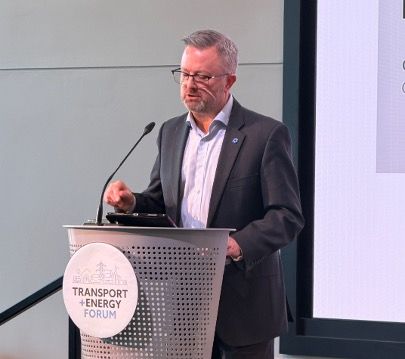
Shane Brennan, chief executive, ChargeUK said:
“Committing the country to electrification whilst considering weakening EV targets is a complete contradiction in terms.
“Switching to electric vehicles is not only the biggest thing the government needs to do to electrify our economy, cut emissions and enhance energy security, it saves households money in every postcode.
“Pulling back on EV targets would make a mockery of the electrification mission. It undermines confidence among the investors that the government needs to put real funding behind meeting its ambitions.
“This would send an immediate chill through EV charging investment, meaning slower deployment and reduced charging capacity. It would also make the UK far less credible among exactly the investors we need to deliver electrification across the roadmap.
“This roadmap sets the right course, weakening the mandate suggests we’re not committed to the journey. Sticking to the trajectory of the ZEV mandate is the way to show we are serious, credible and ready to lead the transition that will deliver for everyone.”
Renewables investment
The roadmap comes as energy company RWE, together with global investment firm KKR, have announced a total investment of £12 billion for the Vanguard East and Vanguard West wind farms, which will be operational by 2030.
The investment will support more than 2,400 jobs during construction and operation, and once operational, the wind farms will have the capacity to supply the equivalent of around three million UK homes.
The decision marks a major milestone for the project, with the developers now making their final investment commitment to deliver the projects. Onshore works are already well advanced, with construction offshore set to begin in early 2027.
The financing for these projects includes a £1 billion investment from the UK’s National Wealth Fund – the UK’s publicly-owned policy bank that aims to drive more than £100 billion of finance into the UK economy.
It follows a new Energy Wealth Fund from the UK Government linked to revenues from the North Sea to invest in low carbon and renewable energy projects – with an initial £2bn in funding.
Scottish-headquartered SSE has also announced that the latest phase of its major offshore wind farm, Berwick Bank B, will back 2,677 skilled jobs in manufacturing, engineering and project delivery.
Prime Minister Andy Burnham said:
“This major investment in UK renewables is a vote of confidence for building in Britain. And it is great news for billpayers because every turbine we put up is power under British control, not at the mercy of events on the other side of the world.”
Energy Secretary Miatta Fahnbulleh said:
“Investment in offshore wind and clean power is creating quality jobs and rebuilding industry, while delivering the clean power we need to lower bills and reach net zero.”
CEO of RWE AG Markus Krebber said:
“Together with KKR, we are delivering two of the UK’s largest offshore wind projects, strengthening domestic electricity generation and making an important contribution to the country’s long-term energy security.”
Co-Head of European Infrastructure at KKR, Vincent Policard, continued:
“Our work with RWE demonstrates how private capital can help turn the UK’s energy ambitions into reality, supporting economic growth and delivering critical infrastructure capable of powering around three million UK homes.”
SSE Chief Executive Martin Pibworth said:
“This is public-private partnership in action. Clear political direction, matched by businesses prepared to invest, is translating into real-world investment in British jobs, skills and manufacturing. From Hull, Newcastle and Manchester to Glasgow and Montrose, you can see what that means for communities across the country.”
Image courtesy of Shutterstock