
Huge demand for electricity from transport, heating and data centres is intensifying the challenge of building the infrastructure needed for electrification, delegates at the Transport + Energy Forum have heard.
Sarah Kelara, Head of Demand Reform at National Grid Electricity Distribution, said electricity demand was set to double by 2050, while the capacity of data centres queuing to connect to its network already exceeded its current peak demand.
Speaking during the panel discussion “Can the UK build the infrastructure needed to accelerate electrification?”, she highlighted the scale of the connections queue and called for planning reform, coordinated construction and funding arrangements that allow networks to prepare for future requirements.
“We’ve got more in capacity of data centres in the queue to connect to our grid than we have peak demand on the network at the moment,” said Kelara. “So that is enormous. You can imagine how much that would cost and how much time it would take if we were to build that.”
She added that the wider demand connections queue was three times national demand, illustrating the volume of potential development seeking access to electricity.
“If we don’t get the infrastructure ready in time, then constraint costs will increase,” she said. “We need to optimise that and make sure that we’re there and we’re ready at the right point in time.”
The discussion was chaired by Dan Clarke, Head of Innovation at the Energy Networks Association (ENA), who stressed that infrastructure decisions needed to look decades ahead.
Charlie Gilbert, Partner at Field Dynamics, said transport was part of a much wider competition for electricity, with heating and data centres pursuing their own substantial requirements.
“If you’re in a data centre conference, they definitely think all the electrons were for that,” said Gilbert. “So the scale of the challenge is vast.”
He said Field Dynamics’ analysis of 95 million MOT records indicated that electrifying the entire car and van fleet would require around 80TWh of electricity. Understanding where and when that demand would arise was critical to infrastructure planning.
For Kelara, land rights and consents were among the most significant delivery risks. She said distribution networks did not have the same compulsory purchase powers as water and transmission businesses, while development could interfere with planned cable routes.
Better coordination was also needed to avoid repeatedly returning to the same locations.
“We want to be able to go to a site, a location, and to be able to do all of the works that are needed for the next 10 years at that site,” said Kelara. “We don’t have time to access those different areas and take outages and do the work in series over many years.”
She called for the next electricity distribution price control, ED3, to balance regulatory discipline with flexibility to anticipate demand and fund infrastructure ahead of emerging requirements.
Pete Cox, Head of Sales at Sevadis, said the charging supply chain could deliver hardware, having already navigated challenges including microchip shortages and changing requirements. The priority was choosing equipment that met customers’ needs and planning early enough to deliver it.
“The hardware is available,” said Cox. “I think the key thing is, what hardware are you procuring, and why?”
He said commercial charging should be considered alongside solar generation, battery storage and businesses’ longer-term energy requirements. Confidence in the direction of policy was essential to making those investments.
“It feels sometimes a little bit like we’re trying to build houses on unstable foundations,” said Cox. “When we have confidence, businesses can plan, and when they can plan, we can plan with you.”
Uncertainty over the timetable for measures such as the ZEV mandate could undermine that confidence, he warned.
On practical delivery, Cox highlighted how charging data was allowing suppliers and customers to make much more informed decisions about infrastructure.
“We’ve never been in such a powerful position as an industry to have so much data on electric vehicle charging,” he said. “We’re able to make really accurate data-led decisions now for implementation of EV charging.”
Rather than simply installing the equipment a customer requested, suppliers could assess how long vehicles would remain parked and what charging speeds were appropriate.
Cox questioned the value of installing a 150kW rapid charger where a vehicle would be parked overnight or throughout the working day. Conversely, drivers stopping briefly for coffee had different requirements.
“When we look at the data, it is helping us to engineer our products and to supply our products into the market too,” he said.
Clarke said matching connection applications to actual requirements could reduce costs and potentially accelerate connections.
Mark Goudie, Head of DSO Strategic Projects & Optimisation at SP Energy Networks, said early engagement with customers and local authorities helped networks turn development plans into forecasts and investment proposals.
“The more data we have, the richer the insights,” said Goudie.
He encouraged organisations to explore network operators’ open data portals and share their own plans, helping build the evidence needed to support investment.
Gilbert said forecasting was becoming more detailed, drawing on information about households, parking provision and depot locations. That data needed to support a clearer journey for customers seeking to electrify fleets or connect new assets.
The panel also cautioned against treating flexibility as a universal solution. Goudie said the term covered different activities, from responding to electricity prices to providing services that support network operation.
Gilbert added that flexibility from EV charging depended on vehicles being plugged in for longer than they needed to charge, making drivers’ everyday behaviour central to understanding its potential.
Asked what Government should do, Kelara prioritised planning reform, a call strongly supported by Goudie.
“Planning reform is going to get the full support,” he said. “This is the number one.”
Cox called for greater clarity, certainty and engagement across the organisations responsible for electrification, allowing them to plan together rather than make last-minute decisions.
Gilbert wanted a more coordinated approach to publicising funding, giving organisations advance notice of opportunities rather than leaving them rushing to assemble bids.
When summing up the panel’s subject, “Can the UK build the infrastructure needed to accelerate electrification?” the panel’s answer was that the UK could build the infrastructure needed, provided delivery was supported by better data, early engagement and coordinated investment. Its message to Government was to reform planning, provide policy certainty and make funding more predictable, giving networks and customers the confidence to turn electrification plans into projects.
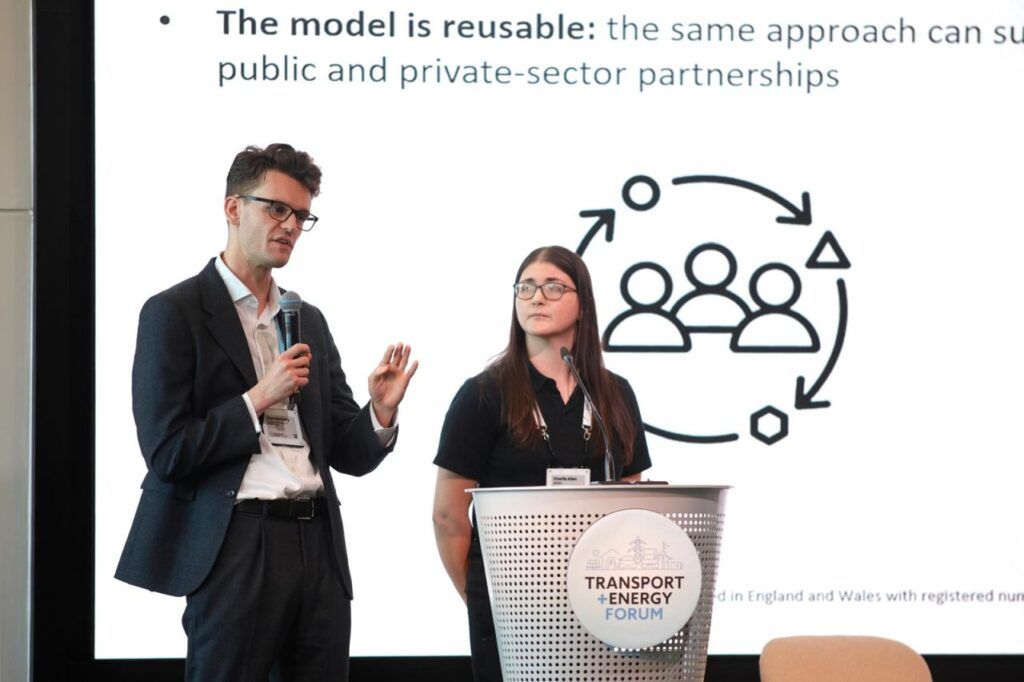
L–R: Dan Clarke, Head of Innovation, Energy Networks Association; Charlie Gilbert, Partner, Field Dynamics; Pete Cox, Head of Sales, Sevadis; Sarah Kelara, Head of Demand Reform, National Grid Electricity Distribution; Mark Goudie, Head of DSO Strategic Projects & Optimisation, SP Energy Networks.