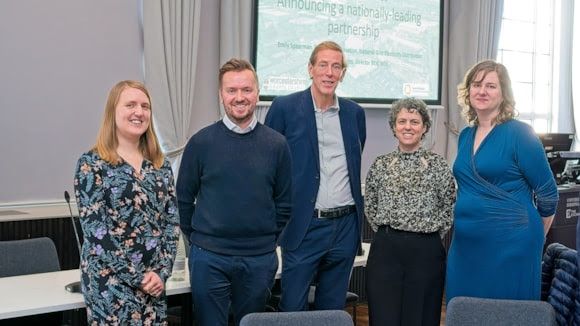
National Grid Electricity Distribution (NGED), West Midlands Combined Authority (WMCA), Worcestershire County Council, and Black Country Industrial Cluster (BCIC) are joining forces to assist West Midlands manufacturers access electricity.
The partners will work directly with industrial businesses on a multi-year programme testing new ways to unlock electricity capacity, make better use of the existing network and help companies get the power they need more quickly.
It could open new routes for businesses looking to expand production, invest in new equipment or electrify existing processes, while also helping maximise the potential of locally generated energy, it said.
The programme will initially focus on industrial areas like Worcester, Cradley Heath, and other areas in close proximity to or already organised in clusters, where the partners will explore practical solutions including more flexible connections, sharing connections costs, energy storage, sharing locally generated electricity and new ways of making available network capacity go further.
The programme is a direct response to the West Midlands Industrial Dialogue, led by NGED and BCIC, where more than 50 businesses identified 30 potential solutions for improving access to electricity. Ideas included shared connections, more flexible connection agreements, energy storage, microgrids and greater use of locally generated power.
Cradley Heath will be the focus of the first project. NGED and its partners will explore a new approach to helping groups of businesses in the same area access additional power by sharing the costs associated with connecting new demand, rather than each business having to meet those costs independently. The Network Innovation Allowance-funded project will use expected growth and electricity demand to identify opportunities and develop an approach that could be replicated elsewhere.
The partners will now work with manufacturers to identify the most important challenges to tackle and develop the programme in more detail. NGED and BCIC will also seek Strategic Innovation Fund support to help develop and test the ideas with industry.
Roisin Quinn, President of National Grid Electricity Distribution, said:
“The West Midlands has a proud industrial heritage and a huge opportunity for growth, with electricity increasingly central to where businesses invest and how they expand.
“Manufacturers have been clear with us about what they need: confidence that they can access the power to invest in new technology, increase production and electrify their operations.
“We want to help unlock that growth, making better use of the network we have today while investing in the infrastructure the region will need for the future.”
Richard Parker, Mayor of the West Midlands, said:
“If we’re serious about reindustrialising the West Midlands, we need the infrastructure to match our ambition. Manufacturers need access to reliable power if they’re going to invest, expand and create jobs.
“We’ve already helped thousands of our most energy-intensive businesses to become more efficient and bring their costs down. Now, we’re going even further in partnership with National Grid Electricity Distribution and Black Country Industrial Cluster to explore smarter ways to generate and store the energy they need to power a new era of industrialisation.”
Michael Drury, Chief Executive Officer of Black Country Industrial Cluster, said:
“The industries at the heart of the West Midlands increasingly need access to more electricity if they are to invest and grow.
“For manufacturers, this is about real investment decisions: installing new equipment, expanding production and electrifying existing processes. Finding practical ways to help businesses access the power they need can make a real difference to those decisions.
“This programme takes the challenges industry has raised with us and puts businesses at the heart of developing solutions.”
Gary Woodman, Assistant Director for Economy and Property at Worcestershire County Council, said:
“Worcestershire has a strong manufacturing base, with businesses that are ambitious to invest, expand and adopt new technologies. Having the electricity capacity to support those plans will be an increasingly important part of the picture.
“This programme gives us the chance to look at that challenge differently, bringing businesses together and exploring solutions that can support their ambitions for electrification and growth, here in Worcestershire and potentially further afield.”
Emily Spearman, Innovation Director at National Grid Electricity Distribution, said:
“The starting point for innovation has to be the real challenges our customers face. This is an opportunity to work alongside businesses in the West Midlands to turn those challenges into solutions that can unlock growth and investment.
“By working directly with customers, we can rethink how we use the network, test new approaches in real industrial environments and turn today’s challenges into solutions for the future. Our ambition is not simply to solve individual problems, but to learn quickly, scale what works and build a network that enables businesses to invest, grow and realise their ambitions.”