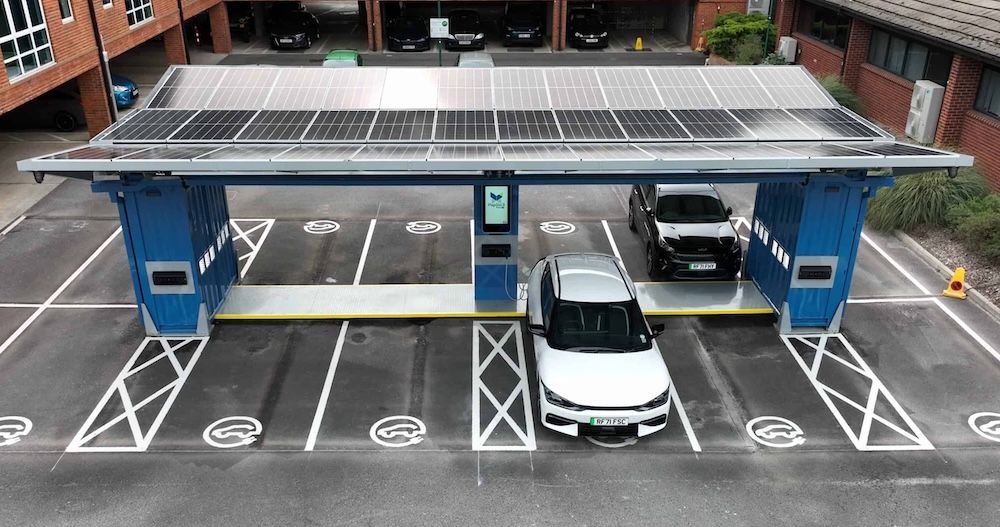
Research from Cenex has revealed how smart energy hubs can integrate solar generation, battery energy storage and bidirectional EV charging for large savings from fleet electrification.
Delivered through the UK Government-funded Innovate UK Vehicle-to-Everything (V2X) Phase 2 Programme, the study provides evidence that DC-coupled energy hubs can provide energy savings, lower peak demand and overcome grid constraints without network reinforcement.
The findings reveal an economic case for smart energy hubs with annual cost savings of approximately £2,600–£3,700, and high-demand factory sites potentially exceeding £18,000.
It also found significantly greater savings may be possible under dynamic electricity tariffs, with peak site demand reduced by between 5 kW and 150 kW, depending on the site and operational profile.
The report explores the performance of the Papilio3 V2X DC FastHub – an equal partnership between Cenex, Turbo Power Systems, 3Ti and Grid Beyond – across a range of commercial and public-sector use cases, including fleet depots, factories, offices and leisure destinations.
Using Cenex’s EIGER energy modelling tool, it assessed how DC-coupled energy systems can optimise energy use behind the meter, enabling organisations to install and operate EV charging infrastructure more effectively, even where grid capacity is limited.
Steve Carroll, Head of Research and Technical Services, Cenex said:
“Cenex modelling demonstrated how smart DC microgrids integrating solar, storage and bidirectional EV charging can significantly reduce energy costs, lower peak demand and support fleet electrification.
“Solutions like the Fasthub will be essential if we are to electrify transport operations and optimise energy use in today’s grid-constrained environments.”
Mark Potter, CTO, 3ti said:
“This research makes a compelling value case for bidirectional charging hubs in fleet depots, factories and sites with limited grid capacity. The HALO V2X Hub brings solar generation, battery storage and bidirectional EV charging together in a behind-the-meter DC microgrid, and Cenex’s modelling shows the tangible savings and grid benefits that delivers.
“For fleet operators facing the pressures of rising energy costs and decarbonisation deadlines, it’s a strong evidence base for investment. The priority now is getting the vehicle makers following the open interoperability standards which will allow this to deliver real-world results.”
Image courtesy of Cenex