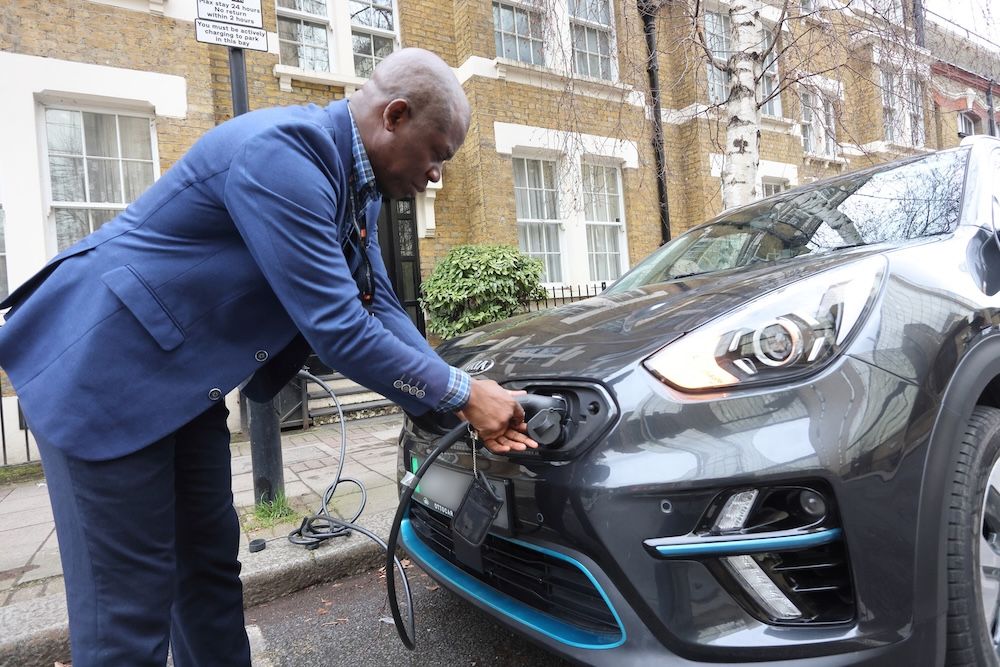
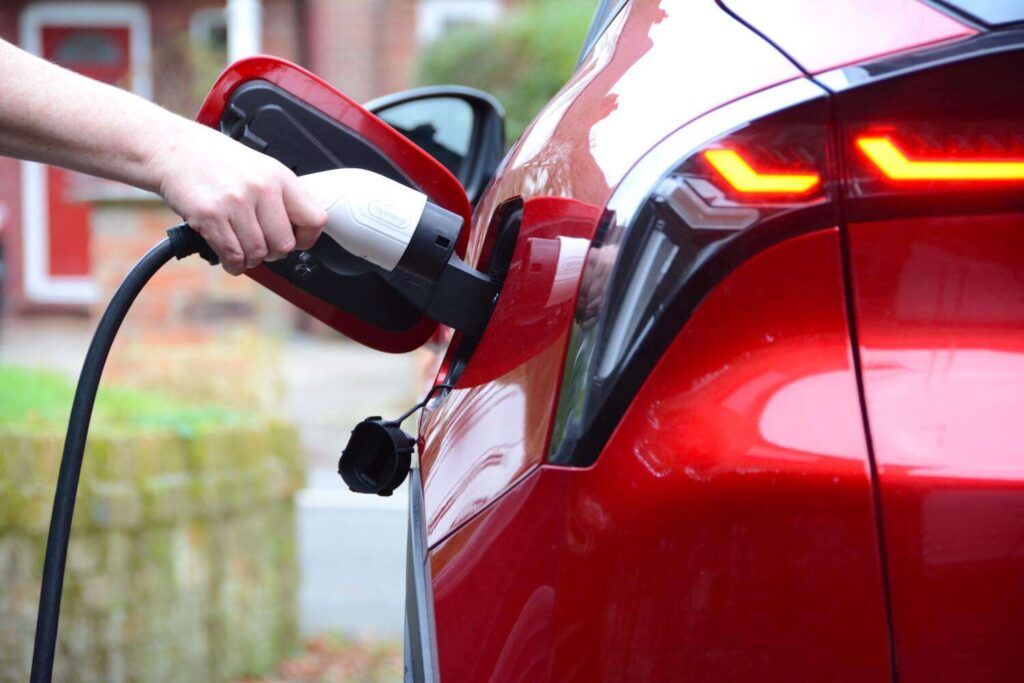
The UK Government has confirmed plans to remove the need for a separate planning application for cross-pavement charging solutions and associated electric vehicle (EV) domestic charge points.
The change, which was announced in the UK Government’s response to its consultation on EV charging rules, will create a new permitted development right for cross-pavement charging.
Local authorities will continue to oversee installations through existing highways permissions and safety safeguards.
It is hoped the move will tackle the ‘charging divide’ which leaves millions of people without off-street parking facing greater cost and bureaucracy if they want to charge an EV from their own home electricity supply.
Around four in ten UK households do not have off-street parking. Those drivers can otherwise be reliant on public charging, which can cost up to ten times more than charging at home.
The announcement follows a campaign led by EVA England to make home charging fairer for drivers without driveways, working with Baroness Pidgeon and a wider coalition including the REA, New Automotive and Kerbo Charge.
During the passage of the Planning and Infrastructure Bill last year, Baroness Pidgeon tabled amendments seeking to remove barriers to cross-pavement charging, with support and briefing from EVA England and its partners.
She subsequently secured a Government commitment to consult on extending permitted development rights for home charging and then bring forward secondary legislation.
The fresh announcement confirms that the UK Government will now proceed with the change, with work underway on the necessary legislation. It will also allow homes immediately adjoining the highway to install a cross-pavement solution and associated chargepoint.
Vicky Edmonds, CEO of EVA England, said:
“This is great news for drivers without a driveway, making it simpler, quicker and fairer for them to charge an EV at home.
People who park on the street should not face unnecessary extra hurdles just to access the cheaper and more convenient charging available to people with driveways. Removing the need for a separate planning application takes away one of those barriers.
EVA England has worked hard to put this issue on the agenda, alongside Baroness Pidgeon and our partner organisations including the REA and New Automotive. Baroness Pidgeon secured the Government’s commitment to consult on this change during the Planning and Infrastructure Bill, so it is fantastic to see that commitment now turning into action.”
Mark Constable, Head of Transport Policy, REA said:
“This is great news for a large proportion of those drivers who wish to move to an EV but have no off-street parking. The ability to access cheaper electricity via a home tariff is instrumental for their right to switch. Our members offering cross pavement solutions will welcome the removal of a significant barrier to uptake, along with councils who will be able to proceed with planned projects without the uncertainty of knowing whether these measures will be introduced.
We are grateful to all the stakeholders on this campaign for their collective support in giving millions more drivers a compelling reason to switch to an EV.”
Ben Nelmes, CEO of New AutoMotive said:
“The best things in life are free, and enabling more people to charge their car on their home electricity supply is one of the best ways government can boost demand for electric vehicles without spending taxpayers’ money. This is an important step towards boosting EV adoption and enabling more households to access much-needed energy cost savings by going electric.”
Michael Goulden, Director of Kerbo Charge, said:
“This is excellent news for every UK resident without on-street parking and goes a long way to tackling the ‘driveway divide’ in the UK. A number of local authorities are awaiting this legislation change before launching cross-pavement charging so it can’t come soon enough.”
James Court, Public Policy Director at Octopus Electric Vehicles, said:
“Removing planning permission for cross-pavement charging is a sensible step and will cut an unnecessary bit of red tape for drivers without a driveway.
“But it doesn’t solve the bigger problem. Councils will still decide whether these installations can go ahead, leaving us with a postcode lottery where one council enables cheap home charging.
“With around 40% of households without off-street parking, closing the ‘driveway divide’ means making safe cross-pavement charging available to everyone who needs it. This is a positive step, but there’s more to do.”
Image courtesy of Green Car Guide