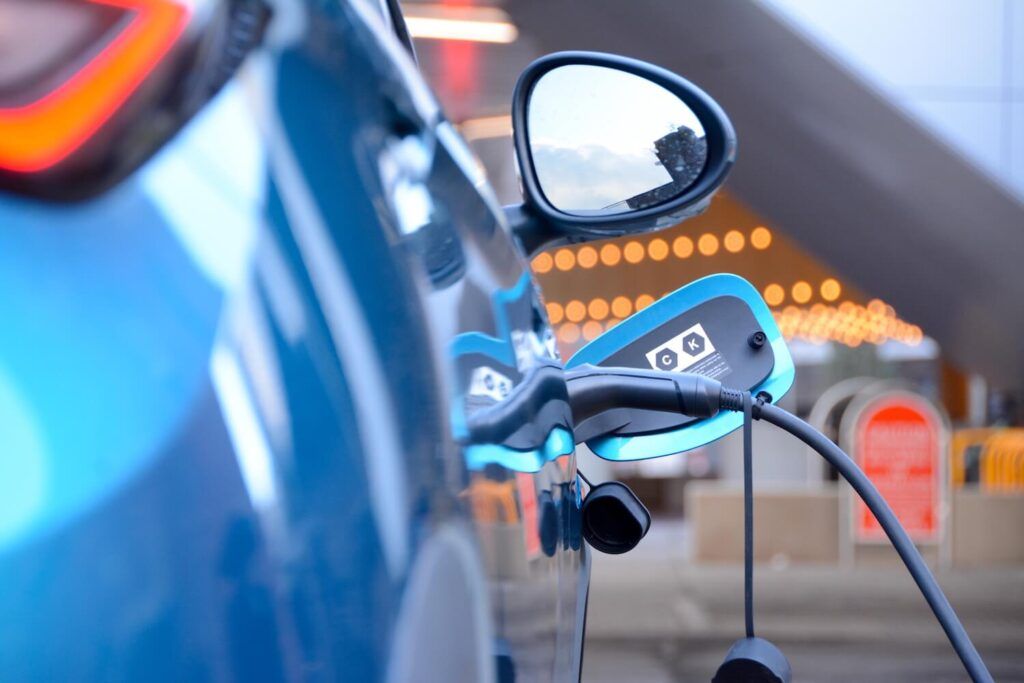

Alastair Woods, COO of charge point operator char.gy, explains how to fully electrify your fleet, while maintaining operational continuity.
Across the fleet operators we engage with, a common strategy is emerging: a steady, incremental transition to electrification, switching around 10% of vehicles to electric each year, with the goal of going fully electric by 2035. This trajectory enables organisations to reach full electrification while maintaining operational continuity and creating space for ongoing optimisation and consolidation.
It’s not easy, I know that firsthand.
Lessons from the first 250 electric vans
During my time at BT, I was fortunate to lead the rollout of the first 250 electric vans in London. We’d moved many engineers from depot-based operations to home parking, which significantly improved productivity. However, one critical factor we underestimated was access to charging. We hadn’t fully considered how many drivers had neither off-street parking nor reliable access to on-street charging.
As a result, many of the vehicles were reassigned outside London to more remote drivers. While they generally covered longer distances, the first-generation vans didn’t always meet operational requirements, leading to considerable driver frustration and negative feedback.
The unintended consequence was that we were left operating more ICE vehicles in London at a time when emissions-related charges and restrictions were increasing rapidly.
Experiences like this highlight just how important it is to think beyond the vehicle itself and consider the wider ecosystem needed to support successful EV adoption. It’s encouraging to see the progress BT has made since then, and the steps they’ve taken to overcome many of the challenges we faced during those early deployments.
The real challenge: charging without heavy capital
When electric fleet vehicles can’t charge during the working day or overnight near drivers’ homes, operators are forced into a costly workaround: using expensive rapid chargers to top up quickly, while still paying drivers to sit and wait. It ends up hitting the business twice: higher charging costs and lost productive time.
Design infrastructure around the operation
Too often, we see organisations deploy charging infrastructure based on what is immediately visible or incentivised. “We can install charge points in the car park,” or “There’s a grant available, so we should do this.” The operating model is then retrofitted around this decision. But this approach overlooks a fundamental truth: fleet operations have been refined over decades. Rather than bending operations to fit infrastructure, the infrastructure should be designed to fit the operation.
Put the driver at the centre
As highlighted in Transport + Energy’s five manifesto points for fleet electrification, the driver must be at the centre of this transition.
Consider the reality of a typical fleet driver’s day. They start early and travel directly to their first job. This could be a depot, but equally it could be a customer site, exchange point, asset location, or supply chain node. Their day is defined by a sequence of stops: completing tasks, minimising dwell time, and moving efficiently from one location to the next. This pattern continues until they return home at the end of the day.
While there may be theoretical opportunities to charge during the day, these are rarely reliable or optimal. Availability is uncertain, dwell times are short, and the use of rapid charging at scale is costly. Routes change day to day, so there’s no reliable window to charge during working hours. But there is one thing that never changes: drivers go home every night.
Importantly, most fleet routes are already optimised such that daily mileage falls within the range of an electric vehicle, with only a small number of exceptions.
Start where the vehicle dwells longest
This leads to a far more pragmatic starting point for fleet electrification: begin with where the vehicle reliably spends its longest dwell time.
Four questions every fleet manager should ask
The first and most important question any fleet manager should ask is: can my drivers charge at home? Home charging offers the lowest cost of energy and the highest reliability. While there are considerations around upfront installation costs and asset ownership, particularly if an employee leaves, these are often outweighed by the long-term savings.
The next question is: can drivers access low-cost charging near their homes? Every vehicle must be parked overnight, whether on a driveway, a street, or in a residential area. If home charging is not viable, can infrastructure be brought closer to where vehicles already are? This is where char.gy plays a critical role.
Third, fleet operators should ask: can we partner with public charge point operators to secure preferential rates for drivers who can’t access a home charger? Strategic partnerships can significantly reduce reliance on high-cost ad hoc charging.
Finally, organisations should consider their own estate: do we own or control locations where vehicles experience meaningful dwell time, or sites that are accessible to a significant portion of the fleet? These might include depots, exchanges, operational hubs, or even residential assets. From here, further opportunities emerge. Can infrastructure be shared with other organisations whose usage patterns are complementary? Can sites be opened to public charging during off-peak hours to generate additional revenue and offset costs?
From reactive deployment to strategic integration
The path to fleet electrification is not simply about installing charge points. It is about designing an ecosystem that aligns with how fleets actually operate. This requires a shift in mindset from reactive deployment to strategic integration.
Fleet operators and charge point operators must work in partnership to build solutions that optimise both charging behaviour and asset utilisation. Those that succeed will not only lower costs and improve efficiency, but also accelerate the transition to zero-emission fleets at scale.
Alastair Woods, COO of char.gy