The UK new car market grew by 6.6% in March with battery electric vehicles (BEV) up 24.2% to 86,120 registrations, according to the Society of Motor Manufacturers and Traders (SMMT).
Some 380,627 new vehicles were registered in the month, which is the best March and overall monthly performance since 2019.
March was also the best ever month on record for all electrified vehicle volumes, accounting for 196,059 registrations, underlining the impact of manufacturers’ investment in road transport decarbonisation.
Alongside the BEV growth, plug-in hybrid (PHEV) registrations rose 46.9% to take a 13.0% market share, while hybrid electric vehicles (HEVs) increased 7.3% to take 15.8% of the market.
Growth was driven primarily by private demand, with retail registrations rising 10.1% to 162,470 units. Fleet registrations increased 3.5% to 208,853 units, while the smaller business sector grew 18.8% to 9,304 units.
Mike Hawes, SMMT Chief Executive, said:
“The strongest new car market since 2019, with the highest ever volume of EV registrations, is a boost to the industry and the economy.
“However, the headlines belie the costs incurred and the challenges involved. Much of March’s performance will be from orders placed before the start of the Iran conflict, which threatens to raise the cost of living, undermining consumer confidence.”
Speaking about the figures, Melanie Lane, CEO of Pod, said:
“March’s figures show how quickly demand can respond when the economics of electrification are brought into focus. It’s positive to see a notable uplift from March plate changes but also a strong indication that drivers are actively looking for more control and predictability over their energy costs.
“What we’re seeing is a convergence of factors, where external pressures like fuel price volatility and access to smarter energy solutions have the potential to tip consumer behaviour in the right direction.
“The opportunity now for the Government is to turn that interest into sustained demand by addressing the rising costs of public charging infrastructure and supporting EV uptake in line with its own targets.”
Colin Walker, Head of Transport at the Energy and Climate Intelligence Unit, said:
“These figures come against the backdrop of the Iran war and rapidly rising petrol and diesel prices, fuelling a surge of interest in electric vehicles. While it is too soon for this to have translated into new car sales, it indicates that more people are looking to protect themselves from shocks in global energy markets over which we have no control.
“Increasingly powered by electricity generated by British wind and solar farms, EVs offer the UK a way to enhance its energy security by reducing its dependence on oil imported from abroad.”
Delvin Lane, CEO, InstaVolt, said:
“March registration data shows petrol market share at 24.8%, down from 29.7% a year ago. BEV is at 22.7%. The gap is now just over two percentage points. That gap was ten points twelve months ago.
“This is not sentiment. It is not momentum. It is a structural shift showing up in the numbers, month after month. Petrol is losing share. Electric is taking it. The direction is not in question.
“What that requires is infrastructure that keeps pace. Drivers making that switch need to know the network is ready for them. That is the job. That is what the data is asking of us.”
Tanya Sinclair, CEO, Electric Vehicles UK, said:
“Growth at this scale was the ambition for over a decade. It is arriving now. The response from parts of the industry has been to keep airing concerns.
“That is a choice and it has consequences. Drivers considering an electric vehicle do not need to hear that the sector is uncertain about its own future.
“Every public hesitation is a reason handed to someone to wait.
“The focus belongs on the people making the switch. Making it easier, making it reliable, making it worth it. That is how confidence is built. Not in boardrooms, but in the experience of drivers who chose electric and found it worked exactly as promised.”
John Lewis, CEO, char.gy, said
“March’s EV registration data is a real boost for everyone who backed the ZEV mandate. A record-breaking 22.7% year-on-year rise proves that ambitious policy works when government and industry stay the course together.
“Rising oil prices are a reminder of why this transition matters. Every electric vehicle on the road is a step towards energy security, cleaner air, and lower running costs for British drivers.”
James Court, Public Policy Director, Octopus Electric Vehicles, said:
“The market is growing and we’re seeing a new wave of new drivers reacting to the petrol price crisis. Drivers are moving and the mandate is working.
“What they need now is a consistent message from industry and government. The brands gaining share are the ones getting on with it. That is the only message that matters right now.”
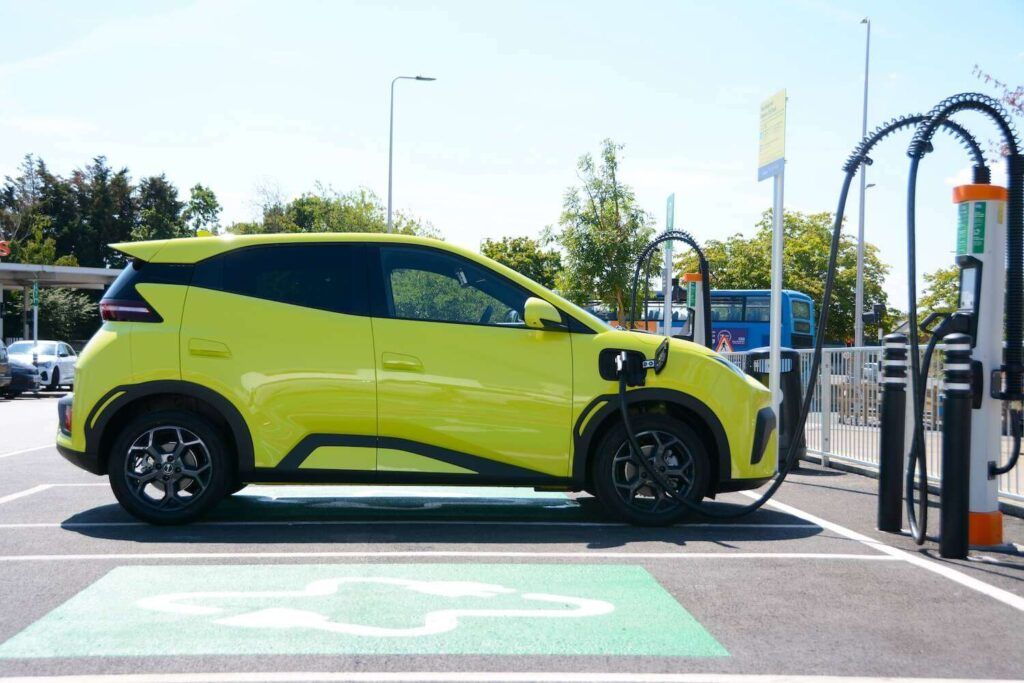
Image courtesy of Green Car Guide