Drivers without driveways are being blocked from switching to electric cars because of red tape, according to new research.
A major new survey by Kerbo Charge of EV drivers and prospective buyers with on-street parking found more than four in ten (43.7%) said they would only get an electric car if they could charge it at home, while a further 33% say home charging would make them more likely to switch.
But planning rules are impacting the process, with more than eight in ten respondents (84%) stating a requirement for planning permission on a home charger would deter them from buying an EV – and for 42.8% it would stop them completely.
The Government recently completed a consultation about relaxing planning rules so that residents with on-street parking do not need planning permission for a charger when they’ve already got approval for a cross-pavement channel.
But until the rules actually change, a major barrier to EV adoption remains, it said.
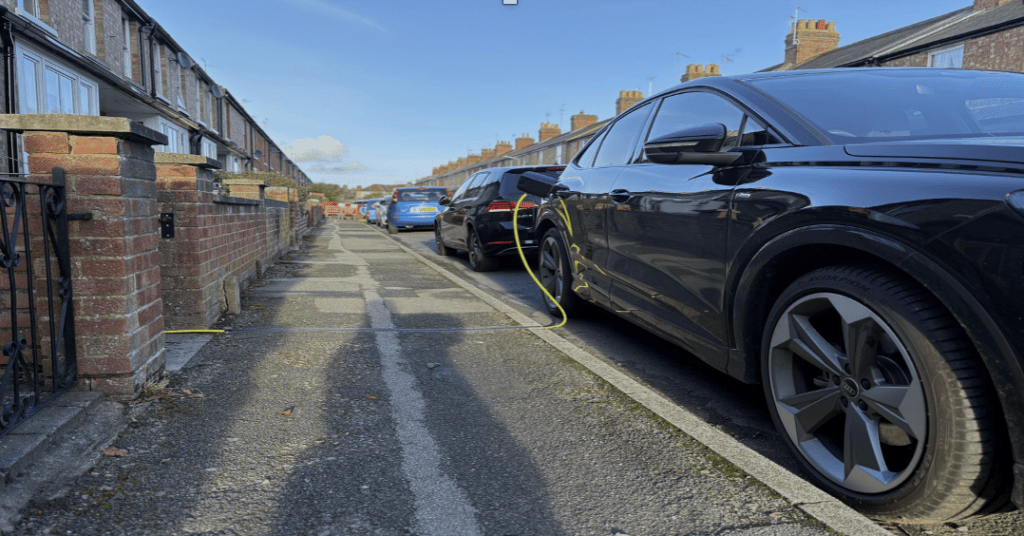
The research also reveals widespread frustration with the cost and accessibility of public charging. Many drivers who have installed cross pavement charging channels describe them as a “game changer” that makes EV ownership possible without a driveway.
With home charging far cheaper and more convenient, campaigners argue that “simplifying council processes and removing unnecessary red tape around pavement charging channels will unlock EV ownership at scale”, they added.
Michael Goulden, CEO of Kerbo Charge said:
“Charging from home is 5 – 10 x cheaper than public charging and much more convenient, we therefore need to make it easy for all residents to charge from home if we’re going to get mass adoption of EVs in the UK.”
Deborah Meaden, sustainability advocate and Dragons’ Den investor in Kerbo Charge, said:
“There is a real problem to solve here: how to make EV charging fair and equitable for everyone, not just those with driveways. This research shows the scale of that challenge, and I’m delighted the Government has recently announced £25 million of funding for cross pavement charging, as well as a consultation on changing permitted development rights for home chargers.”
Fiona Howarth, Founder | Director Octopus Electric Vehicles, said:
“It’s brilliant to see more councils enabling gullies so drivers can charge at home, even when parking on the street. Drivers switching to electric are already saving up to 80% on fuel by charging overnight, so expanding access to home charging is a big step forward.
Innovators like Kerbo Charge are helping open this up to more households, backed by government and council grants. The next step is simple: make planning easier, so more drivers can get their hands on cheaper, convenient home charging.”
Tanya Sinclair, CEO of EVUK, added:
“Home charging remains the most affordable way to run an electric car. It is simple to manage and allows drivers to start each morning with a full battery.
“Innovations such as gully charging now make this option possible for households without driveways. These are practical, proven solutions that expand access to convenient charging.
“It is unfortunate that some local authorities are reluctant to enable them for residents who would benefit most.”
Image courtesy of Kerbo Charge shows a cross-pavement channel install in Milton Keynes