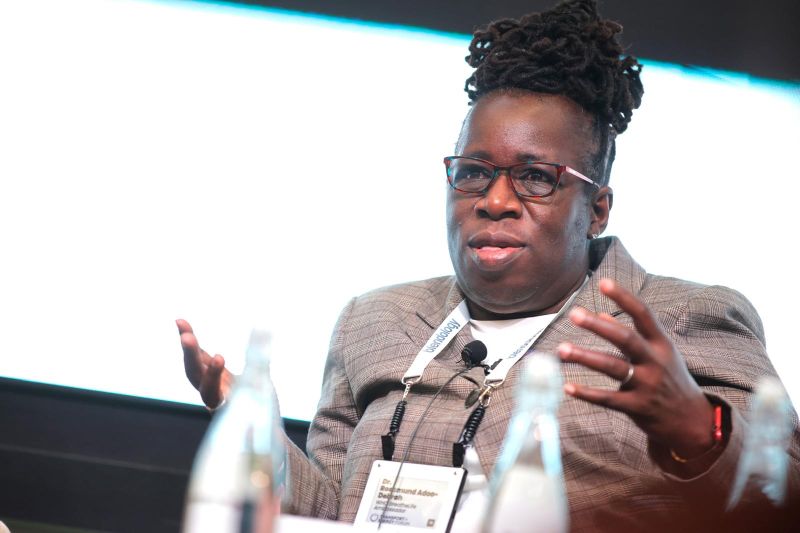
Dr Rosamund Adoo-Kissi-Debrah has called for stronger government action to tackle air pollution, warning that children continue to die from asthma despite improvements in air quality.
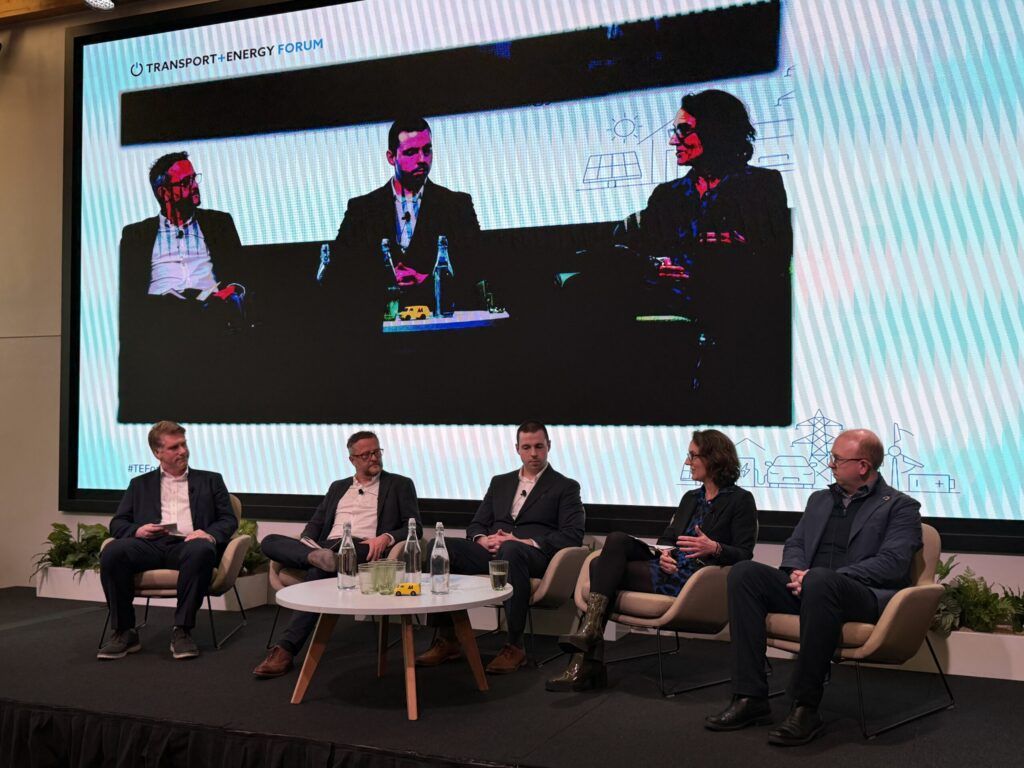
Speaking to Bold Voodoo founder Ben Kilbey at the closing session of the T+E Forum, the World Health Organization (WHO) free life ambassador and founder of the Ella Roberta Foundation said the UK was failing to do enough to protect vulnerable people from the effects of air pollution.
Dr Adoo-Kissi-Debrah began campaigning for cleaner air after the death of her daughter, Ella, in 2013. Ella suffered from one of the most severe cases of asthma recorded in the UK, experiencing sudden and life-threatening attacks throughout her childhood.
She said that originally they had struggled to understand what was triggering the condition, particularly as Ella was an active child who could swim and play football without difficulty, only to suffer severe coughing episodes at other times.
It was only later that she began to understand the potential connection between air pollution and her daughter’s illness.
Reflecting on her daughter’s death, Dr Adoo-Kissi-Debrah said the experience “had driven her determination to ensure other families did not go through the same ordeal”.
She told the audience that, while air quality had improved in London, “the problem remained far from solved”.
In addition, she cited figures suggesting that 115,000 children in London had been admitted to A&E with breathing difficulties over the previous year.
Despite progress, she said she would only consider stepping back from active campaigning “when no child was dying from asthma and the figures showed that vulnerable communities were properly protected”.
Government action needed
A major focus of the discussion was the need for consistent political leadership and long-term investment in cleaner transport.
Dr Adoo-Kissi-Debrah criticised successive governments for changing priorities, arguing that frequent changes of prime minister had slowed progress on important environmental policies.
She highlighted the potential of electric vehicle adoption, particularly in London, where she said around 54% of people live in flats.
She argued that more attention needed to be given to electric vehicle charging infrastructure for people living in flats, rather than focusing solely on homeowners with driveways.
She also expressed frustration over uncertainty surrounding the government’s electric vehicle targets, questioning why politicians appeared reluctant to commit to ambitions she believes are achievable.
The campaigner said the government needed to “demonstrate greater confidence in the transition to electric vehicles and support the businesses and individuals working to make it happen”.
However, she also acknowledged that practical barriers remained. Recounting a recent conversation with a taxi driver who had returned an electric vehicle after just six weeks, she explained that concerns over driving range and charging times could make electric vehicles unsuitable for some professional drivers.
She said such experiences “demonstrated why the transition needed to take account of people’s different circumstances”.
Climate change and children’s health
The discussion also highlighted the growing impact of extreme heat on respiratory health.
Dr Adoo-Kissi-Debrah warned that the UK was not adequately prepared for increasingly hot summers, pointing to excess deaths recorded during May and June and the potential consequences for people with existing health conditions.
She questioned whether enough was being done to protect the public ahead of future heatwaves, arguing that isolated initiatives, such as tree planting, were not a substitute for a comprehensive public health strategy.
She also raised concerns about pollution from fireworks, wood-burning and cooking, calling for better public education about the potential health risks.
Rather than “telling people what they should or should not do”, she argued that “the public should be given clear information so they could make informed decisions”.
She added that governments needed to “take a more serious approach to public health when developing environmental policies”.
Clean air should be a human right
Concluding the discussion, Dr Adoo-Kissi-Debrah returned to the central message behind her campaigning: access to clean air should be recognised as a fundamental human right.
She said the Ella Roberta Foundation had spent the past five or six years lobbying for legislation to establish clean air as a human right.
She believes making this a legal requirement would help prevent politicians and decision-makers from avoiding responsibility and would ultimately save lives.
Her message to delegates was clear: despite progress in some areas, far more needs to be done to protect children and vulnerable people from the health consequences of air pollution.
She said no child should die from asthma in the UK and urged those attending the forum to support the campaign for clean air legislation.