In the first part of an analysis of the electric vehicle (EV) charging landscape, James Evison looks at the issues around domestic EV charging.
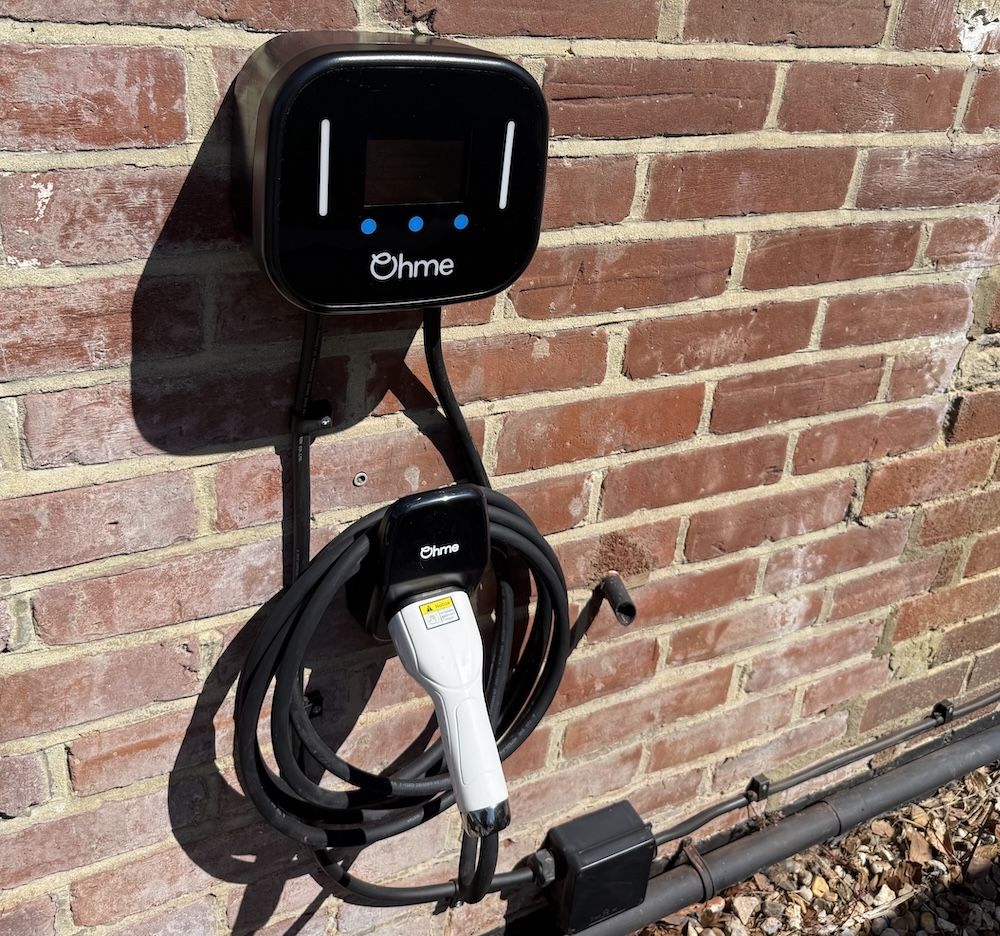
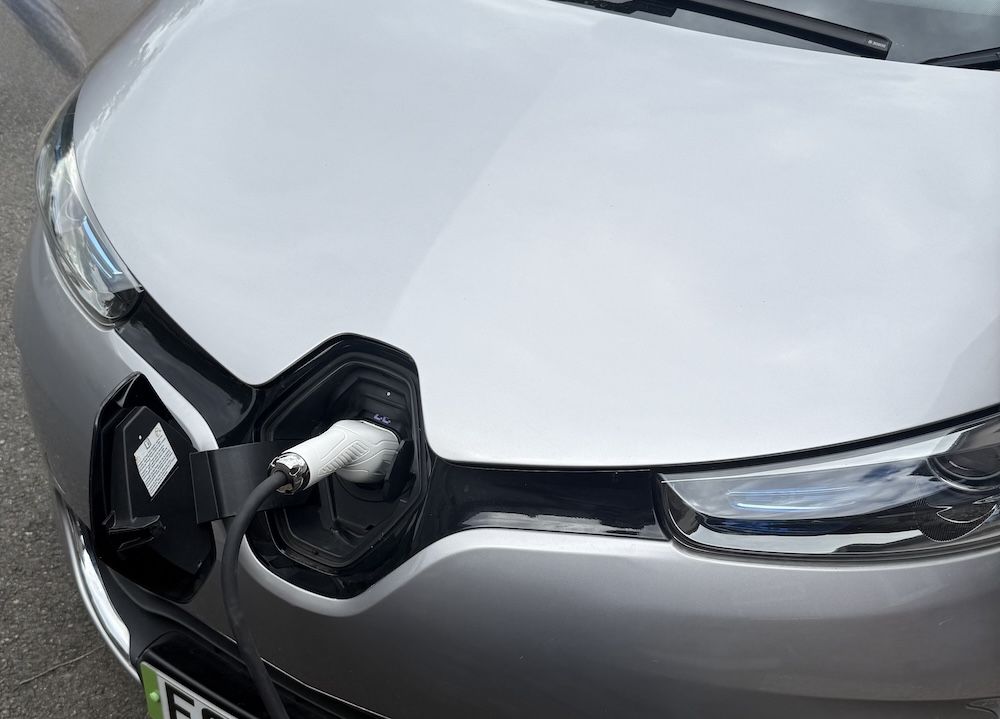
There are many industry discussions for domestic EV charging, and the landscape is rapidly changing. The reality is almost half of the UK haven’t even been in an EV (43%) – let alone driven one – according to Motability Operations. Indeed, a fortnight ago, I had my first domestic EV charger installed – an Ohme Home Pro. The process was relatively straightforward, using an online survey, a third-party installer, and an app to get up and running on a used Renault Zoe.
As Ben Nelmes of New Automotive pointed out, used EVs are cheaper than ever – with Zoes and Nissan Leafs under £5,000, and even Tesla Model 3s available under £10,000. In this way, it was a straight swap from my used ICE vehicle. As a journalist, the domestic charging installation and vehicle purchase was an experience that put into practice a lot of the stories that I write about: the importance of smart energy, flexibility, the cost (and availability) of used EVs, and charger installations.
Here, Transport + Energy consider the current state of play and issues for business fleets and drivers to consider on domestic charging.
The location
Figures from Kwik Fit suggest that only one in five (18%) drivers aged 18-34 expect to buy a fully electric model next – and just 11% (one in nine) of drivers over 55 who are planning to change their car. These figures don’t correlate with off-street parking, where the clear incentive for EVs and charging is most apparent.
According to figures from the RAC Foundation, around 65% of UK households either have, or have the potential for, off-street parking. In addition, these vehicles are parked for 23 out of 24 hours of the day. The average car or van in England is driven only 4% of the time, a percentage that hasn’t shifted significantly for more than a quarter of a century, it added.
So there is plenty of space – and time – for EVs to charge on driveways, workplaces, and off-street facilities. The RAC Foundation breaks the numbers down to 75% of Welsh households having potential for EV charging, 68% in England, 63% in Scotland and 44% in London – the last figure explaining the large number of on-street and public charging infrastructure in the capital.
These aren’t just higher income households either. Another important statistic from an Autotrader study reveals that 70% of lower income households have off-street parking, illustrating the potential for EVs to have a significant impact on the cost of living crisis.

The charger and electricity tariff
Recent research from the Energy and Climate Change Intelligence Unit (ECiU) suggested many EV drivers could save an average of £850 a year from charging an EV over fuelling a petrol car. Indeed, an increase in the price of petrol could see savings for EV drivers using Octopus’s Intelligent Go tariff jump to more than a thousand pounds.
When it comes to the charger, perhaps one of the biggest current considerations reported in the industry is around smart charging and flexibility. Selecting a charger that can work with a tariff such as Intelligent Octopus Go can make a big saving on recharging an EV. This enables a vehicle to slowly charge overnight, at a significantly reduced rate.
For example, using a charger, such as an Ohme Home Pro, enables the EV to charge overnight during a special guaranteed six-hour rate on this tariff (at the time of writing 8p per kWh from 11:30pm to 5:30am) on this Octopus tariff. These products often are delivered through specialist apps, which allows for dynamic charging to be timed, managed and controlled remotely. Crucially, it also means someone else can’t come along and plug in and charge their vehicle.
Importantly though, businesses and drivers might actually want that to occur. Services like community charging company Co Charger allow the assets to be utilised by neighbours and even other business vehicles. Indeed, business expenses provider Allstar recently partnered with Co Charger on such a solution for fleets.
Tariffs and employees
In addition, another consideration is around whether such tariffs work for the driver during the remainder of the day, when rates may be higher than other tariffs. This issue was recently discussed at the Transport + Energy Fleet Electrification Forum in relation to those who park their business EV at home overnight.
For the business, it may be best to use a smart energy tariff. But if the fleet driver consumes a lot of energy during other times of the day at home, when the price is higher than other tariffs, it may not work for them – and could even leave them out-of-pocket.
Equally, the opposite may be true, and they have large-scale energy savings – resulting in fleet drivers without an EV missing out on a possible benefit. Perhaps most importantly, can a company ask an employee to take a specific domestic tariff? It is an interesting example of how Human Resources and employment law comes into the EV charging equation.

Flexibility
Energy flexibility is widely cited as playing a significant role in the transition to EVs, charging at times of lower demand – and incentivising drivers to do so. A recent trial saw Ohme reward EV drivers with £750,000 during one of the UK’s largest home energy flexibility trials. But the company has also called for a more joined-up approach from the UK Government on the issue.
David Watson, Ohme CEO, said: “But to move this knowledge on from trial to reality, we need more coordination across the Government and energy industry to give greater value and more rewards to our customers for the full system value that their home EV chargers can offer.”
Yet BEAMA has recently pointed out how potential changes to the ZEV Mandate could hit UK flexible energy targets, due to the role EVs could play.
Matt Adams, Head of Electrical Transport Systems at BEAMA, said: “Ministers want EV smart charging to provide more flexibility to the electricity system, while considering a weaker Mandate that could slow EV uptake and the rollout of smart charge points.”
Future charging
Another consideration is futureproofing. Although at present vehicle-to-grid technology isn’t widely available, and only a few trials have taken place, it is expected in the future.
Products are available that are V2G-ready, meaning that the battery from the EV can be used to send energy back to the grid, earning the household money. Last year, Octopus, BYD and Zaptec launched a special V2G tariff bundle too, which showcased the potential movement for the future.
Ultimately, selecting a charger than may enable an EV to be utilised as an energy asset in the future, could be especially important if it is a business vehicle. As also discussed at the Fleet Electrification Forum, who benefits from this potential energy saving from V2G – the business or the fleet driver – is a question to ask as well.
Accessibility
Finally, accessibility is a key issue that is often discussed, when selecting a charger and solution that can be used easily by a disabled driver.
At present, research suggests three quarters of councils still have no accessible EV chargers, which applies further pressure onto potential domestic charging infrastructure.
Installation
Issues around installation broadly are discussed in relation to cross-pavement for those without a driveway, more standardised off-street solutions, and the complexities of domestic charging for residential flats.
At last year’s Transport + Energy Forum, a council workshop, convened by Kerbo Charge, London Councils, Motability Operations and Ohme, highlighted the opportunities for cross-pavement EV charging solutions, especially in relation to accessibility. Russ Morgan from Ohme, said if the sectors want “everyone to transition to EVs, we must make home charging accessible to on-street”. Jonathan Jenkins from Motability Operations added that there were around 200,000 customers across the UK who benefited from Motability, and could therefore access cross-pavement solutions in their locality.

Pilots for pavement-channel on-street charging have increased recently, in a bid to ensure a just and equitable transition for the approximately 40% of drivers across the UK without a driveway.
Figures from Vauxhall suggest some 42% of local authorities will have cross-pavement charging solutions available by the end of 2026. But the picture is mixed: costs for installation varied dramatically depending on council, with some local authorities offering installation services for free, while others charge over £1,000.
In addition, there is the issue of installations at flat blocks. Earlier this year, Zaptec, in relation to the UK Government announcing support for charger installations, warned about the issue of multi-dwelling buildings.
Michael Braybrook, Managing Director at Zaptec UK, said: “In multi-dwelling buildings and flats, charging has to be treated as shared infrastructure. In most blocks, installing chargers back to individual meters simply isn’t a viable option.”
Ohme added that access to the chargers is vital, and ensures only residents with their own app and account can use them. “The management company control the use and price per kWh of the charger, but the residents just pay for it direct via a credit card on their account and they share the charger accordingly,” a spokesperson said.
Driveway
Although cross-pavement appears as the most complex issue for domestic charging, even just mounting a charger on a property wall direct to a vehicle on an off-street driveway can be challenging.
Normally, these are relatively straightforward. But as Ohme explains roughly 15% of their installs are non-standard – i.e. where the fusebox isn’t easily accessible, or close to the charger location. The company told T+E that it provides 15m of cable from the fusebox to the charger as a standard install, which is “pretty much industry standard”.
A spokesperson for Ohme told Transport + Energy: “It’s very hard to classify what a typical non-standard install is, because they can vary. They might be as simple as more cable length or even the customer needing an upgraded consumer unit/ fusebox. Around 80% of non-standard installs are less than £400 extra.
“Where it can get expensive is situations where groundworks are required, especially if the cable needs to go under a driveway. Unfortunately, there’s nothing we can do about that.”
They also said the other issue to be considered is whether a customer is on a “looped supply” with a neighbour, which requires the DSO to unloop before a charger can be fitted. Fortunately though, the DSO covers the cost of this issue.
Major move
The majority of the UK has some form of off-street parking, but it is also critical to remember the challenges around installing charging.
Utilising this space will be vital for the transition, as much as a viable public charging infrastructure, which will be assessed in part two of our analysis of the charging sector.