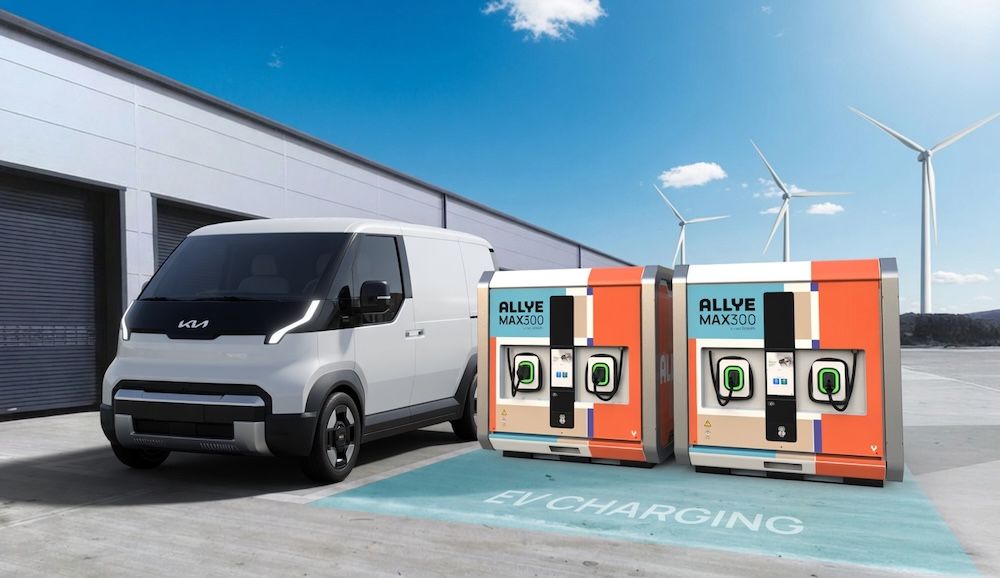
Clean tech firm Allye Energy has upgraded its MAX300 battery energy storage system, ahead of the Depot Charging Scheme application window closing on 30 June 2026.
The firm is positioning the solution as “the most capable and cost-effective solution available for fleet operators electrifying their depots” to overcome grid constraints.
Delivering up to 400kW of DC fast charging from any standard grid connection, the MAX300 enables fleet operators to install more charge points and charge at higher power than their existing grid connection would otherwise allow.
The development is underpinned by three engineering innovations designed and built in-house. Its 300kW output is made possible by integrating 800V battery architecture, with running at higher voltage, reducing electrical losses and increases the rate at which power can be transferred.
Allye’s proprietary platform architecture manages battery packs of different voltages and chemistries independently within a single system, with an isolated converter for each pack enabling independent power balancing.
The second innovation is structural, with Allye and engineering partners having undertaken a full structural and trailer system re-optimisation, replacing the conventional approach of mounting a battery system onto a standard trailer with a purpose-designed, lightweight chassis architecture.
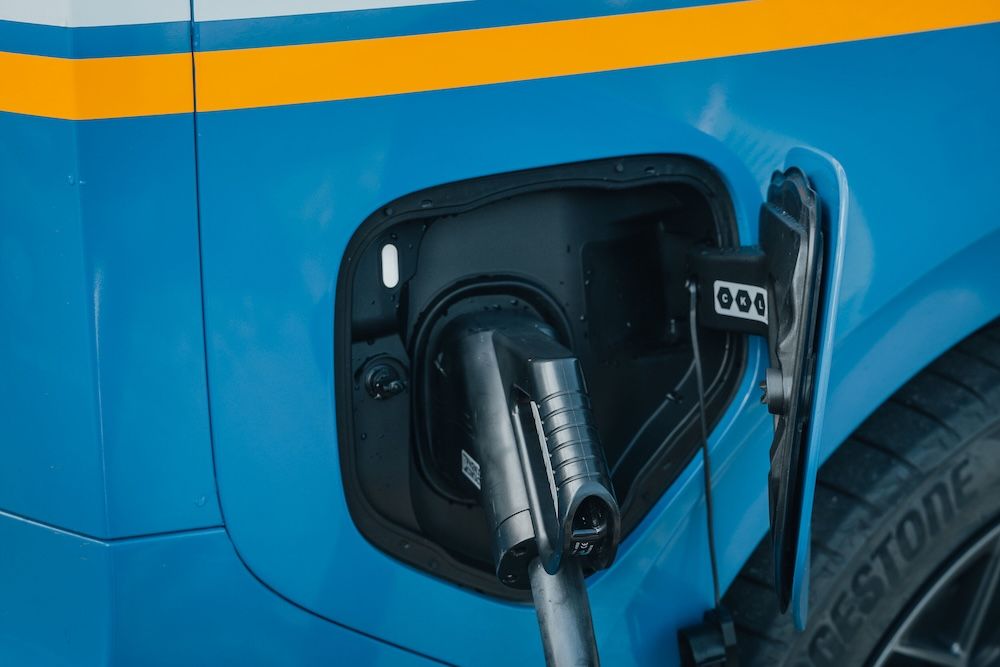
The third is Allye’s integrated rapid DC charging system, custom engineered in-house, built on a direct DC-to-DC architecture that minimises energy losses in transfer from the MAX300’s battery to the vehicle. It supports charging voltages from 200V to 1,000V and is available in both CCS and NACS standards.
Stored energy is available on demand at up to 400kW, with no grid upgrade, no DNO negotiation, and no months-long wait, the company added.
When not actively charging vehicles, the MAX300 can participate in grid services – frequency response and demand flexibility that the electricity network pays for.
Jonathan Carrier, Founder and CEO at Allye Energy, said:
“The Depot Charging Scheme is a real opportunity for fleet operators, but only if the technology can actually solve the grid constraint problem. The MAX300 does that, at a price point that makes the economics work, in a package that also generates revenue when it isn’t charging.
“We handle the full integration and we can support operators through the application. For any fleet operator who needs to electrify and hasn’t found an infrastructure solution that works yet – this is it.”
Robert Carter, CTO at Allye Energy, said:
“A fleet operator shouldn’t have to wait months for a grid upgrade before they can charge their vehicles. The MAX300 means they don’t have to. Plug into an existing connection and you have up to 400kW of DC fast charging available immediately. Equally, you can recharge this system on-the-go from a public DC fast charger.
“The engineering behind that is genuinely complex – the experience for the operator is genuinely simple. With over 300kWh of storage, it keeps going long after competing systems have run out of energy. And when it isn’t charging vehicles, that same storage capacity is earning money from grid services. It is a fundamentally different proposition from anything else on the market.”
Image courtesy of Allye Energy