The Government has announced £1 billion to roll out clean trucks and vans and install EV chargers at depots, saying the move will help build resilience against fuel price uncertainty.
According to the Government, the move will save businesses cash, clean up millions of journey miles, and help hauliers become more resistant to global price changes.
The Zero Emissions Truck and Van grants and the Depot Charging Scheme (DCS) aim to tackle two of the biggest barriers to businesses making the switch – upfront costs and access to charging.
Global fuel price uncertainty is challenging for businesses, and these grants will support industry to switch to electric, helping to reduce exposure to fuel price uncertainty.
Aviation, Maritime and Decarbonisation Minister Keir Mather, said:
“This £1 billion investment cuts cost for British businesses, supports jobs, cleans up our roads, and gives operators protection against shifting global fuel prices.
“The logistics sector is the backbone of the UK economy, worth £170 billion and supporting 2.7 million jobs. We’re helping them expand and decarbonise their fleets whilst saving them cash, driving growth up and down the country.”
The truck grant will offer savings of up to £81,000 off the heaviest zero emissions trucks, covering up to 40% of the cost. The van grant will continue to offer discounts of up to £5,000 off the cost of electric vans.
On top of that, businesses and public authorities could save up to £1 million, covering up to 70% of the cost, when installing charging infrastructure for vans, coaches, and eHGVs, thanks to a £170m boost to the Government’s Depot Charging Scheme.
The new funding comes after the Government announced an £18 million uplift in January to slash up to £120,000 off the cost of green lorries, making it cheaper for businesses to go electric, with companies like M&S and Wren Kitchens and Bedrooms taking advantage of funding to decarbonise their fleets and reduce operational costs.
Lee Holmes, Transport and Logistics Director at Wren Kitchens and Bedrooms, said:
“Government investment gives businesses like Wren the confidence to accelerate fleet decarbonisation while maintaining operational stability, even in periods of economic uncertainty.
“With this support, we’ve brought a number of 44-tonne e-trucks into our fleet alongside a rapid charging infrastructure, reducing our reliance on traditional fuels and strengthening resilience and reliability against ongoing market volatility.”
Julian Bailey, Head of Group Transport at M&S, said:
“In 2021, we set ourselves the ambitious target of becoming a net zero business across our value chain by 2040. Since then, we’ve made some great progress, which includes the onboarding of 24 battery electric vehicles across our transport fleet.
“We welcome this investment which serves as a reminder of the importance of the logistics sector in the UK and its role in decarbonisation.”
Alongside support for operators, the Government is also helping families make the switch through the Electric Car Grant which has helped over 80,000 drivers buy an EV, by saving them up to £3750 in the process. This is tackling upfront costs which is one of the biggest barriers to EV adoption.
With 1 in 4 cars sold now electric, it’s crucial to expand the UK’s charging infrastructure and so the Government is spending over £600 million to rollout hundreds of thousands of EV chargers across the country, giving drivers the confidence they’ll be able to charge up whether at home, at work or on the go. This will build on the over 118,000 chargers already available.
Toby Poston, BVRLA Chief Executive said:
“The Depot Charging Scheme is playing a vital role in helping fleet operators and rental companies to install affordable, reliable charging infrastructure at their depots.
“The vehicle rental sector faces one of the most challenging paths to decarbonisation, and this additional support for depot charging will play a major role in building confidence. It will encourage more rental operators – particularly SMEs – to electrify at scale, reduce costs, and contribute to the UK’s net zero goals.”
Further industry reaction:
Jarrod Birch, head of policy and public affairs, ChargeUK commented:
“The direction of travel for trucks and vans is clear – electrification. We called for more enduring funding for electric trucks earlier this year and the Government has delivered. Combined with the funding for depot charging this will really help to tackle businesses’ up-front costs when considering electrification.
“But running costs are just as important and Government has yet to deliver a solution to the policy driven costs which inflate the bills to charge these vehicles. There is a real danger fleet owners will invest in electrification only to be crippled by high standing charges when they are well down the road.
“The market requires a dedicated HGV infrastructure fund and relief for standing charges on depot charging to bring down the total cost of ownership and speed up adoption of cleaner trucks and vans.”
Nick Connor, CEO of the IMI, said:
“This investment is a very positive step and will help remove some of the financial barriers for businesses looking to electrify their fleets. However, funding vehicles and infrastructure is only part of the solution. Without the skilled workforce to maintain, repair and safely handle these vehicles, particularly high-voltage systems and batteries, the transition risks being constrained.
“We cannot afford a mismatch between the number of electric vehicles on the road and the number of qualified technicians able to support them. Targeted government support for training and upskilling is essential to ensure the UK has the capability, confidence and safety standards needed to deliver net zero.
“The IMI continues to work with industry and training providers to expand EV qualifications and support technicians in gaining the skills required for the transition. Together, with the right investment in people as well as technology, the UK can lead the way, but skills must be treated as a core part of the infrastructure.”
Mark Constable, Head of Transport Policy at the REA, said:
“This is a welcome continuation of incentives to decarbonise the commercial vehicle segment, where the economics are more challenging than for cars. The ongoing geopolitical situation will provide an extra incentive for firms to increase their energy security at a more predictable cost, and the funding will directly remove a lot of uncertainty over adoption.
“The recently concluded consultation as to whether new carbon emission limits and/or a ZEV Mandate should be introduced complements this new Demand-side intervention. We look forward to the package bringing more certainty, more decarbonisation, and improved air quality to the commercial vehicle sector.”
James Charnock, Interim Managing Director, Renault Trucks UK & Ireland:
“As a pioneer in decarbonised transport across both trucks and vans, we welcome this announcement as exactly the boost the industry has been waiting for. By directly addressing the critical barriers of high upfront costs and infrastructure investment, the government is enabling operators to move forward with greater confidence.
“The Zero Emission Truck and Van grants and the Depot Charging Scheme will help unlock the business case for fleet electrification, accelerating the transition from ambition to action. For operators, switching to electric is no longer just an environmental imperative, it is a strategic opportunity for sustainable growth, improved total cost of ownership over time and long-term competitiveness.
“We look forward to working closely with partners across the value chain to ensure this momentum translates into real-world deployment at scale.”
Chris Morrison, CEO Fleete Group, said:
“Fleete is investing private capital to build out low-cost nationwide charging infrastructure for electric trucks. To build more infrastructure, we need to know there will be enough electric trucks on the road, and this happens when the electric trucks are competitive with diesel.
With the new Zero Emissions Truck and Van grant announced today that is a reality. The grant helps bridge the gap until innovation and scale can drive costs down further to a point where the subsidy is not needed.
Our latest Total Cost of Ownership calculator incorporates the new grant and latest diesel price showing that it is now as cost effective buying an electric truck as a diesel truck. “
Rhian Burrell, Managing Director of Vertellus, commeneted:
“This latest investment in depot charging and vehicle support is a significant step towards enabling fleet operators to shift to electric trucks when it makes operational and commercial sense, creating the right conditions for faster, more practical adoption at scale.
Through our EV Discovery Programme, we’re already supporting customers on this journey, and these measures will help more fleets move from trial to full rollout.”
Simon Smith, CEO of Voltempo, remarked:
“Today’s DfT announcement is exactly what the UK freight sector needs. Strengthening the Plug in Truck Grant and Depot Charging Scheme signals a clear shift from ambition to delivery on zero emission HGVs.
“The direction is clear. Now it is about execution. Incentives can start the transition, but scaling it depends on making electrification work in real operations. For operators, the test is simple. Do electric trucks run reliably at the right cost? If they do, adoption will follow.
“Infrastructure is the enabler. Depot charging must be delivered as a complete, integrated solution. Grid access, energy pricing and site readiness will determine how fast the sector moves. This is the moment to align infrastructure, energy and operations and deliver at scale.”
Michael Braybook, Managing Director at Zaptec UK, said:
“Today’s £1 billion commitment from the UK Government is a decisive step towards tackling two of the biggest barriers facing fleet electrification: upfront costs and access to reliable charging infrastructure. By supporting both zero-emission vehicles and depot charging, this package gives businesses the confidence to accelerate their transition while protecting themselves from volatile fuel prices.
“At Zaptec, we see first-hand how scalable, cost-efficient charging at depots can unlock electrification at pace. The focus now must be on speed and simplicity of delivery.”
Ben Fletcher, Chief Executive at Logistics UK, said:
“This is the practical support the industry needs that will move the needle on electric commercial vehicle adoption. Our research highlights a growing gap between decarbonisation targets and industry readiness – particularly among smaller operators – driven by factors such as limited charging infrastructure and high cost of electricity. By extending the Depot Charging Scheme and confirming significant funding levels through the Zero Emission Truck and Van Grants, the government is simplifying the investment decisions businesses need to take.
“These announcements reduce uncertainty in purchasing decisions and will help fleet operators demonstrate the operational viability of transitioning to electric vehicles. However, vehicle procurement cycles span several years, so the government must provide multi-year funding certainty to support the continued adoption of Zero Emission vehicles. Moving away from the current annual funding cycles will present a clear transition pathway enabling businesses to plan and upgrade their fleets in a more structured and sustainable way.”
Jordan Marsden, Partnerships Manager at Amplify EV, says:
“This is exactly the kind of backing the industry has been waiting for. £1bn of funding removes a major barrier for businesses looking to electrify, but the real value will come from how quickly and effectively organisations can turn this into deliverable projects. Amplify EV is ready to support businesses in making that happen.”
Kasia Chodurek, Director of Business Development, Aegis Energy said:
“We welcome the UK Government’s decision to commit £1bn of new investment into the Zero Emissions Truck and Van grants, as well as the Depot Charging Scheme. By offering significant savings on electric van and truck purchases, this funding helps more fleets to get a foot on the electrification ladder. The extension of the DCS also speaks to the government’s recognition that a lack of dedicated charging infrastructure is a key barrier to widespread commercial vehicle electrification. The popularity of the last round also reflected the keen appetite from fleets to close the infrastructure gap.
“Whilst making depot charging more affordable is an important piece of the puzzle, installing your own charging infrastructure still remains unattainable for many operators. Lack of grid availability and specialist skills, on top of space and land constraints, make depot installations impossible for many operators, even with funding on the table.
“UK operators also need dedicated, public and semi-public recharging facilities to complement depot locations. These sites are being built right now. The rollout of a national network of multi-energy hubs is ongoing. We look forward to engaging with our partners in government, industry, and the commercial sector to further accelerate the transition, delivering infrastructure that makes electrification operationally and financially viable for fleets.”
Russell Olive, UK Director at vaylens comments:
“This is a package that reflects how businesses actually start the switch to electric – by tackling vehicle costs and depot charging together.
“But even with this backing in place, the real challenge is making electrification work in real time. Installing chargers and buying vehicles is only the starting point.
“What also matters is understanding how vehicles are actually used, how charging demand builds across the depot and wider network, how costs fluctuate, and how to manage all of that in practice.
“Without that visibility, there’s a risk that infrastructure and vehicles won’t align with operational needs, which could end up slowing progress.”
Mike Nakrani, CEO of VEV, said:
“This funding is a positive step, but it doesn’t remove the core challenge facing fleet electrification. The issue isn’t ambition or even upfront cost – it’s the complexity of making electric fleets work operationally at scale.
“The focus now needs to shift from funding vehicles to delivering integrated charging and energy solutions that actually work in the real world. At the moment, industry just isn’t seeing that happening.”
Fleet Electrification Forum 2026
The second edition of the Fleet Electrification Forum will take place at Warwick Conferences on 8 July 2026. The event brings together industry professionals across the transport and energy sectors who are focused on delivering the decarbonisation of fleets.
Already announced for the event are some of the biggest companies and operators in the sector, who will be providing vital insights into their programmes and strategies.
This already includes the AA, Energy Networks Association, Innovate UK, Cenex, National Highways, XPO, DPD, RSPB, Openreach, Places for London, CMS Cameron McKenna Nabarro Olswang LLP, and the London Borough of Islington and Westminster City Council, with many more names to be announced.
Conversations will focus on the collaboration between transport and energy on decarbonisation of fleets, financing the transition for public sector fleets, the changing role of the fleet manager, and challenging elements such as the electrification of HGVs.
More information on the event can be found here: https://transportandenergy.com/fef-2026/
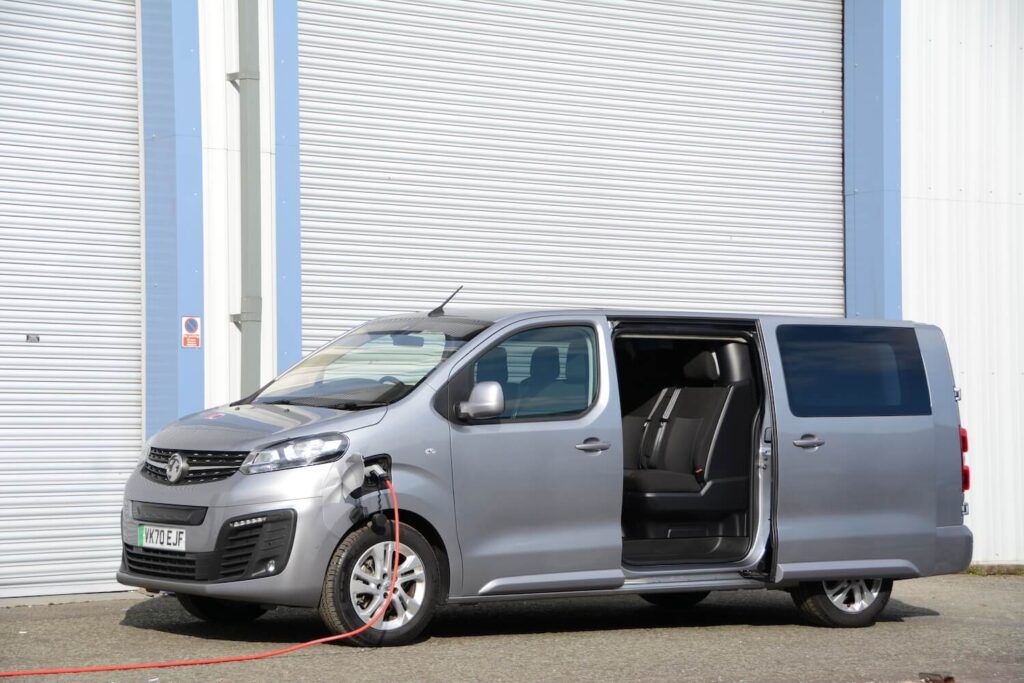
Image courtesy of Green Car Guide.