Chancellor of the Exchequer John Healey has outlined a suite of measures in the Autumn Budget for the transport and energy sectors.
Calling it a Budget for working people, Healey said it was “built on fiscal discipline” with “clear direction for the future”, which was “backing the innovation of British businesses” – highlighting net zero, AI, employment and devolution.
Healey highlighted how the Office for Budget Responsibility (OBR) said that war in the Middle East was a key driver impacting the economy today. “What we face today are global economic storms”, he said.
Healey said:
“Today, I meet the fiscal rules – the stability rule, that day to day spending must be covered by tax receipts, and the investment rule, that government debt, defined as public sector net financial liabilities, must be falling as a percentage of GDP. This year, for the first time, I must meet these rules in the third year of the forecast, and I do.”
He added that he hopes to “get UK energy costs down in line with Europe”, stating “we remain unshakeably committed to net zero by 2050. This will require deep reform of the energy system.
“For many years, under Conservative governments, policy costs were simply loaded onto household bills through levies. Today, I am putting an end to that. We’ll introduce a new cost control framework to drive down all aspects of energy bills.”
Clean power
In addition, Healey said he would back hydrogen projects directly from the UK Government, rather than through other means.
Also on clean power generation, he added that the UK Government will only buy and build new projects that can connect to the grid and lower bills, creating cheaper, fastest grid connections through GB Grid, and reduce the “complex web” – “but it won’t happen overnight”, he added.
Domestic electricity
There was also an extension of the 5% VAT cut into Spring and Summer 2027, and 25% of electricity bills for small and medium businesses, going live in April, and backdated for this year.
Healey also spoke on the gas standing charge abolition, which is scheduled for next year or later, also offers an incentive for moving to electricity.
Research foundation Nesta said that the abolition of the gas standing charge supported electrification by reducing the electricity-to-gas price ratio.
Healey said: “Gas standing charges are unfair and outdated so I am scrapping them to give millions of households a bit of breathing space.
Energy secretary Miatta Fahnbulleh, said: “By removing one of the nation’s bugbears – taking standing charges off gas bills, with extra support for those who need it – we’ll give millions of people breathing space.
Fuel duty and AI
He also added that the UK Government is extending the tax cut on fuel duty for another six months, and increasing the mileage rate from 25p to 35p per mile, and making permanent the increase in the standard rate.
Healey also said that the UK Government would be the “first customer” for those British businesses that generating wealth and innovation for the economy, changing the rules on procurement to reflect this ambition.
A new AI data centre plan was announced to ensure that it is used as “secure, safe and working for the British people”, with grid connections needed where they are “critical” and “where necessary, be allowed to build onsite generation while they wait.”
Healey said: “Local areas shouldn’t come cap in hand to build new trams in their areas”, and is introducing Good Growth Funds and incubator capital for areas without Mayors, with £1.5bn in devolved loans for mayoral authorities.
Devolution
He said the devolution of tax revenues would begin next year, with 100% of business rates being retained locally by the end of the decade.
From next year, 20% of business rates will got to Mayors, and from 2028, income tax receipts, and an overnight visitors levy.
These can be invested in local infrastructure, such as the Bakerloo line extension in London, he said. There was also a local apprenticeship fund announced.
Healey said:
“I’m announcing flexible funding to invest in local economies, boosted by a further £1.5bn of devolved loans for mayor authorities, funds that will back projects like the new Black Country metro extension led by the mayor of the West Midlands, or the urban regeneration in Gateshead.
“For the first time, I’m making the commitment that 100% of business rates will be retained locally by the end of the decade.
“So if local leaders help businesses to start and grow, more of the rates they pay will stay in that area. Fom next year 20% of business rates revenues will go to mayors and, from 2028, a share of income tax receipts will go to mayors as well.
“Also, from 2028, mayors and other strategic authorities will have new powers to introduce an overnight visitors levy. Taken together, these are long-term funding streams they can be used to back investment into big local infrastructure, so that more of the money that is raised locally can be invested and spent locally.”
Public charging
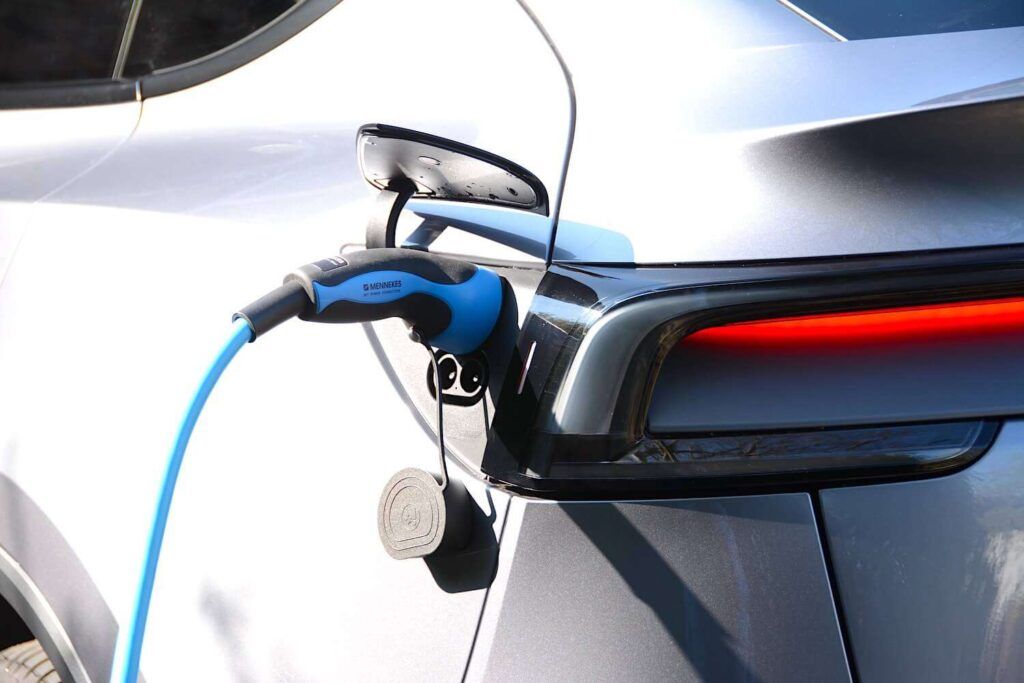
Notably absent was any announcement from Healey on a VAT cut for public EV charging to bring it closer to those who are able to charge at home with 0% VAT.
It follows the UK Government appealing a decision by the Tax Tribunal earlier this year that stated public electric vehicle (EV) charging should be set at the lower VAT rate of 5%. Community benefit society Charge My Street won its appeal on whether public electric vehicle (EV) charging should qualify for the reduced 5% VAT rate.
The ruling overturned HMRC’s initial decision requiring charge point operators to charge the full 20% VAT, a rate widely criticised as a barrier to equitable EV adoption – and the foundation stone of the long-running campaign, FairCharge.
On the retention of the 20% VAT rate on EV public charging, Edmund King of The AA said:
“The Chancellor has missed the chance to help accelerate the transition to electric cars by retaining the 20% VAT rate on public charging. Around two fifths of households do not have any form of dedicated off-street parking, and retaining the difference in VAT rates only widens the Pavement Tax.
“Even more so considering that VAT on domestic energy is temporarily held at 0% to 1 July 2027 which is welcome and reduces the cost of home charging.”
Thom Groot, CEO of The Electric Car Scheme, said:
“This budget was very disappointing for working families looking to make greener choices, and the direct impact this has on the clean energy transition.
“Whilst it was positive to see the VAT cut on household electricity extended to July 2027, it was frustrating to be left in the dark and to not get clarity on the continuation of the EV salary sacrifice scheme until at least 2032, which consumers expected. Salary sacrifice is one of the most effective tools the Government has, and it should be protected and extended.
“Households are facing ever-increasing energy costs and other cost-of-living increases, and they are being asked to make significant decisions about their home, or car, often committing to four or five-year leases with uncertainty about the costs in years four and five.
“We are asking the government to urgently provide reassurance for consumers entering into EV salary sacrifice agreements now. The Electric Car Scheme remains committed to working with the government to push new initiatives forward, so that families can benefit from cleaner, cheaper energy through their employer or themselves.”
Mike Vousden, EV Expert at nearly new and used car retailer Motorpoint, said:
“Access to home-charging facilities is still a major barrier for many motorists looking to switch to an EV. Owners who rely on public charging face costs similar to or even higherthan filling up at the pump. That basically removes the most compelling financial and convenience benefit of owning an electric car.
“Cutting the VAT rate for public chargers would have benefitted existing EV owners and given motorists more confidence to swap to an EV.”
Responding to the Budget and publication of the review document, Shane Brennan, chief executive, ChargeUK said:
“Today’s announcements on the cost of EV charging will do serious damage to the EV transition.
“Instead of listening to the call of EV drivers for fairness on VAT the government has slammed the door shut on ending a rank unfairness between at home and out of home charging. An unfairness that even the courts ruled to be illegal earlier this year.
“Meanwhile its cost of public charging review recommendations do not meet the moment – too little, too complex and too slow to make a meaningful difference.
“The industry asked for simple measures to address the foundational cost issues for public charging – VAT, soaring operator standing charges, and renewable fuel credits. The review recommends action on the latter point but overall amounts to warm words and an open ended taskforce not meaningful action.
“Taken alongside extended fuel duty cuts and the potential weakening of EV targets, it paints a picture of a government which is unserious about helping millions of drivers save by switching to electric.
“Hard work will now be required to rebuild trust and confidence across the EV charging sector. We will work urgently to understand how government intends to keep the zero emission transport transition on track.”
Image courtesy of Shutterstock