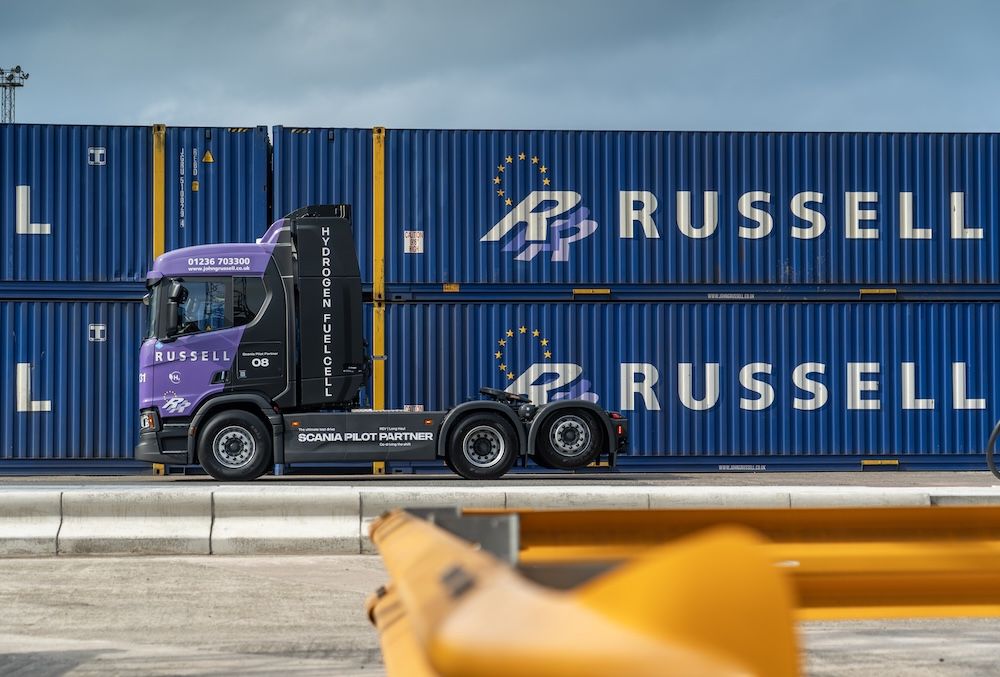
Scottish transport and logistics operator, John G Russell (Transport) in collaboration with Scania is putting hydrogen fuel-cell electric vehicles (FCEV) into daily operations on UK roads.
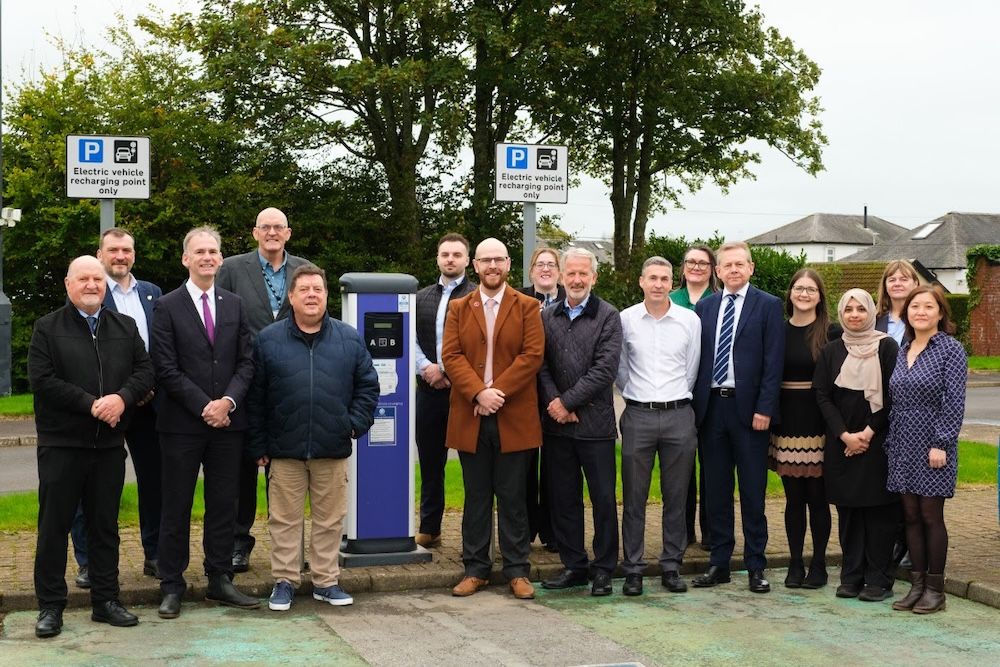
This announcement comes as the Glasgow-based firm officially took ownership of three prototype FCEV vehicles at Scania’s flagship service branch in Scotland – Eurocentral.
The vehicles form part of the ZENFreight project, part of the Zero Emission HGVs & Infrastructure Demonstrator programme (ZEHID), funded by the Department for Transport and delivered in partnership by Innovate UK.
The three Scania fuel-cell vehicles have been developed by Scania’s Pilot Partner division in Sweden. They will form part of a prototype fleet of 16 trucks in Europe conducting real-world field testing with customers to test the viability and use cases for hydrogen-powered vehicles.
The ambition is to learn as much about these vehicles in different operational use cases, climates, topographies and cultures. Based on Scania’s latest 6×2 4 battery electric truck platform, each is fitted with a 400kW electric machine and installed battery capacity of 416kWh, giving the truck a predicted range of up to 300km in electric-only mode – at a GVW of 44 tonnes.
Added to these vehicles is a 300kW Cummins fuel cell engine, situated under the cab. At the rear of the vehicle are storage tanks capable of storing up to 56kg of hydrogen pumped in at a pressure of 700 bar. A cooling fan system regulates the coolant’s temperature. With the support of the fuel-cell technology, this extends to a total estimated range of up to 850km.
The system works as a hybrid powertrain, with John G Russell able to use power from the electric motor or the fuel cell engine exclusively, in parallel together, or using the fuel-cell motor as a range extender for the batteries.
Stephen Madden, Group Fleet Engineer at John G Russell, said:
“We are committed to delivering sustainable logistics through innovation and the use of cutting-edge technology to reduce environmental impact.
“As a key part of our customers’ supply chains, we have always taken this responsibility seriously, from our early adoption of intermodal operations in the 1970s to our current involvement in UK-wide decarbonisation trials.
“We identified early on that hydrogen could play a critical role in delivering a true carbon zero solution for non-urban logistics. In response, we built partnerships with organisations and experts who could help bring Hydrogen Fuel Cell Electric Vehicles to the UK, alongside investing in the infrastructure needed to support them.
“The ZEHID demonstration project marks a significant step forward. It enables us to invest in and trial both hydrogen and battery electric vehicles, along with refuelling solutions, in real- world heavy-duty operations.
“This is an exciting opportunity to build confidence in zero-emission freight. By operating three of Scania’s prototype FCEVs in the UK, we are proud to be at the forefront of a pioneering initiative that will help accelerate the transition to cleaner, greener logistics.”
Dr Isabella Panovic, Programme Manager – Zero Emission Road Freight, Innovate UK, said:
“John G Russell and Scania’s UK-first deployment of hydrogen fuel cell HGVs is an important step for the ZEHID programme and demonstrating the real-world operation of zero-emission freight technologies.
“The insights gained from these vehicles will be invaluable in helping industry and government understand where hydrogen can play a role alongside battery electric solutions in delivering a net zero freight future. Innovate UK are delighted to see John G Russell and Scania leading the way with this UK-first deployment.”
Mark Bridgland, Sales Director for Scania UK, said:
“We’re delighted to be working with John G Russell and helping them on their decarbonisation journey.
“At Scania, innovation is at the heart of everything we do, and it’s great to work closely with a customer who has the same entrepreneurial spirit and desire as we do to make a positive impact on society and the environment.
“For a collaboration of this nature to be successful, it is vital that we work together to overcome any barriers and hurdles together. While also sharing all the intelligence we gain on how these vehicles perform – from an engineering and an operational perspective too.
“Seeing how our Pilot Partner prototype FCEV trucks perform day-to-day on the UK roads with John G Russell will be fascinating. It will be interesting to see what insight, learnings and data we get at the end of the trial. It will be invaluable.”
Tony Sandberg, Head of Pilot Partner at Scania, said:
“We are so happy to be part of this project alongside the ZENFreight consortium and pioneering customer John G Russell.
“John G Russell’s commitment to innovation and sustainability demonstrates what is possible when an ambitious transport operator works closely with its partners.
“Together we will learn more about how hydrogen fuel cell technology works in the real-world, and the benefits it could create. By learning together through real world operations, we can help move the transport industry towards a more sustainable, resilient and secure future.”
Image courtesy of Scania