A single electric heavy goods vehicle could cut around 1,000 tonnes of carbon emissions by 2034 compared to a diesel equivalent, according to new research.
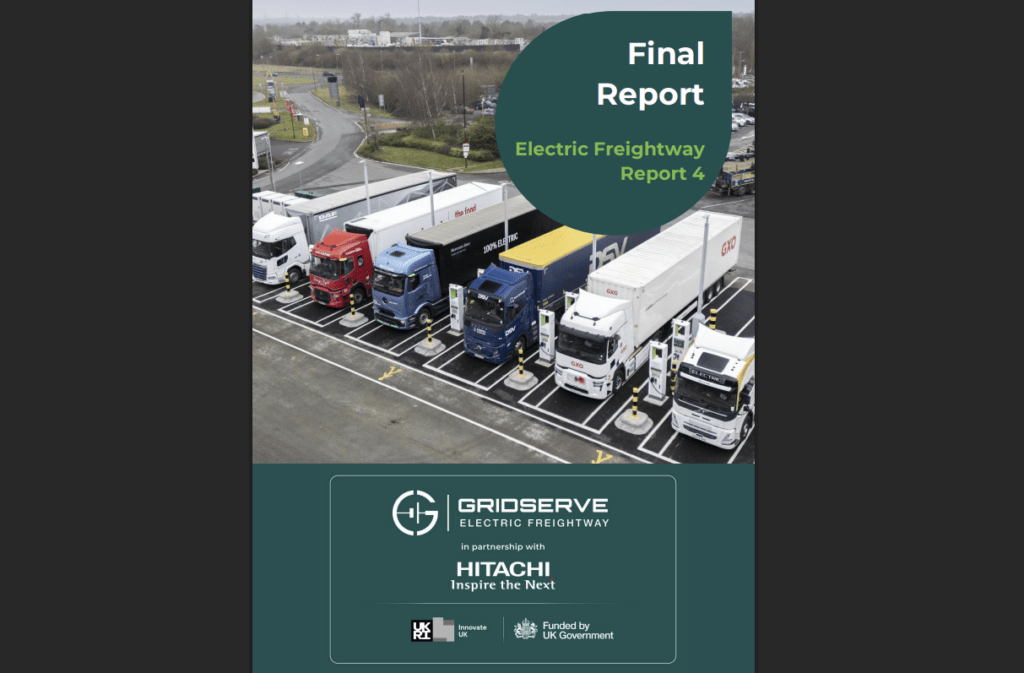
The findings in Hitachi ZeroCarbon and Gridserve’s fourth report from the Electric Freightway project, highlights the role electric trucks can play in decarbonising road freight, drawing on insights gathered from real-world operations across the UK.
The Electric Freightway project is part of the Zero Emission HGV and Infrastructure Demonstrator (ZEHID) programme, funded by the Department for Transport and delivered in partnership with Innovate UK.
The project brings together more than 30 industry partners, led by Gridserve, to accelerate the adoption of electric HGVs and the development of supporting charging infrastructure.
The fourth report highlights the progress made during the programme, with eHGVs now deployed across 25 hauliers and operating on real-world logistics routes across the UK. Participating fleets have collectively tracked over two million zero-emission kilometres, generating valuable insights into how electric trucks perform in day-to-day freight operations.
It also explores the evolving business case for electric freight, showing that eHGVs can achieve cost parity – and potentially cost savings – in certain operating conditions, particularly where fleets operate high annual mileage and optimise charging between depot and en-route infrastructure.
Alongside these operational insights, the report also highlights growing driver confidence, with many reporting positive feedback on vehicle performance and drivability once they gain hands-on experience with electric trucks.
The Electric Freightway project will focus on collecting long-term operational data, refining charging strategies and continuing to support the transition to zero-emission freight transport, it said.
Insights from the project will help fleet operators, policymakers and industry stakeholders better understand how to scale eHGV adoption across the UK and build the right infrastructure to help transport and logistics achieve sustainable objectives.
The news comes as the Transport + Energy Fleet Electrification Forum is due to take place on 8 July at Warwick Conferences, including a special session on logistics.
Nick Day, Director of Distribution, UK at ADM Milling said:
“As a business, we are constantly seeking more sustainable solutions to service our customers’ needs and have been exploring ways to improve energy efficiency and reduce GHG emissions in our manufacturing processes for many years now.
“Using electric trucks was the natural next step in this process and so we started engaging with a third-party haulier to introduce electric trucks and charging solutions into our fleet and then expanded this capability through the ZEHID scheme.
“While we still have more work to do to fully embed eHGVs within our operation, we are encouraged by the progress we’ve made so far and the ZEHID project has been a great opportunity for us to gain hands-on experience operating them.”
Leon Clarke, Head of Operations and Delivery at Hitachi ZeroCarbon said:
“Electric Freightway demonstrates what can be achieved when industry partners come together with a shared ambition to decarbonise road freight.
“The collaboration between hauliers, infrastructure providers and technology specialists has been key to getting electric trucks on the road and generating real-world insights that will help the industry achieve its long-term net zero goals.”
Mike Biddle, Executive Director Net Zero at Innovate UK said:
“Electric Freightway, led by Gridserve in collaboration with principal partner Hitachi ZeroCarbon, has been instrumental in supporting the early efforts towards UK road freight decarbonisation, facilitated through the UK government’s Zero Emission HGV & Infrastructure Demonstrator (ZEHID) programme, delivered in partnership with Innovate UK.
“This report reflects on the project’s extensive findings as it moves beyond the earlier deployment efforts into large scale data collection in real world operations for the next five years.”
Image of report courtesy of Gridserve/HitachiZeroCarbon