The AA UK EV Readiness Index has reached 60 out of 100 for the first time with Chinese competition impacting the overall battery-electric vehicle (BEV) market.
The Q3 2026 Index increased from 58.8 in Q2 to 60, marking the fourth consecutive improvement. But the AA also said the score demonstrates that “significant barriers remain” before BEVs are accessible and affordable for all drivers.
The Index tracks eight key factors affecting drivers’ ability and willingness to switch to an EV, including purchase price, charging, running costs, insurance and maintenance.
The latest Index showed Chinese brands captured 15.8% of UK new vehicle sales in August 2026, almost three times their 5.5% share a year earlier. Its research though, based on 10,594 responses from AA members, suggests drivers remain cautious about Chinese-made cars but that attitudes could be changing.
More than a quarter of drivers would consider buying a Chinese-made car, while 42% would not, including 16% who say they would “never” buy one. Yet four in ten (40%) 18–24-year-olds would consider buying a Chinese car, compared with 22% of 65–74-year-olds.
Data security is a particular concern, with just 3% believe data captured by a vehicle would be handled better and more safely by a Chinese manufacturer than an established brand.
While a quarter of drivers believe established brands offer better quality than Chinese manufacturers, 66% are unsure. Similarly, 77% do not have a view on whether Chinese cars are safer.
Disrupted energy markets continued to affect the Index during Q3, as petrol increased to 161.5p per litre, compared with 159.6p at the end of May and 132.5p in February. For drivers able to charge at home, electricity remained 66% cheaper per mile than petrol. Ultra-rapid public charging remained around 15% more expensive per mile than petrol though.
New EVs were on average 25% more expensive than comparable petrol cars, improving slightly from 26% in Q2. In the used market the gap has almost disappeared, with used EVs averaging just 1% more than petrol equivalents, down from 3%.
EVs also continued to perform strongly when breakdowns occurred. 88.1% of EV callouts were fixed at the roadside by AA patrols, compared with 83.5% for petrol vehicles.
Edmund King OBE, AA president, said:
“The EV Readiness Index reaching 60 is another significant milestone. It shows that the conditions for going electric are steadily improving, but a score of 60 also tells us that we aren’t there yet.
“The AA supports the transition to zero-emission vehicles, but targets need to be realistic, achievable and supported by consumer demand. Whether the 2030 mandate remains at 80% for cars and 70% for vans or is adjusted, drivers and manufacturers need certainty and a clear direction of travel.
“Ultimately, the transition will work when consumers want and are able to make the switch. That means affordable cars, reliable and convenient charging and incentives which give drivers confidence rather than confusion.”
Dean Keeling, AA Managing Director Roadside Services, said:
“China has demonstrated that the transition to electric vehicles can happen at extraordinary pace when government, manufacturers, infrastructure and consumers move in the same direction.
“Having visited Auto China and manufacturing facilities in Beijing, the pace, scale and coordination of the Chinese automotive industry is both exciting and scary, depending on where you sit in the industry.
“Chinese manufacturers are bringing increasingly sophisticated, competitively priced vehicles to market at a speed that should make the established automotive industry sit up and take notice.
“The lesson for the UK isn’t simply to impose tougher sales targets. It is to create the conditions that make consumers want, and are able, to buy electric vehicles.
“The arrival of new manufacturers also changes the traditional automotive model. EVs generally require less conventional servicing and more work can increasingly be carried out by mobile technicians. Nationwide organisations such as the AA, with EV-trained patrols and mobile mechanics, can help provide the roadside, maintenance and aftersales infrastructure these new entrants and their customers will need.”
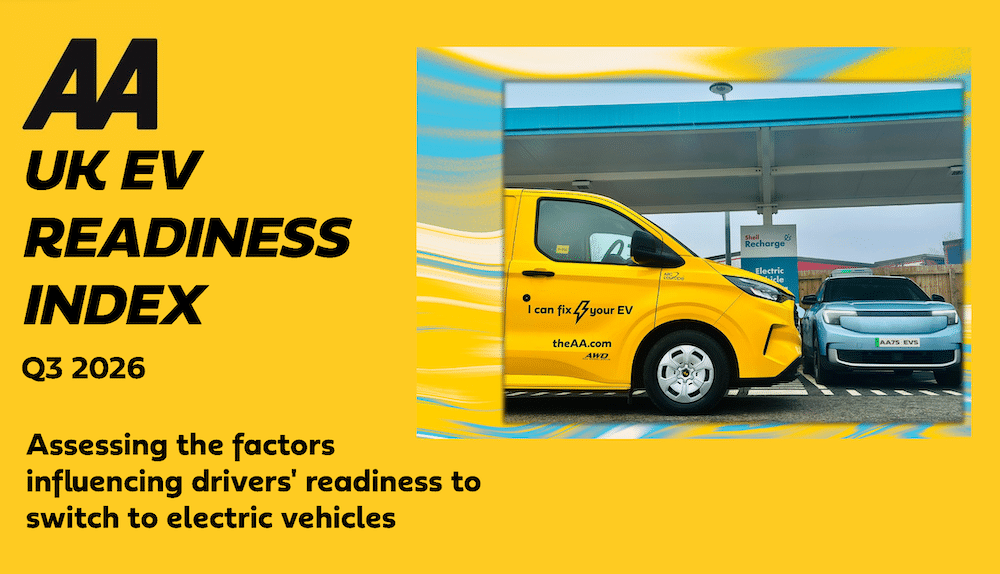
Image of report courtesy of The AA