

Believ CEO Guy Bartlett explains how ensuring the right site selection for electric vehicle (EV) charge points is vital to serve the needs of the local community.
The UK’s transition to electric vehicles (EVs) is accelerating. There are now more than 1.8 million EVs on UK roads, around one in five new car sales are electric, and the public charging network continues to expand at pace – reaching more than 88,000 devices across approximately 45,000 locations. But with a government-set ambition to reach 300,000 charge points by 2030, we cannot afford to lose momentum, and progress must continue at speed.
A significant part of the responsibility for the rollout lies with local authorities, who must plan, procure and deploy charging where people live, work and travel. Believ’s latest Local Authority Insight Report, based on responses from 101 local authorities across England, Wales and Scotland, shows councils are moving forward, but they’re doing so while facing a
familiar cluster of barriers: budgets; funding access; logistics; grid constraints; siting complexity; and resident reticence.
The good news is that the market is maturing and many councils are becoming more confident in how to navigate delivery. Three quarters of local authorities now have formalised EV rollout plans (up from two-thirds in our last report), and around three quarters have issued or are about to issue tenders through schemes including the delayed-but-now-delivering Local Electrical Vehicle Infrastructure (LEVI) fund. The research shows that only 12% of authorities don’t expect to complete their rollout by 2030.
The challenge is converting plans and tenders into installations on the ground – quickly, equitably and in a way that communities support.
The barriers
When asked what most stalls rollout, councils are clear. The most-cited major barrier is pressure on council budgets (75%), followed by slow or constrained access to central government funding (63%). Beyond funding, practical delivery challenges remain significant: 42% cite logistical and delivery constraints (including grid capacity and site limitations), while procurement complexity, lack of siting guidance and regulatory constraints still create challenges for some. Resident reticence – often amplified by soncerns about parking loss, otreet clutter or perceived unfairness – also remains a factor.
Of the 42% of local authorities who say logistical difficulties are a significant barrier to EV charging rollouts, 71% report issues with existing distribution network infrastructure, and 29% experience new grid connection delays of at least six months. The reality is, even when a site looks viable on a map, delivery can be slowed by the real-world complexity of power availability, permissions, traffic management, and local politics.
That’s why the Transport + Energy webinar – Practicalities of EV charge point site selection – brings together Suffolk County Council, Believ and Zapmap to focus on what works at the point where strategy meets the street.
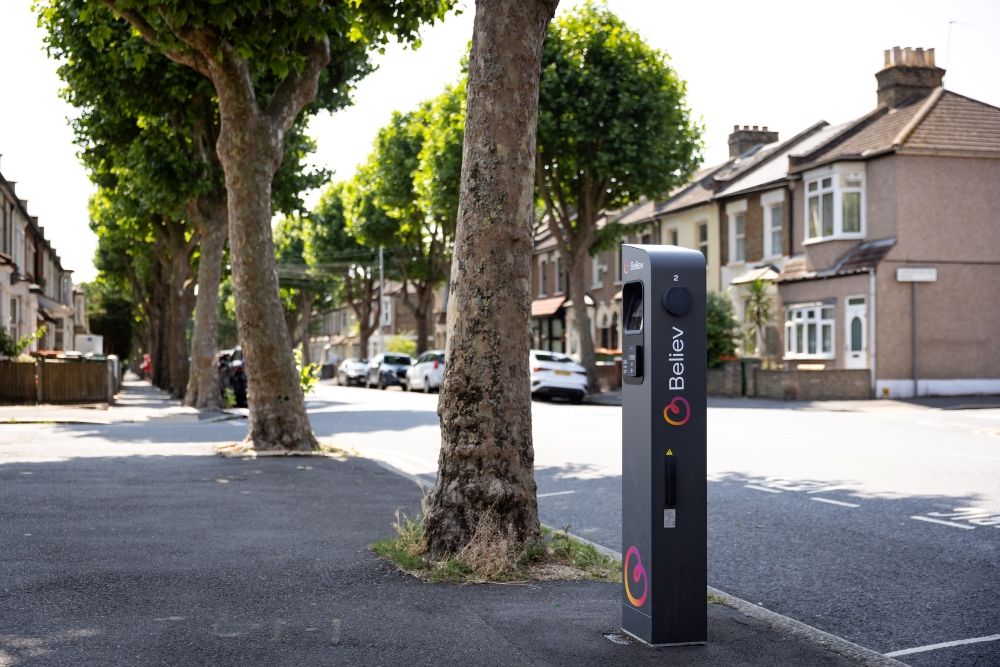
A phased rollout approach
For many councils, the most effective way to progress rollouts is a phased approach. Rather than trying to ‘do everything everywhere’, and hitting grid, procurement and engagement bottlenecks all at once, phasing allows local authorities to compartmentalise the work and build momentum.
While phase one often focuses on sites that are straightforward to deliver, it is not about avoiding harder areas. It’s about building a repeatable delivery model, strengthening internal processes, and gathering utilisation and operational data that can improve decisions in later phases. It also helps councils demonstrate early wins – vital for maintaining political and public confidence as the programme scales.
Suffolk County Council was the first to sign a LEVI contract, engaging Believ to install up to 6,000 charge points. It is proving an example of how a council can engage in an ambitious programme by utilising a mixture of government and private funding, and rollout out in stages through planned sequencing. For context Believ’s £16 million capital expenditure
funding for Suffolk is a little over three times that utilised from government funding, showing how private industry can alleviate budgeting pressures.
More detail on what phasing and funding support look like from both the CPO and local authority perspective will be discussed on the webinar.
Community buy-in
Even the most technically ‘perfect’ site can attract opposition if people feel decisions are happening to them rather than with them. Resident reticence may be cited by a smaller proportion than budget or grid issues, but it can still derail individual locations and slow programmes through objections, complaints or political escalation.
The councils that perform best treat engagement as an enabling workstream, not a final tick-box exercise. Working with Suffolk has showcased some great examples of best practice, making engagement more approachable – and even fun. Resident engagement is not just about obtaining buy in for the individual charge point installation, but an opportunity to promote the benefits of EVs more generally.
Another important consideration is how the engagement is framed. Sometimes the engagement is presented as ‘consultation’, where there is an expectation of changes, versus explaining what will happen, why, and inviting questions and mitigations. Both approaches can be appropriate depending on context, and this is an area we will discuss in more depth and invite questions in the upcoming webinar.
Practical deployment
Finally, delivery depends on easing bottlenecks early – especially around power, permissions and operational design. Early engagement with Distribution Network Operators (DNOs) is essential and the most effective programmes also leverage the strengths of each partner: the local authority’s knowledge of the area and their residents – traffic movement, parking behaviour, planned works, community sensitivities – combined with the charge point operator’s rollout experience, data and operational insight. Geographical mapping data is a vital tool in helping local authorities understand the overall EV charging need and can help answer questions like: should a location be rapid charging, fast, or on-street residential? Is a town centre site serving destination dwell time, or encouraging unnecessary car trips?
It’s also important to look beyond residential streets. Car parks may play a role, but suitability depends on factors such as whether they’re underground, access to power, operational maintenance, safety and usage patterns. Meanwhile, Traffic Regulation Orders (TROs) and Traffic Management Orders (TMOs) are another important area to be discussed as they can be a critical (and sensitive) lever, balancing the benefits of preventing ICE vehicles from blocking EV bays, against the risk of removing general parking where it’s still needed.
Join the webinar
These themes of phased rollouts, community buy-in and practical deployment will be explored in depth in Transport + Energy’s masterclass webinar, featuring Suffolk County Council, Believ and Zapmap.
Watch the webinar live, or catch the recording, to take away actionable steps you can apply to your own local EV charging strategy.