The UK is likely to miss its legal climate targets if the UK Government reduces the Zero-Emission Vehicle (ZEV) Mandate, the Climate Change Committee (CCC) has warned.
The Chair of the UK’s independent climate adviser, Nigel Topping, has written to the Transport Secretary Heidi Alexander, setting out the Committee’s position on the UK Government’s current review of the ZEV Mandate, alongside new evidence.
The CCC’s analysis highlights the economic and energy security costs of weakening the policy. It points to the UK Government’s impact assessment which implies that cutting the headline ZEV targets would increase UK fuel consumption by 15 million barrels of oil a year by 2030.
Data reveals this is oil that the UK would need to buy on international markets at a cost of over £1 billion a year, at current prices.
By reducing reliance on oil, the transition to EVs can help shield households from future energy price spikes. A typical household can save around £800 a year by switching to an EV.
Emissions reduction
EVs also deliver the largest share of emissions reductions in the Government’s Carbon Budget and Growth Delivery Plan through to 2037, and represent the most cost-effective way of delivering the necessary emissions cuts in this period, it added.
Weakening the mandate would make it harder and more expensive to achieve the Sixth Carbon Budget (2033 to 2037) as a result.
The mandate also underpins the separate carbon budgets set by the Scottish and Welsh Governments and the Northern Ireland Executive. Any review of the policy “must also consider the impact that changes would have on their ability to meet their targets”, it said.
Nigel Topping CMG, Chair of the Climate Change Committee, said:
“Weakening the Zero-Emission Vehicle Mandate would miss an opportunity to reduce the cost of living for people, undermine Britain’s competitiveness, and leave us more exposed to volatile fossil fuel prices. People are buying electric vehicles in record numbers because they are cheaper to own than the alternative. The mandate gives those up and down the supply chain the certainty they need to invest, supports thousands of jobs, and keeps the UK on track to meet its climate commitments.
“Countries around the world are racing to get the economic benefits of the EV transition. Far from being out in front on that transition, the UK currently ranks 22nd in the world for EV sales, behind countries that are our key competition for making cars, such as France and Germany. The market has already evolved, and the UK should be accelerating to keep up, not putting the brakes on. British drivers deserve better than a backtrack on such critical policy.”
Local impact
The local authority group UK100 also highlighted that independent modelling for the Clean Air Fund shows cutting the 2030 target from 80% to 60% would increase toxic emissions by almost 9% and add £561 million in health costs, falling hardest on communities next to busy roads.
Christopher Hammond, Chief Executive of UK100, said:
“Councils are installing the public chargepoints and running the clean air schemes that make the switch to electric work on the ground. Weakening the mandate now would leave families paying more for fuel and breathing dirtier air.”
“Businesses ask governments for clarity and certainty, in return, they invest billions, create jobs and strengthen growth. Tinkering with targets and slamming the brakes on a policy that’s working makes no sense. Sales are ahead of what the mandate requires, and drivers are already saving money. Most cars built in Britain are exported, and the biggest markets are going electric. France and Germany remain ahead in electric vehicle sales.
“The rules were already loosened less than a year ago. Weakening them again rewards the laggards and lets down the manufacturers and councils who’ve been leading the switch.
“The rules were already loosened less than a year ago. Weakening them again rewards the laggards and lets down the manufacturers and councils who’ve been leading the switch.
Izzy Romilly, Head of Transport at the Energy and Climate Intelligence Unit said:
“It’s rare that the Climate Change Committee makes this kind of intervention, which underscores the magnitude of the decision Government is poised to make. The Prime Minister pledged to lead a “cost of living government”, yet some departments seem to be trying to hit the brakes on the switch to EVs, despite it saving families hundreds of pounds a year. With diesel recently reaching £2 a litre, it’s no wonder there’s been a surge of not only new EV sales, but second-hand EVs too, where cars bought under the ZEV mandate are now starting to be sold on in their thousands.
“After the UK’s hottest-ever year and the worst harvest on record, and following cuts at the Budget to insulation and heat pump schemes, this is a critical test for the Burnham government’s credibility on climate and the cost of living. These EV targets are the single most important policy we have for cutting UK emissions. If Ministers want to deliver on their pledge of getting UK families ‘off the fossil fuel rollercoaster’, it’s hard to see a policy more important than this, which supports consumers in shifting away from petrol and diesel vehicles for good.”
Shane Brennan, Chief Executive of ChargeUK, commented:
“The CCC has said what the charging industry, drivers and EV sales figures have been telling government repeatedly: the ZEV mandate is working. Every month more drivers find that going electric is one of the biggest cost-of-living savings they can make.
“Weakening the mandate now would be a complete own goal. Charging companies are building ahead of the demand trajectory set by the mandate. Cut the targets and you put £1.7bn of charging investment at risk, along with the jobs and supply chains that come with it. You get fewer chargers, a slower more regionally selective rollout and higher prices at the plug.
“The CCC is right that government should instead progress with policy to reduce the cost of public charging. The Budget made a start, but it was too limited, too slow and too narrow. Government should equalise VAT, commit to a renewable fuel credit scheme and direct Ofgem to fix network charges now.
“This would produce a meaningful reduction in public charging prices whilst spurring infrastructure investment, unleashing more EV demand and making the electric transition fairer.”
Ben Nelmes, CEO of New AutoMotive said:
“The Climate Change Committee is right: the ZEV mandate is working, and the numbers prove it. Electric cars took 32% of the market in October, well ahead of the 25% manufacturers actually need to hit this year once flexibilities are counted. Watering down the targets now would mean burning up to 15 million more barrels of imported oil a year by 2030 and denying families savings of around £800 a year, in the middle of the second fuel price shock in five years. Ministers should hold their nerve, keep the targets, and close the plug-in hybrid loophole, so the billions already invested in British batteries and charging get the certainty they were promised.”
Matt Galvin, Managing Director, Polestar UK said:
“The climate crisis is accelerating and the case for electric cars is overwhelming: they cut carbon emissions, improve air quality, and make our streets quieter. Transport is the UK’s largest source of greenhouse gas emissions, accounting for around 30% of the total. Most of these emissions come from road transport, with exhaust fumes particularly harmful because they are released in our towns and cities, where people live, work and study.
“The ZEV mandate is fundamental to this transition. It is driving investment and innovation, accelerating the industry’s shift away from petrol and diesel. We are approaching a historic tipping point, as more drivers discover the benefits of electric motoring, including running costs as low as 3p per mile.
“There is room to debate the pace of the transition, but there must be no retreat from the destination. Moving the goalposts dramatically at this stage would undermine investor confidence, penalise manufacturers that have committed to electrification and leave British drivers with fewer models, less choice, and potentially higher prices. The industry needs long-term certainty to invest, innovate and compete. My message to ministers is simple: progress, not postponement.”
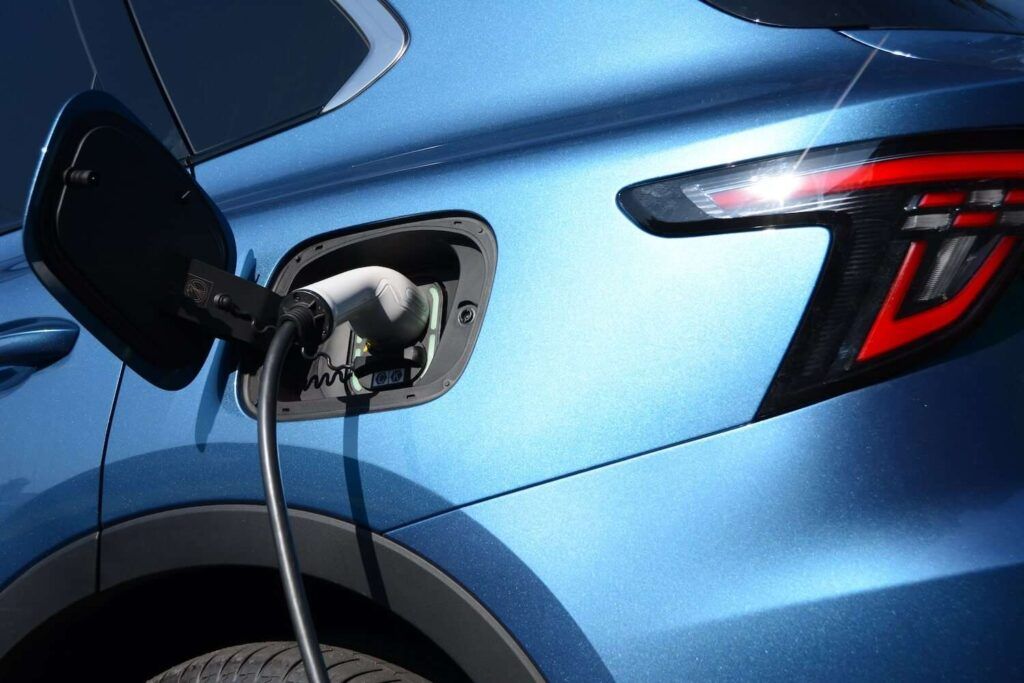
Image courtesy of Green Car Guide