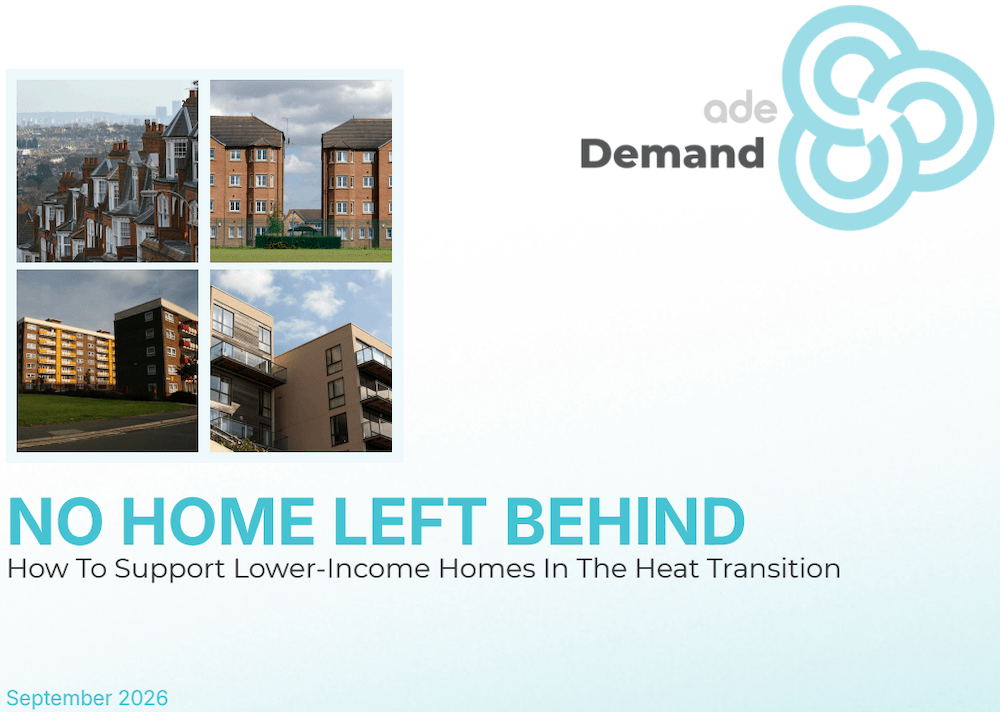
Households on lower incomes could pay nearly five times as much to switch to clean heating as wealthier families, according to a report from ADE: Demand.
The No Home Left Behind study by the UK non-profit trade body for energy demand and heat batteries found, for a typical smaller home, a heat pump costs £9,300 to install, while a heat battery – sometimes the only practical option for flats and terraced houses – costs £10,200.
But after Government grants, a household pays just £1,800 for the heat pump, compared with £7,700 for the heat battery. Subsidies inflate a modest cost gap into a £5,900 divide – and it is the least well-off who “fall on the wrong side”, it said.
More than half of the lowest-income households live in flats or smaller homes where heat pumps are often difficult to install. For the highest earners, that proportion drops to under one in five.
For a family in the second-lowest income bracket, a £7,700 contribution would swallow nearly 45% of their annual income after housing costs. For the same household, the heat pump contribution would represent just over 10%. Renters are doubly exposed – almost two-thirds of social renters and 60% of private renters live in these homes, yet they have little say over which technology is installed.
Heat batteries are a clean answer, they store electricity as heat, work with existing radiators, need no outside unit and can charge when power is cheaper – helping to lower bills. But they are being undercut by a policy that favours heat pumps, even where heat pumps are not the best choice, the trade body added.
ADE: Demand is calling on Ministers to equalise the grant for heat batteries at £7,500, extend the same VAT relief given to heat pumps and properly model the cost of decarbonising flats and leasehold homes.
Sarah Honan, Head of ADE: Demand said:
“It cannot be right that households already struggling to make ends meet are asked to pay five times more for clean heat because their home is less suited to the technology that gets the most Government support.
“Technical feasibility is only the first step; public policy must support households to install the heating solution that fits their home.”
Image of report courtesy of ADE: Demand