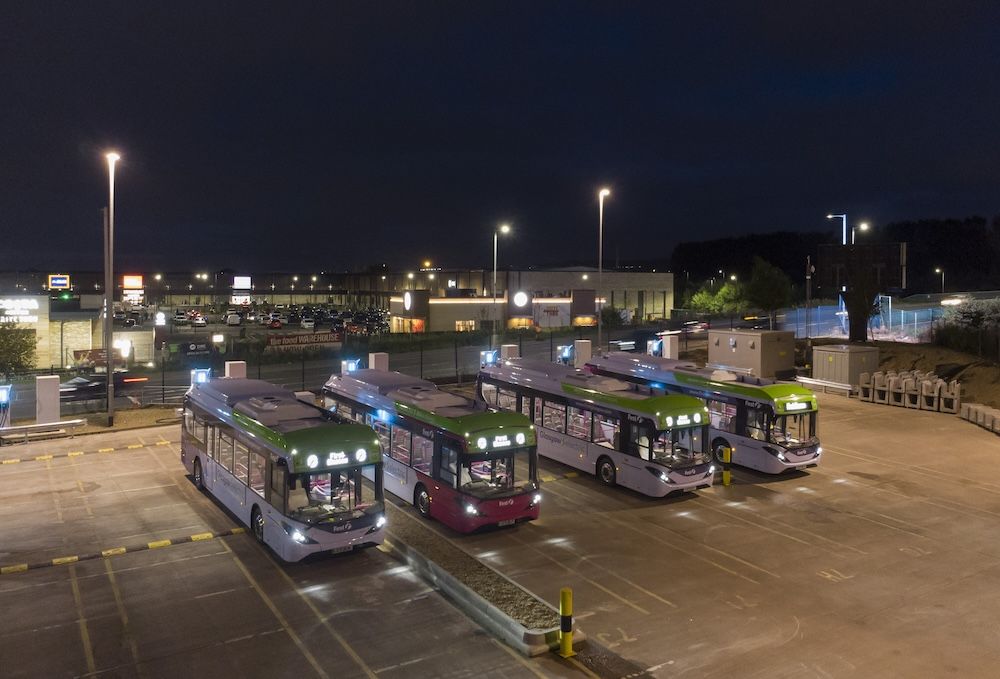
First Bus trialling the use of its electric bus depots to help balance the UK’s electricity system by adjusting when vehicles charge, reducing wasted renewable energy.
The trial began at the First Bus depot in Glasgow, and will also extend to the Great Yarmouth depot in Norfolk later in the spring.
It is one of the first times that a UK bus operator has enrolled electric depots into the National Grid balancing mechanism, which balances electricity supply and demand shortly before electricity delivery.
By flexing when buses are charged, the depots can increase demand at times when there is excess renewable energy on the system, particularly wind power in Scotland, and reduce demand during peak periods.
This helps reduce the need to curtail renewable generation and supports a more efficient, flexible energy network, the firm said.
Scotland generates significant volumes of wind energy, but limitations in grid capacity mean some of this power cannot be transmitted to where demand is highest, it added.
As a result, renewable energy is sometimes curtailed, but by increasing demand at key times, electric bus depots can help absorb this excess energy.
The trial is being delivered in partnership with Optimo Energy, whose platform enables operators to optimise charging in response to real-time grid signals, while ensuring vehicles remain ready for service.
Isabel McAllister, Chief Sustainability Officer for First Bus, said:
“Electric buses are already transforming public transport, but this trial shows that they have the ability to go even further: playing an active role in the UK’s energy system.
“We’ve built significant electric capacity across our depots, and the next step is using it more intelligently. By charging when the grid needs us to, we can help reduce wasted renewable energy, support system stability and improve the overall economics of electrification.”
First Bus has also opened up its depot-based charging infrastructure to third-parties via its First Charge offering, which it announced last year at the Transport + Energy Fleet Electrification Forum.
Daniel Homoki-Farkas, CEO & co-founder of Optimo, said:
“Electric fleets like First Bus’s represent a significant opportunity to support the UK’s transition to a more flexible energy system.
“By intelligently managing when vehicles charge, operators can respond to real-time grid needs, helping to reduce renewable energy curtailment, lower system costs and unlock new value from existing infrastructure.
“This trial is an important step in demonstrating how transport and energy can work more closely together.”
The news comes ahead of this year’s Fleet Electrification Forum, due to take place on 8 July at Warwick Conferences. Find out more here.