BEVs accounted for around a quarter of all new car registrations in February with more than a third of new cars having a plug when PHEVs are included.
While BEV registrations were broadly stable compared with February 2025, petrol and diesel registrations continued to decline, falling 8% and 11% respectively, according to data from New Automotive.
Separate figures from the Society of Motor Manufacturers and Traders (SMMT) showed BEV uptake rose 2.8% to 21,840 units, representing 24.2% of the market.
The pattern reflects the continued structural shift away from internal combustion vehicles even as the overall car market grows modestly, New Automotive added.
Growth in hybrid and PHEV registrations has reduced the effective ZEV target for manufacturers, pushing the estimated real-world requirement for BEV sales down to around 19.4% this year.
As a result, the market is currently tracking above the adjusted target, with year-to-date BEV sales already exceeding the level required for compliance. However, the increased reliance on hybrids and PHEVs highlights how ZEV mandate flexibilities can alter the pace of full electrification even as the transition continues overall, New Automotive said.
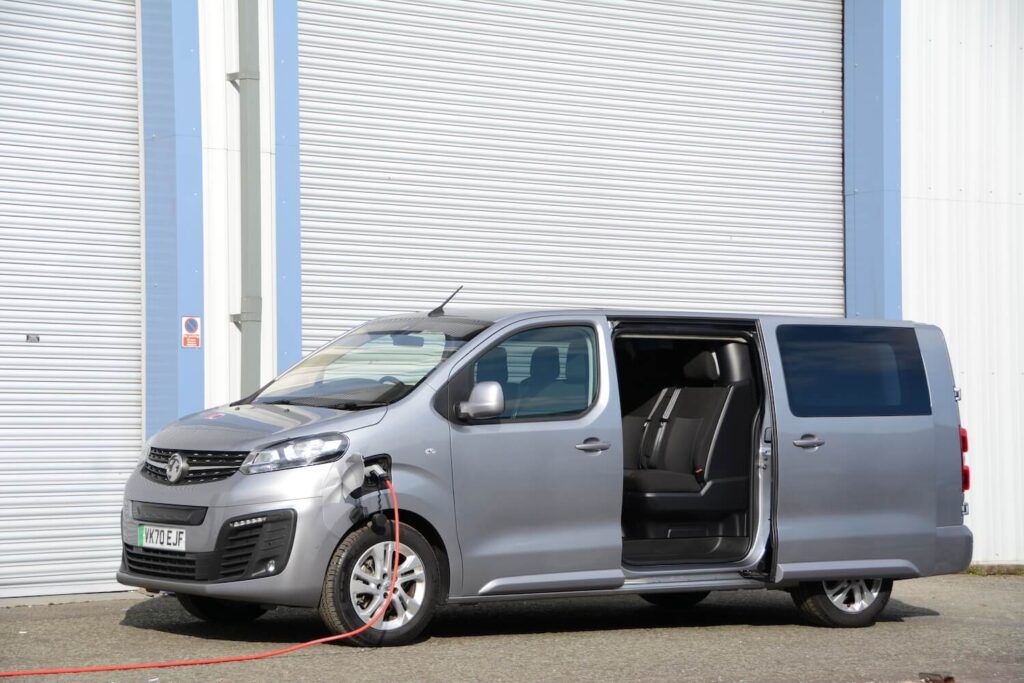
The electric van market also strengthened in February, reaching a record monthly market share of around 13.8% for battery electric vans. Growth in the segment was driven entirely by plug-in vehicles, with both BEVs and PHEVs rising while registrations for all other fuel types declined.
Ben Nelmes, CEO at New AutoMotive, said:
“It is fantastic to see one in four motorists opting for an electric car in February. This great progress is consolidating UK leadership in electrified transport. As we enter yet another fossil fuel price crisis, every electric vehicle is yet another step on the road to energy independence.”
Simon Smith, CEO, Voltempo, said:
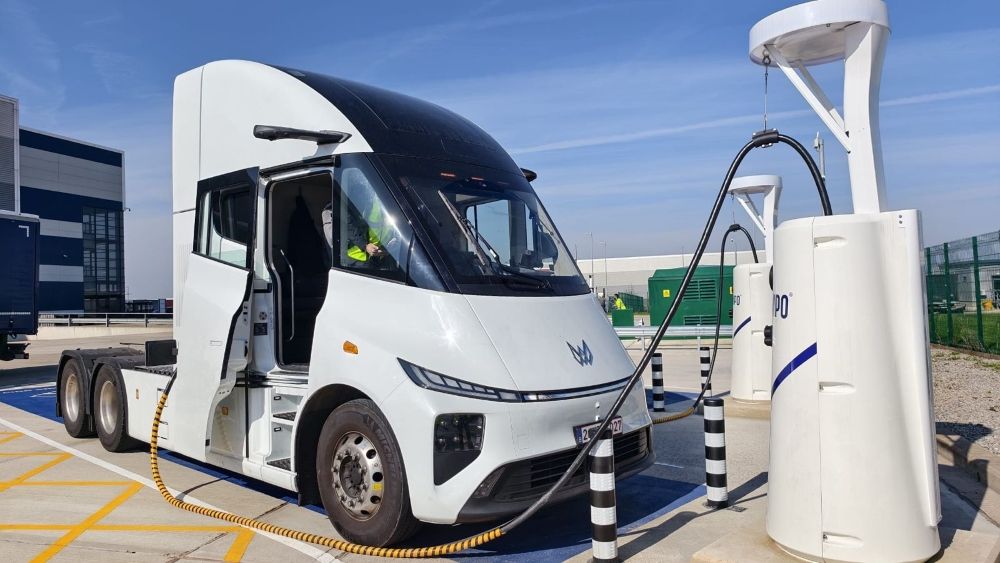
“The growth in electric vans demonstrates a simple truth about transport transitions. When the commercial logic is clear, fleets move quickly – it’s all about returns. The same dynamic will apply to heavy goods vehicles, once charging infrastructure becomes affordable and scalable.
“The Depot Point Operator model is important because it addresses the structural barrier. By allowing infrastructure to be shared across multiple fleets, capital can be deployed once and utilised many times. That improves asset utilisation, lowers the effective cost of charging, and creates the conditions for large scale electrification of both vans and heavy trucks.”
James Court, Public Policy Director, Octopus Electric Vehicles, said:
“It’s really interesting how many of the big, familiar car brands are now fully on board with the EV journey and starting to see it pay off. Drivers have more choice than ever, with great EVs in pretty much every shape, size and price point, which can only be a good thing.
“The direction of travel is clear for car brands – crack on and you’ll stay ahead. Hang back, and you’ll get left behind.”
John Lewis, CEO, char.gy, said:
“It’s encouraging to see EVs holding a quarter of the market, but the drop in the effective ZEV mandate target to 19% is a worrying signal. The UK set ambitious goals for electrification for a reason: to give manufacturers, infrastructure providers and consumers confidence about the direction of travel.
“If the government wants EV adoption to keep accelerating, it needs to back the mandate with consistent supporting policy. Measures that create uncertainty for drivers – from new road pricing proposals to higher costs for public charging – risk making the transition harder just when confidence is starting to build.”
Ginny Buckley, the chief executive of Electrifying.com, the electric car buying and advice site, said:
“Every electric mile driven means less reliance on imported fossil fuels and more drivers running their cars on British electricity.
“But research by Electrifying.com and the AA of over 11,000 non-EV drivers shows how fragile consumer confidence still is. More than half said the idea of pay-per-mile road charging would make them less likely to go electric. The worst thing ministers could do now is send mixed signals on EV running costs.
“The direction of travel is clear: drivers want cheaper running costs and greater energy security. Policy should reinforce that shift towards fully electric vehicles, not slowing it down.”
Tanya Sinclair, CEO, Electric Vehicles UK, said:
“Month by month and year by year, thousands of drivers are choosing to switch. It is also notable that the plug in van segment continues to perform strongly. As more products reach the market and fleet solutions scale up, adoption is following.
“Whatever the mix of powertrains in any given month, the underlying trend remains the same. Electric vehicles are expanding choice, improving value, and delivering strong performance across the market.”
Colin Walker, Head of Transport at the Energy and Climate Intelligence Unit (ECIU) said:
“One in four new cars sold in February was an EV, meaning sales are already ahead of the real target that the car industry needs to hit to comply with its sales targets for 2026. At a time when oil prices are rising due to conflict in the Middle East, the 1.8 million EVs [2] now on British roads are not just providing cheaper driving but also cutting the UK’s dependence on foreign petrol imports.
“But there is a risk that the mixed signals coming from Government, including the weakening of the ZEV Mandate last year, might come at the expense of British drivers. Policy changes that incentivise the sale of plug-in hybrids, vehicles that consume 490% more fuel than their manufacturers claim [3], will cost families hundreds of pounds a year more to run than if they owned an EV. [4] Hybrids also leave the UK more dependent on international oil markets which can be highly volatile particularly at a time of war, like those in Iran and Ukraine remind us.”
Image courtesy of Green Car Guide