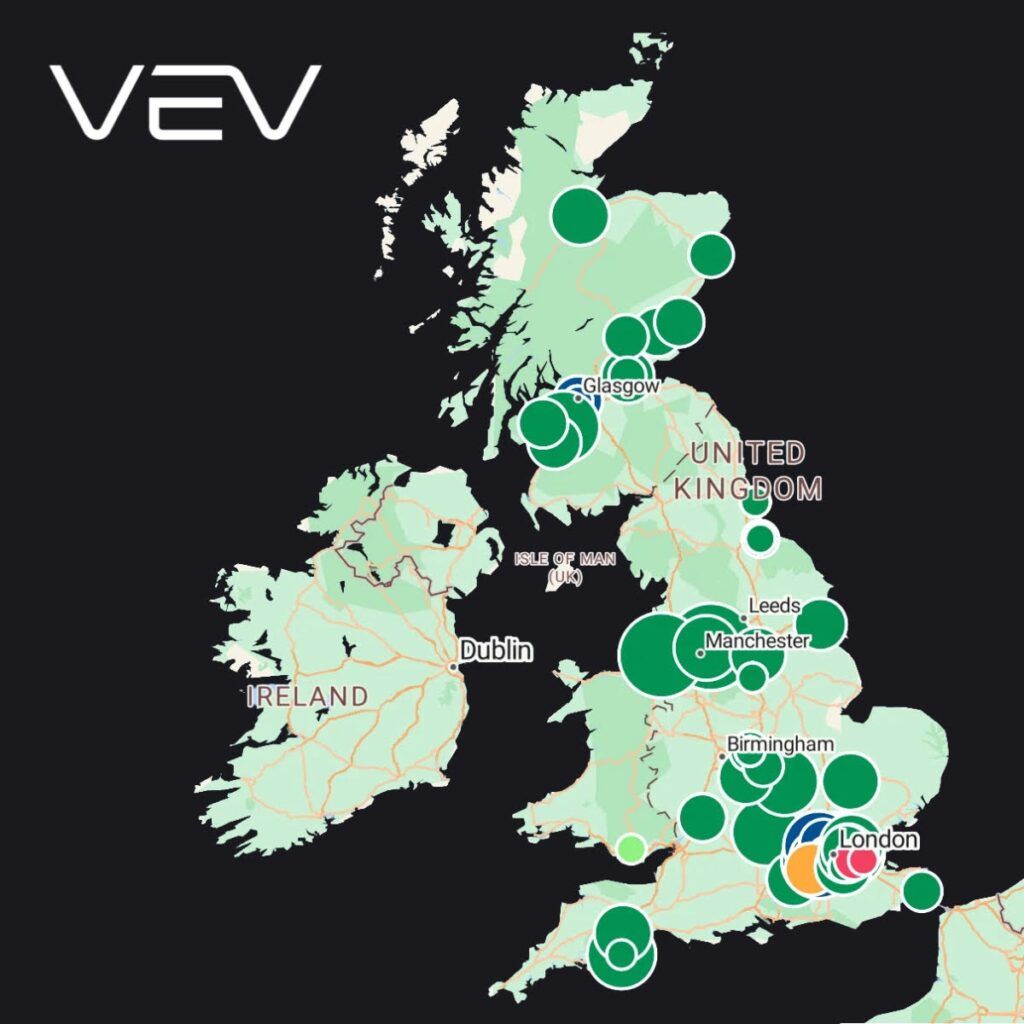
82.8% of logistics businesses lack the grid capacity they need, according to the Grid Users Coalition.
The Budget’s grid measures do little to change the current situation, according to the twelve business groups, including Logistics UK, the Road Haulage Association and ChargeUK.
The coalition has therefore set out low-cost fixes, most of which do not need new public money, to get every business connected faster and make better use of the grid that bill payers fund.
The Budget was right that “businesses are held back by slow grid connections and energy costs”, the coalition said. But its fixes reach only a few organisations, with electricity price relief going to around 10,000 energy-intensive manufacturers, and faster connections to strategic data centres and other “strategically important projects”.
The logistics depot, the charging hub, the factory and the housing development are still waiting in the queue, it said.
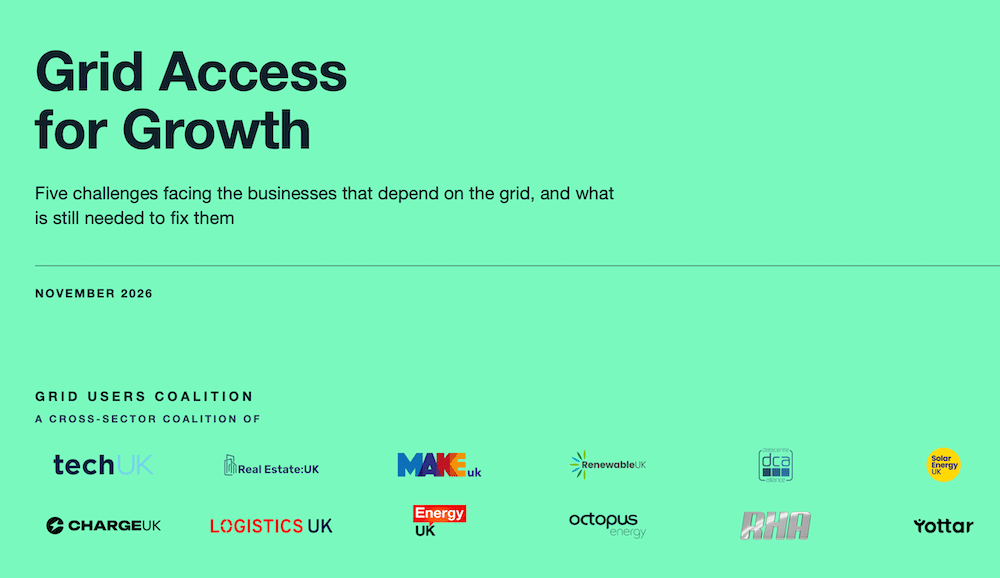
In Grid Access for Growth, published today, the Grid Users Coalition sets out practical fixes to reach every business. The coalition has also written to the Secretary of State for Energy Security and Net Zero asking for a meeting, and has submitted the report to Ofgem as its response to the regulator’s Transforming Connections Data consultation.
The report finds that grid access is now a significant barrier, and alongside the 82% figure from Logistics UK, it found:
- Many data centre projects now face connection delays of five to ten years (Data Centre Alliance)
- One in three industrial businesses say grid connection problems are delaying new projects (survey of 200 industrial decision-makers, 2026)
- Members report connection costs rising by up to 300 to 400 per cent between an early offer and final signing
It also calls for action in five areas:
- Costs: a point at which connection costs are fixed, transparency on what the network costs to build, and commitments that are proportionate and reciprocal.
- Visibility: the data and models for third parties to model capacity accurately, including the whole connections queue from formal application onward, down to 1 MVA, with the accuracy of the queue itself measured independently.
- Timelines: queue discipline settled, proportionate and applied fairly; self-build rights developed at pace and made to work; standardised voluntary flexible connections that increase speed to power and can be tailored; and networks held to milestones.
- Policy approach: open, market-led solutions tested before new central bodies or roles; guidance, not mandates, on where to build; and a clear role for Great British Grid, defined with strong engagement from the sector.
- Service: prompt, consistent roll-out of the new service standards across every network; independent measurement of network performance; a competitive market for digital grid solutions; and innovation funding open directly to innovators.
The Data Centre Alliance said:
“Reliable and timely access to electricity has become the single greatest constraint on the delivery of new digital infrastructure.”
Tara Singh, Chief Executive of RenewableUK, said:
“The offshore wind sector alone is set to invest £100 billion in UK projects over the next five years, but developers need timely, accurate and fair connection offers to progress their projects with confidence.”
Ben Fletcher, Chief Executive of Logistics UK, said:
“Our members employ 8% of the UK’s workforce and contribute £175 billion in GVA every year and despite expressing support for decarbonisation of their operations, many are finding insufficient grid access and charging capacity hindering their ability to switch away from conventional fuels.”
Richard Smith, Managing Director of the Road Haulage Association, said:
“Commercial vehicle operators are actively putting in place plans to decarbonise their fleets. However, grid constraints and long waiting times for a connection, which can be at least 10 years, act as substantial barriers to electrify lorries and coaches.”
ChargeUK said:
“At present, grid connections constitute one of the most significant barriers to further investment and faster deployment.”
Pete Clutton-Brock, Chair of the Grid Users Coalition, said:
“The Budget gets the diagnosis right: slow grid connections are holding businesses back. But its fixes are not sufficient to meet the challenge, which is economy-wide. Government shouldn’t have to search for grid capacity on businesses’ behalf. Publish the data, set common standards, and every business can find the connection it needs. Most of that costs the taxpayer nothing.”