
The UK Government has relaxed planning permission for cross-pavement solutions for domestic electric vehicle (EV) charging today (21 October) – as well as permitted development rights for charging hubs.
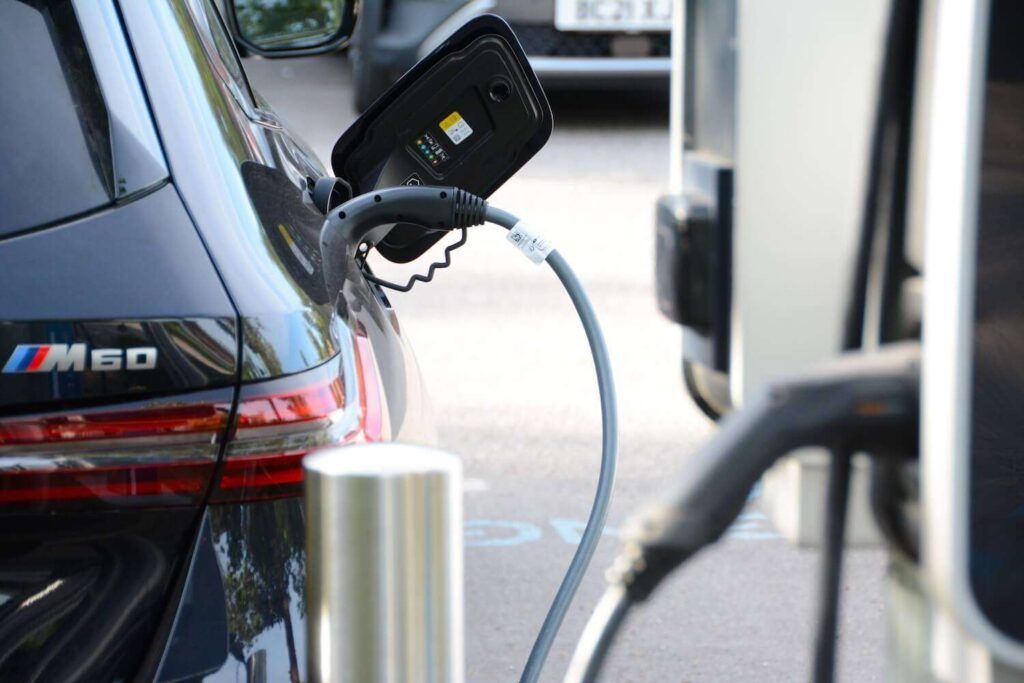
A cash sum of around £300 in savings comes from the approximate reduction in installation costs for cross-pavement solutions, without the need for planning. It will then allow EV drivers to access cheap domestic energy for charging their cars, rather than relying solely on the public charging network – potentially saving up to £1,750 in running costs, at the time of writing.
In addition to the announcement, the UK Government has also launched two consultations to make home charging easier and ensure new buildings are equipped with chargers.
Through the consultations, tenants and leaseholders could get a clearer, quicker, and more consistent route to installing a charge point, thanks to clear guidance for landlords on how to handle the process, it said.
The UK Government is also considering mandatory requirements for landlords and freeholders to make it harder to refuse renters’ applications. In addition, building regulations could also be updated to ensure that charge points are installed in new and refurbished covered car parks.
Changes to permitted development rights (PDR) also mean it will be quicker and cheaper for charge point operators to install larger, higher-powered public EV charging hubs.
Speaking about the PDR move, Shane Brennan, chief executive, ChargeUK said:
“Ultra rapid charging hubs are a vital enabler of the EV transition. Planning too often gets in the way, limiting the size and potential of the sites operators want to build.
“That’s why we called for these improvements to permitted development rights and we are grateful to government for acting.”
On the cross-pavement news, Buses and Local Transport Minister Simon Lightwood said:
“We’re saving drivers up to £300 off the cost of installing home charging by cutting unnecessary red tape.
“The EV transition is in full swing – sales are up 36% on last year and over 190,000 have saved thousands making the switch in the last year alone.”
Vicky Edmonds, CEO of EVA England, said:
“This might look like a small planning change, but for someone without a driveway, it could make the difference between being able to afford an electric car and ruling one out altogether. Removing the need for planning permission for cross-pavement charging is a really welcome and meaningful step towards a fairer transition.
“Our research found that 60% of petrol and diesel drivers without off-street parking would never consider an EV. Being able to connect a car parked on the street to cheaper home electricity could help change that. It’s now up to local authorities and landlords to make these solutions easier to access in practice.”
Dickson Abegunde, Director of Strategic Partnerships at Zoopla, said:
“For buyers considering an electric vehicle, access to charging can be an important factor when choosing a home. Zoopla was proud to be the first property website to help buyers discover nearby on-street chargers and search for homes with EV charging facilities.
“The government’s decision to remove planning permission requirements for qualifying cross pavement charging solutions is another welcome step towards making EV ownership more accessible, particularly for households without off-street parking.”
Image courtesy of Green Car Guide