The UK’s net zero economy now underpins the jobs of 1.1 million UK workers, who together generate £105 billion in Gross Value Added (GVA) for the UK economy, according to a new report.
Commissioned by the Energy and Climate Intelligence Unit (ECIU) with analysis from CBI Economics and The Data City, it found workers generate £119,300 in economic value per full-time job, around 1.5 times the national average. This leads to higher wages, with net zero jobs earning £43,142, 11% higher than the current national average of £39,039.
In its fourth annual report, it also found 22,700 small firms – employing less than 50 people – and six economic hotspots, valued at a billion pounds each, spread across the UK including in Scotland, Yorkshire, North Wales and Cheshire.
It also found that Yorkshire and the Humber region leads the way in England with the highest shares of net zero GVA as a proportion of the local GVA (4.4%). Yorkshire and the Humber’s net zero economy supports over 79,000 jobs.
Alongside the direct 1.1 million full-time jobs, an additional 308,000 were supported by the activity of net zero businesses, a 520,000 being supported in the supply chain, and 234,000 through the wider economy.
The net zero economy generated £105 billion in GVA for the UK economy, with £36.7 billion generated directly by net zero businesses, £51.2 billion generated through the supply chain and £16.8 billion generated through induced economic activity.
For every £1 in value generated by the net zero economy a further £1.85 is generated in the wider economy.
The UK’s renewable energy pipeline represents a £455bn investment opportunity across 262GW of capacity, with two-thirds already in active or construction phases, highlighting both the value and scale of development required to deliver clean power.
Louise Hellem, CBI Chief Economist, said:
“At a time when the UK must strengthen energy security and drive growth, the net zero economy is becoming central to the country’s future competitiveness. With global competition intensifying, government and business must work together to attract investment and scale up delivery. The UK cannot afford to step back from an industry already contributing £100bn to the economy and with huge future growth potential.”
Peter Chalkley, Director of the Energy and Climate Intelligence Unit, said:
“Thousands of small businesses across the UK are the unsung heroes of this net zero economy, installing solar panels on rooves, manufacturing parts for electric cars and in doing so creating greater energy independence for the UK, shielding us from the oil and gas price crises of recent times.
“With the UK’s net zero workforce having surged past one million, communities from Hull to Ellesmere Port, and North Lanarkshire to Somerset need to see consistent stable policy into the future. With global demand now falling for petrol cars and installations of net zero tech like solar panels and heat pumps rising, the UK is in a global race to develop future-proof clean industries. Standing still or looking back just isn’t an option for job security.”
Dr. Natasha Boulding, Chief Executive Officer at Low Carbon Materials (LCM) said:
“LCM is proud to be a North East company, and the report’s finding that the region is one of the country’s biggest hotspot for SMEs in net zero matches what the team sees every day. With the green economy now employing over a million people and worth more than £100 billion, the demand for low-carbon construction is only going one way, and LCM plans to be part of it as it grows.”
Neil Spann, CEO at Power Roll said:
“Crucially, the report also shows that this growth is being delivered by a broad base of innovative large and smaller businesses across the country, and that green industries are creating high-value, high-productivity jobs. For companies like Power Roll, this provides a strong signal that investment in clean technologies is aligned with long-term economic opportunity, and that the UK has a real chance to lead in emerging global markets if the right conditions are maintained and that there is access to appropriate capital.”
Darren Davidson, UK Vice President for Siemens Energy, said:
“At Siemens Energy, we employ more than 7,500 people across the UK, including at our offshore wind blade factory in Hull, currently celebrating its 10th anniversary. We are especially proud that the vast majority of colleagues there call the Humber home. That is exactly what the net zero economy should look like in practice: world-class industry creating lasting value and opportunity in local communities.”
Tim Morris, Group Head of Corporate Communications at Associated British Ports said:
“Our ports are fundamental to driving growth, supporting jobs and enabling energy resilience across the UK. Across our ports, ABP is investing ambitiously in the infrastructure and services our customers need to build the resilient businesses of the future. Already a key enabler of the offshore wind sector, we have pivotal roles to play in carbon capture, hydrogen and more.”
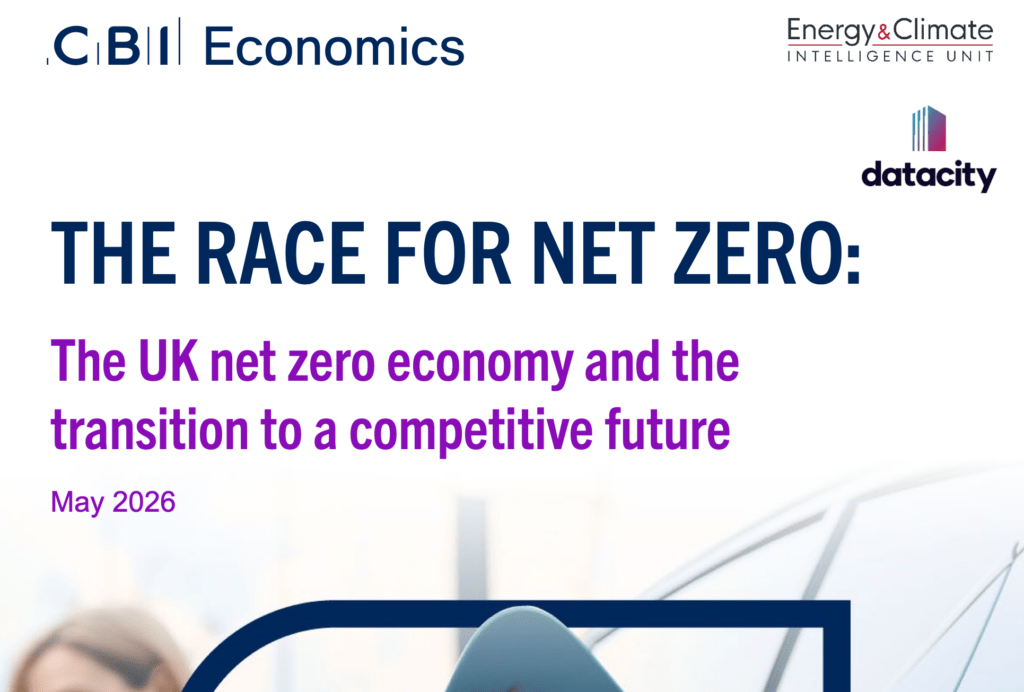
Graphic of report courtesy of ECIU