Europe’s e-mobility industry has committed nearly €200 billion to electric vehicles, batteries, and charging infrastructure, “locking in” the transition, new analysis reveals.
The news from New Automotive comes as EU politicians debate further weakening the bloc’s 2035 zero-emission car target. It shows EV investment is scaling up across Europe, cutting the bloc’s oil dependence and narrowing the gap with China.
But the analysis comes as a growing disconnect between industrial momentum and policy signals, where pressure to dilute the 2035 zero-emission car target casts doubt on the long-term outlook for Europe’s EV market, New Automotive added.
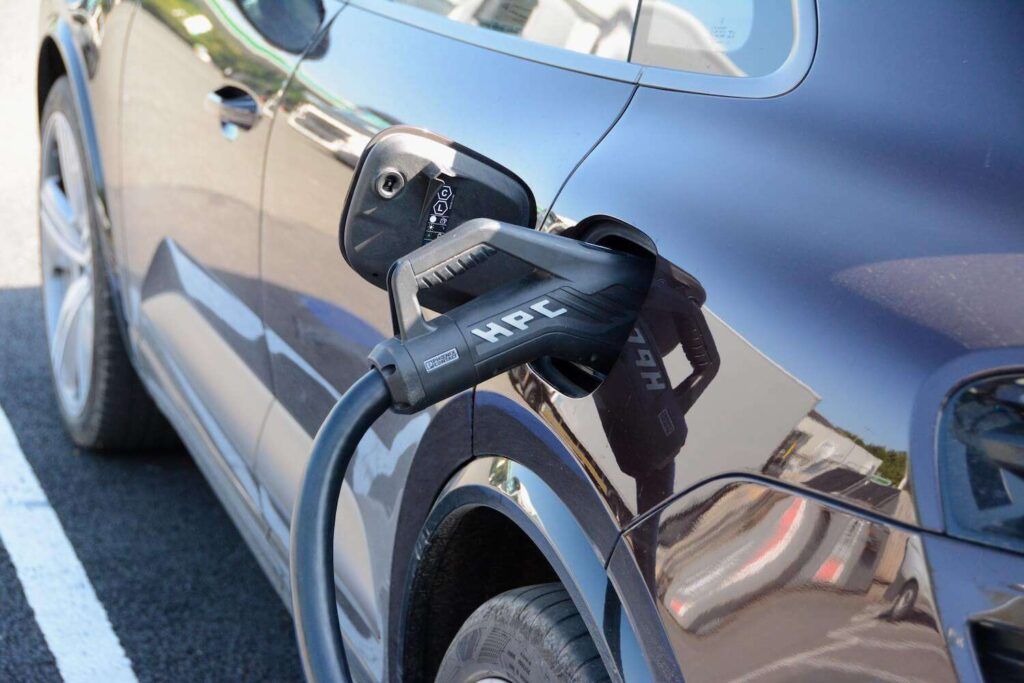
The report maps €60 billion in new and retooled automotive plants, €109 billion in batteries and materials, and up to €46 billion in public charging infrastructure.
When private charging and EV-specific components are included, Europe’s total EV-related investment well exceeds €200 billion.
These investments support more than 150,000 jobs, with a further 300,000 jobs expected if all announced projects are fully realised.
EU Member States opposing the 2035 car CO₂ target stand to benefit most from this EV investment wave, with more than half of tracked investment is concentrated in Germany, Italy and Central and Eastern Europe – regions that have formally opposed the EU’s 2035 cars and vans framework. France and Spain stand-out as other major beneficiaries.
It comes as China is well positioned to capitalise on any delays, with the report warning Europe “must anchor this investment to secure its industrial base, and establish a globally competitive position in clean mobility”.
Chris Heron, Secretary General, E-Mobility Europe, said:
“Europe’s EV industries are investing at scale. Political backtracking and constant uncertainty are becoming a direct threat to investment. Short-term flexibilities to the EU’s CO₂ framework are under discussion, but they cannot come at the expense of long-term investment certainty.
“Europe needs to deliver its full €200 billion investment pipeline to compete globally – and that means maintaining confidence.”
Ben Nelmes, CEO, New Automotive, said:
“Europe has made enormous progress in building a domestic EV ecosystem, with investment flowing into regions that stand to benefit most from the transition.
“Maintaining a clear and consistent policy framework will be essential to sustaining that momentum.”
Image courtesy of Green Car Guide