New analysis from the ECIU reveals that drivers could be saving more than £1350 a year by leasing an electric vehicle (EV) rather than an equivalent petrol car.
The research factored in the monthly cost of leasing a vehicle as well as the costs associated with running it, such as fuelling/charging, insurance and servicing. It found that the ten best-selling EVs of 2025 could, on average, save their owners £4070 over a 3-year leasing term – more than £1350 a year.
Examples of individual model comparisons include the Volvo EX30, which is £1875 a year cheaper to lease and run than a petrol BMW X1. The Skoda Enyaq is £893 a year cheaper to lease and run than a petrol Skoda Kodiaq, and a Ford Explorer is £1390 a year cheaper to lease and run than a petrol Ford Kuga. The Tesla 3 was £4744 a year cheaper to lease and run than a petrol BMW 320.
Many analyses that compare the costs of owning and running an EV with a petrol car do not take into account the fact that leasing a vehicle, rather than purchasing it up front, is an increasingly popular means by which people are accessing new vehicles.
The research from the Energy and Climate Intelligence Unit (ECIU), addresses that gap by comparing the total costs of leasing and running an EV with those of an equivalent petrol car.
Recent analysis by the ECIU has found that oil trading at $100 a barrel could see petrol rising from £1.32 per litre before the war started, to £1.50 – increasing the cost of fuelling a petrol car from £1220 a year before the war started, to £1390.
Were the predictions we have seen in some quarters that oil could hit $150 a barrel become a reality, the price of petrol could jump to £1.90 a litre. This would see the cost of fuelling a petrol car jump to £1760 a year.
The International Energy Agency has said the ZEV mandate policy is playing a key role in driving a ‘surge’ in EV sales in the UK since its introduction by the former Conservative government.
A report by CBI Economics for the ECIU revealed that a failure by the car industry to make the transition to manufacturing EVs could see its contributions to the UK economy fall by as much as 73%, or £34.1bn, and over 400,000 jobs could be lost.
Conversely, economic output could increase by over £16bn, and 167,000 new jobs could be created, if a rapid and successful transition takes place.
Colin Walker, Head of Transport at the Energy and Climate Intelligence Unit (ECIU), said:
“It is no surprise that interest in EVs has risen significantly since the war started, since they offer drivers a way to shield themselves from the shocks we are seeing in global energy markets. Leasing is an increasingly popular means by which drivers can make the switch, delivering average driving cost savings of over £1350 a year”.
“The Government’s ZEV mandate policy is increasing competition between manufacturers, driving down prices and, as new cars are sold on, ultimately widening the pool of second-hand EVs on sale. If not leasing, many of us buy on the second-hand market where EVs offer huge savings over their petrol equivalents’.
“Any U-turn on the mandate could weaken this dynamic in the midst of an energy crisis, slowing the UK’s transition to the electric vehicles that will reduce its dependence on oil, and better protect its drivers from shocks in global energy markets over which we have no control.
“It could also undermine the UK’s position as a front runner in the global EV transition, and introduce regulatory uncertainty at a crucial time in the UK car industry’s transition to building the vehicles upon which its future depends.”
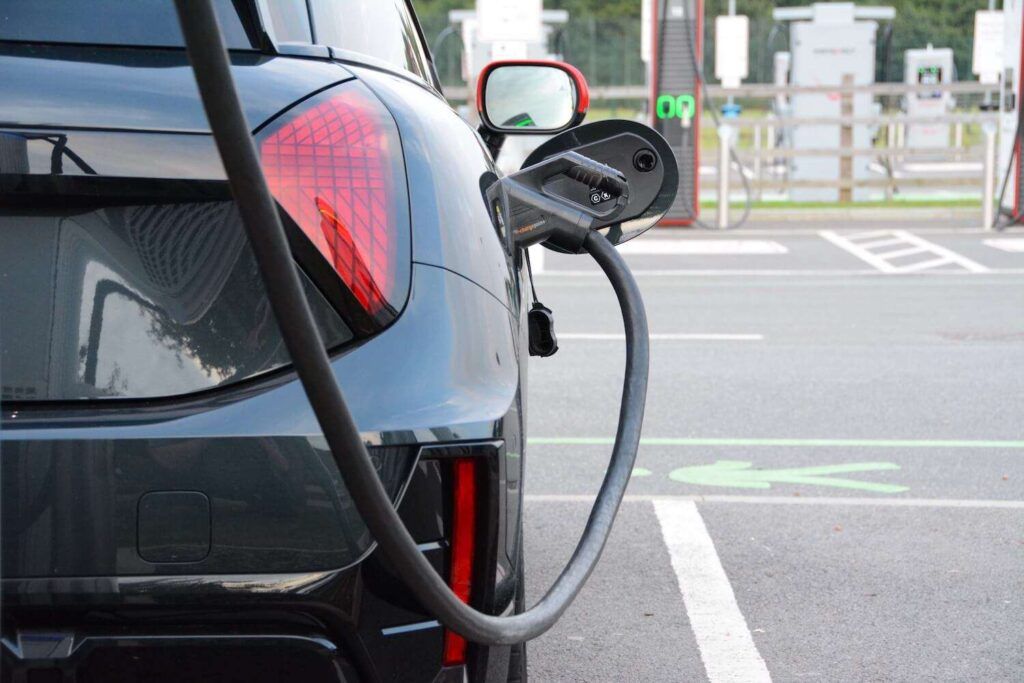
Image courtesy of Green Car Guide