One of the largest studies in the UK of used electric vehicle (EV) battery performance has revealed that battery health is still significantly high, even after heavy mileage and usage.
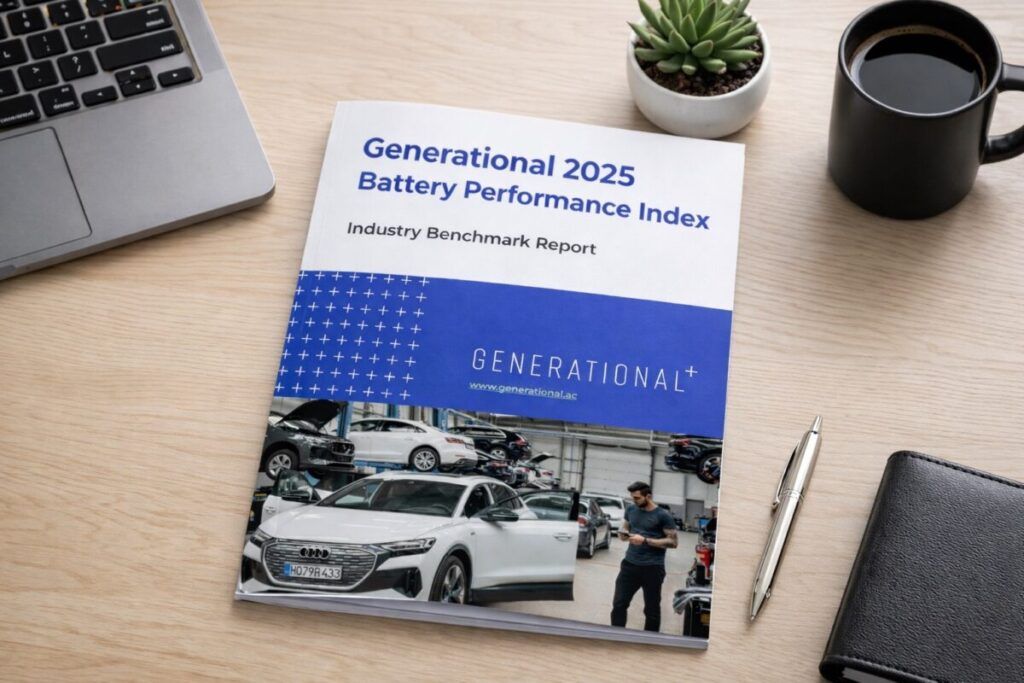
The Generational 2025 Battery Performance Index is the UK’s largest analysis of EV battery condition conducted to date, based on 8,000+ battery health assessments conducted in 2025 across BEVs and PHEVs, passenger cars and LCVs, spanning 0–12 years and 0–160,000+ miles.
Findings from the 2025 data include an average battery health of 95.15% across all vehicles tested, and even at 8-9 years old, vehicles still have around an 85% median capacity – which is above the OEM warranty thresholds.
It also found that mileage wasn’t a “reliable predictor” of vehicle battery health with EVs of more than 100,000 miles returning 88-95% battery health.
The report made five key findings:
- Battery degradation “is not the systemic risk it was once assumed to be”, the report concluded. Real-world data shows
that most EV batteries comfortably exceed warranty thresholds, even at higher ages and mileages. - Uncertainty, not underlying longevity, is now the primary constraint on used EV values, it said, “where battery condition is opaque, worst-case assumptions dominate sales performance”.
- Age and mileage alone are no longer sufficient valuation proxies. Battery condition is “emerging as the defining determinant of long-term vehicle value, performance and risk”, it said.
- Transparent battery data enables better decisions across the value chain. “From underwriting and warranty design to fleet management and remarketing, verified battery condition supports more accurate outcomes,” it reported.
- Battery testing is becoming essential market infrastructure. Like mileage verification or service history, “battery condition transparency is fast becoming an expected part of the buying process rather than an optional reassurance”, it said.
The report said:
“The results confirm that overall battery performance significantly exceeds stakeholder and consumer expectations, though individual results vary based on how vehicles have been used.
“This report will be published annually as a recurring reference for industry participants reflecting the currents that are shaping this rapidly evolving market, and providing essential insights for stakeholders looking for the tools needed to gain a competitive edge in 2026.”
Philip Nothard, Chair, Vehicle Remarketing Association, said:
“Potential buyers of used electric cars and vans understandably place a huge emphasis on battery health. They need to trust that this fundamental and expensive vehicle component will meet their needs without any unpleasant surprises.
“Transparency will prove crucial in building future consumer confidence and dispelling the many misconceptions that have gained currency around EV batteries.”
Richard Norris, Managing Director, Drive Green, said:
“The battery health of used EVs remains a key concern for most EV buyers, and with battery health normally much better than they are expecting, providing a battery health certificate for the cars they are looking at is the very best way to allay their concerns.
“Battery testing is very important in building broader consumer confidence in EVs, as well as being a critical element in successful EV retailing.”
Image of report courtesy of Generational+