Hydrogen transport infrastructure is developing at half the pace of other clean tech, putting net zero targets at risk, according to research from Heriot-Watt University.
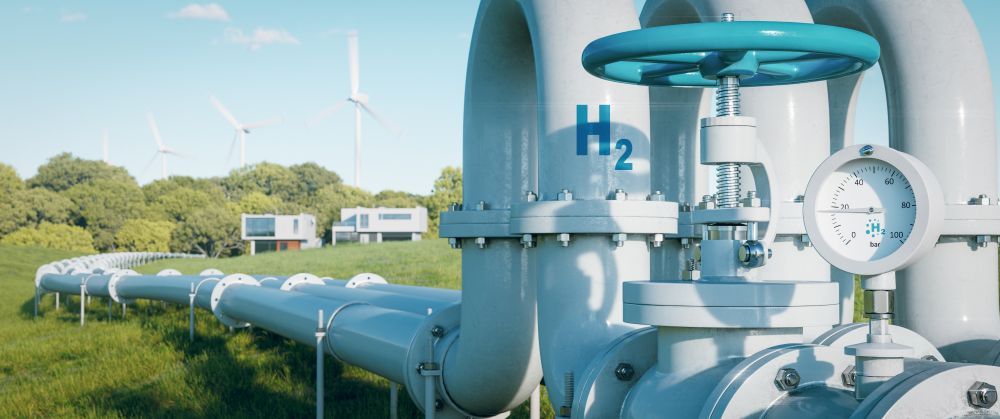
A recent study from Edinburgh Business School at Heriot-Watt University found that while hydrogen production, storage and fuel cell technologies are advancing rapidly, the hydrogen distribution infrastructure is developing at half the speed, creating a critical bottleneck that could put billions in clean energy at risk.
The findings, published in the journal Sustainable Futures, are an important milestone in recognising that, while other hydrogen technologies improve and costs fall, distribution expenses could take up a large share of hydrogen system budgets, significantly limiting overall efficiency and growth of the hydrogen sector, the university researchers said.
The research team analysed 777,000 patents and 1.3 million citations spanning 182 years of hydrogen technology development, revealing clear differences in progress across the system.
The findings reveal where the hydrogen system is most vulnerable showcasing that pipes, terminals and liquefaction plants needed to move hydrogen safely and affordably are lagging behind.
As a result, the researchers said, “distribution is what links the entire hydrogen system together” and “without it, production stays concentrated near manufacturing sites”, meaning the “wider economy cannot make use of it and the climate benefits never materialise”, the researchers added.
Dr David Dekker, a research fellow at Edinburgh Business School, Heriot-Watt University and the paper’s lead author, said:
“Distribution will become the dominant cost in any hydrogen system. Even as we get better at producing and using hydrogen, getting it where it’s needed stays expensive.
“The problem is structural. Distribution requires massive pipeline networks and liquefaction plants that need billions in capital investment. Safety regulations and permitting processes are complex, so progress is slow.
“Most distribution infrastructure sits with a handful of major companies. They tend to share less knowledge than innovators in other hydrogen fields. In capital-intensive sectors where competitive advantage matters, companies are far less likely to publish innovations openly. This slows progress across the entire sector.”
Professor Dimitris Christopoulos who co-authored the findings is director of research for the Edinburgh Business School and Heriot-Watt University’s School of Social Science, said:
“We cannot have a hydrogen economy without the infrastructure to move it around. Right now, that is the fundamental missing piece.
“The 2015 Paris Agreement requires rapid scaling of clean energy technologies, but infrastructure bottlenecks could undermine major investment programmes. The question now is whether policymakers and industry will act before distribution costs make hydrogen uncompetitive.”
Professor Mercedes Maroto-Valer who leads the UK Industrial Decarbonisation Research and Innovation Centre (IDRIC), said:
“As the BBC recently reported on Germany’s green hydrogen industry, hydrogen faces a classic chicken-and-egg problem: industry won’t commit at scale without pipelines, terminals and reliable delivery, but those networks won’t be built at scale without firm industrial demand.
“What this new Heriot-Watt research adds is hard evidence that distribution innovation moves much more slowly than the rest of the hydrogen system, so without targeted action to de-risk infrastructure, the distribution costs and uncertainty will keep holding the market back.”
Image courtesy of Heriot-Watt University