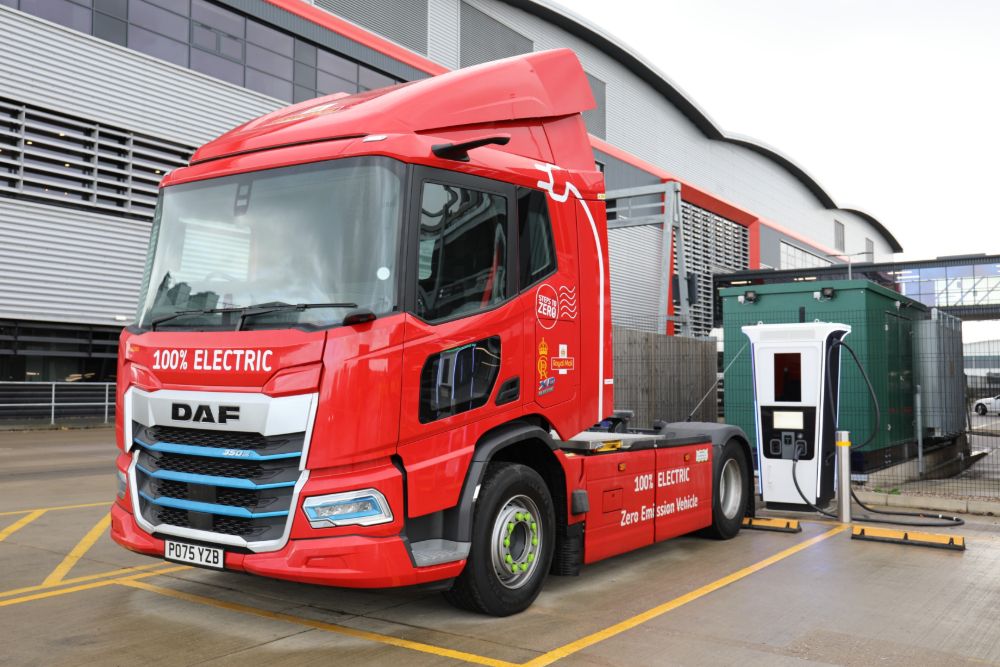
Royal Mail has rolled out the first eight eHGVs at its Midlands and North West parcel hubs as it moves to replacing diesel-power 42-tonne trucks with zero-emission alternatives.
The eight DAF 42-tonne XD 350E electric HGVs will operate around the clock, handling ‘middle-mile’ deliveries between parcel hubs and mail centres.
Each vehicle will be powered by ABB’s high-performance T360 chargers, capable of adding up to 60 miles of range in under 15 minutes.
Through its membership of Electric Freightway, Royal Mail has installed high-speed chargers at its two parcel hubs in Daventry and Warrington, which has made it possible to introduce eHGVs.
The new eHGVs will save around one thousand tonnes of carbon emissions annually and lower operational costs than diesel alternatives.
Royal Mail’s strategy is to achieve net zero by 2040, and it already operates one of the UK’s largest electric delivery fleets, with more than 7,000 vans charged on-site using 100% renewable electricity.
Electric Freightway, led by GRIDSERVE, is backed by over £100 million in investment, including £62.7 million of UK Government support.
It will deliver one of the UK’s most advanced public charging networks for eHGVs, with more than 200 chargers capable of up to 350kW and supporting over 140 electric trucks nationwide. Data collected over five years will help accelerate the decarbonisation of the freight sector.
Electric Freightway is part of the Zero Emission HGV and Infrastructure Demonstrator (ZEHID) programme, which is backed by up to £200m in funding from the UK Government and delivered in partnership with Innovate UK.
Nick Dunn, Royal Mail’s National Distribution & Fleet Director, said:
“Introducing electric HGVs into our network is a major milestone in decarbonising our operations and achieving our Net-Zero target. This is an important first step in learning how we can efficiently integrate eHGVs into our operations across the country.
“We’re combining cutting-edge vehicle technology with high-speed charging infrastructure, made possible by Electric Freightway, which will transform how we deliver across long distances.”
Sam Clarke, GRIDSERVE’s Commercial Lead, said:
“We are pleased to see Royal Mail join other GRIDSERVE Electric Freightway consortium members in developing a strong network of eHGV charging depots. These locations are critical infrastructure that enable the decarbonisation of freight transport across the UK. These sites at the Midlands and North West Parcel Hubs strengthen charging in both regions as well as reduce carbon emissions by supporting the replacement of diesel trucks with eHGVs.
“As a member of the Electric Freightway consortium, Royal Mail is working together with industry leaders to create a cohesive charging network, including both depot and public charging sites, that accelerates transport electrification.”
Louis Jones, DAF Trucks’ EV & Connected Services Director, said:
“We’re proud to support Royal Mail with the introduction of eight fully electric XD Electric 350 vehicles through the Electric Freightway ZEHID Programme. This deployment marks an important step in scaling zero-emission logistics across the UK.
“The initiative follows the recognition of our XD and XF Electric range being named International Truck of the Year 2026, underscoring the strength of DAF’s technology and engineering leadership. Delivered to Royal Mail’s bespoke specification and built on our latest New Generation cab and platform, these vehicles set a new benchmark for operational capability and sustainability. We’re eager to see them enter service and to continue supporting Royal Mail on its wider decarbonisation journey.”
Image courtesy of Royal Mail