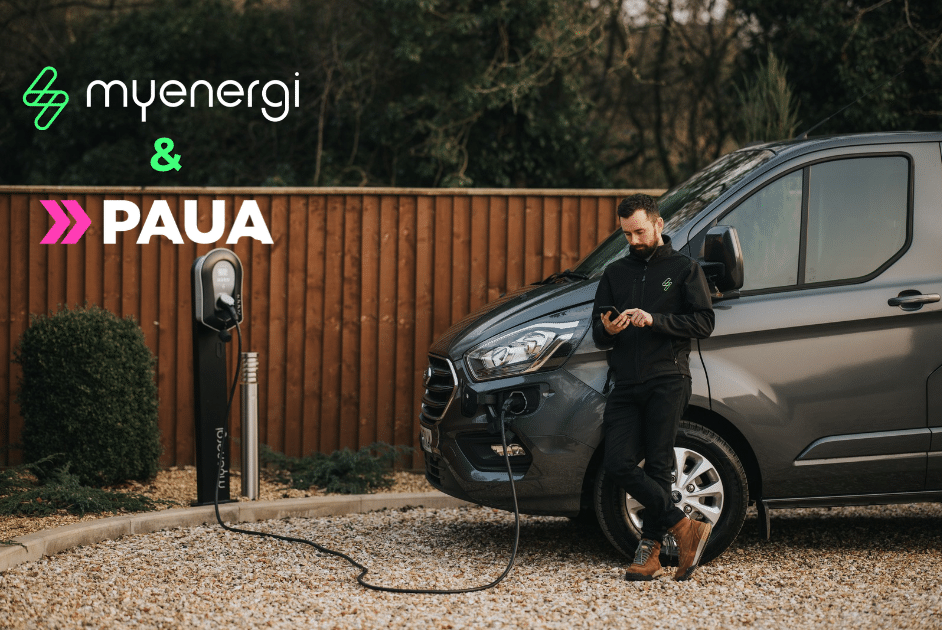
Plans to make it easier for company car and van driers to get reimbursed for home charging have been created by myenergi and electric vehicle (EV) charging platform PAUA.
The companies have made the move as home charging can be cheaper than public points, but varying electricity tariffs and the mix of business and personal journeys can make it difficult for employers to accurately reimburse drivers.
As a result, the partnership connects myenergi’s zappi home chargers with PAUA Reimburse, automatically recording charging sessions and calculating costs against the driver’s electricity tariff, rather than relying on estimates – reducing the need for manual mileage claims.
Compatible with an extensive range of smart electricity tariffs, myenergi’s zappi allows drivers to take advantage of cheaper charging periods, including overnight, while also making use of home solar power where available.
By supporting different household tariffs, Paua Reimburse helps ensure drivers are reimbursed fairly without restricting their choice of energy provider. It can also use mileage information to distinguish between business and personal journeys, helping employers cover the appropriate share of charging costs.
On top of tariff savings, drivers could earn more than £100 a year with myenergi Gridpay, simply by letting their zappi charger shift charging to off-peak times and support the grid when demand is high. It’s another way homes and fleets can turn flexibility into cheaper charging.
Jack Fielder, Chief Commercial Officer at myenergi, said:
“Company car drivers should have the freedom to choose the electricity tariff that works best for their household, without worrying about getting reimbursed.”
“zappi helps drivers charge when electricity is cheapest, while our partnership with Paua makes it easier for employers to calculate what that charging costs and distinguish between business and personal use. It’s a practical way to make home charging fairer for employees and more cost-effective for businesses.”
For businesses managing larger vehicle fleets, the partnership simplifies reimbursement across employees on different electricity tariffs, while bringing home charging data alongside public and workplace charging costs.
Niall Riddell, CEO and co-founder of Paua, said:
“Home charging is often the cheapest and most convenient way for a business vehicle to charge, but for fleet managers it creates a new problem: how do you accurately identify that charging and reimburse the driver?
“Connecting myenergi into Paua Reimburse makes that process much simpler. zappi is already installed in homes across the UK and has a strong reputation with electric vehicle drivers. We can take that charging data and bring it into the same platform fleets use for their public, workplace and shared depot charging.
“That is increasingly what fleet managers need. EV charging is no longer about one charging network or one location. Vehicles charge wherever it makes operational and economic sense, and businesses need one system that can manage the complete journey.”
Image courtesy of myenergi and Paua