Closer coordination, faster grid connections and a fairer charging experience will be needed if transport and energy systems are to keep pace with demand over the next decade, delegates at the Transport + Energy Forum have heard.
In a panel session, speakers highlighted the scale of the challenge, with transport electrification taking place alongside growing electricity demand from heating, industry and data centres.
But they also identified practical steps to accelerate progress, from sharing long-term infrastructure plans to making better use of flexibility and tackling the costs preventing drivers from switching to electric vehicles.
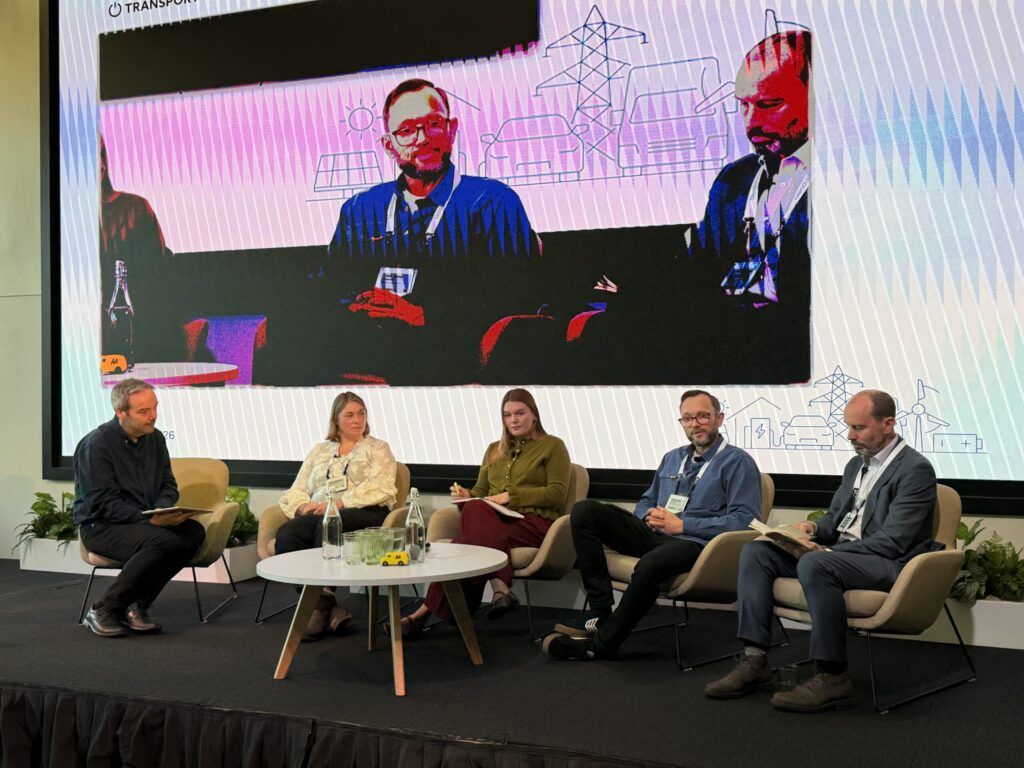
The discussion, entitled “Can transport and energy systems evolve fast enough to meet demand over the next decade?”, was chaired by Shane Brennan, CEO of ChargeUK.
Lowri Williams, Transport Practice Manager at Energy Systems Catapult, said transport must be considered alongside the wider changes taking place across the energy system.
She warned that the system was not yet ready for the demands ahead:
“At the moment it isn’t ready for even what 2030 looks like, let alone what 2050 looks like,” she said.
Williams said the challenge extended beyond cars and vans to heavy goods vehicles, aviation and maritime, with electrification forming a major part of a much broader decarbonisation programme.
Increasing renewable generation would also require greater flexibility in when electricity is used.
She highlighted the complexity facing fleet operators dealing with multiple distribution network operators, each with different processes, technical requirements and contacts.
Better information sharing would help networks plan for future demand, but transport businesses needed to communicate their requirements more consistently.
“If you want them to be planning based on your ideas of what the future looks like, you need to tell them,” she said.
Anthony Simpson, EV & Storage Manager at National Energy System Operator (NESO), pointed to the considerable progress already made in charging infrastructure, while stressing the difficulty of balancing a changing electricity system.
“Demand and generation has to match exactly every second of the day,” he said.
Vehicle batteries could provide a substantial resource to help manage that balance, with hundreds of thousands of vehicles already contributing flexibility, he added.
Simpson called for simpler access to flexibility markets and more detailed conversations about connections. Rather than waiting for the full capacity a site might eventually require, developers and networks could explore providing smaller connections sooner and increasing capacity over time.
Chris Casey, UK Program Manager at Fastned, said charging operators had demonstrated their ability to scale delivery, but faced three major barriers: planning and highways consents, land and legal agreements, and sufficient grid capacity in suitable locations.
Processes were often fragmented and difficult to predict, making collaboration with planning authorities and network operators essential.
Casey called for greater transparency over available grid capacity:
“We need to know where capacity is, in which locations that can allow us to deliver on those and prioritise those locations.”
He said phased capacity increases and storage could help charging operators manage demand as utilisation grew, supporting investment without securing more capacity than a site initially needed.
For Vicky Edmonds, CEO of EVA England, the transition also depended on understanding what drivers wanted and removing the barriers holding them back.
“I think there is a huge amount of unlocked, untapped EV demand,” she said.
Upfront vehicle costs remained an issue, while public charging prices and the charging experience were significant concerns.
Edmonds said drivers without driveways needed to see the transition as fair, with action required both on consumer prices and the costs faced by charge point operators.
She also urged the sector to explain the benefits of smarter energy use in language drivers understood.
“There is a big job to do to try to educate the consumer and put it in their language,” she said.
Brennan reinforced the need to reduce the underlying cost of charging:
“We need to make electricity to deliver electricity in the cars cheaper. We’ve got to find a way of doing that.”
The discussion set out the conditions for making the answer to the session’s question “yes”: they agreed the industry needs coordinated planning, quicker infrastructure delivery, greater flexibility and an affordable transition that drivers could understand and trust.
(L–R: Shane Brennan, CEO, ChargeUK; Vicky Edmonds, CEO, EVA England; Lowri Williams, Transport Practice Manager, Energy Systems Catapult; Chris Casey, UK Program Manager, Fastned; Anthony Simpson, EV & Storage Manager, National Energy System Operator (NESO).)