EV infrastructure provider Zest has warned that weakening the UK’s Zero Emission Vehicle (ZEV) Mandate risks undermining the private investment needed to build the nation’s future charging network.
As the Government consults on the mandate’s trajectory and annual targets ahead of the 23rd October deadline, Zest said the debate “must recognise that the policy is not just about vehicle sales, it is a critical demand signal for investors backing long‑term charging infrastructure projects”.
It highlighted that battery‑electric vehicle registrations up 27.7% year‑on‑year in August, according to SMMT, and with Government funding already committed to charging rollout, maintaining a clear long‑term policy direction is “essential”.
Unlike vehicle sales, which respond quickly to consumer trends, infrastructure investment must be made well ahead of demand. Zest warns that uncertainty is already prompting global investors to look to European markets offering more stable returns and long term confidence.
It added the key question is not how many EVs are sold today, but whether Britain is “creating the conditions to ensure sufficient charging capacity when millions more drivers make the switch”.
Zest is calling on the UK Government to maintain a clear and credible pathway for EV adoption and recognise the vital role of policy stability in unlocking private capital for the nation’s future charging network.
CEO of Zest, Robin Heap, stressed that charging infrastructure requires years of planning, from site identification and land agreements to grid connections and construction and most contracts run for at least 15 years after being switched on.
Robin Heap, CEO of Zest, said:
“If we weaken the demand signal, we risk weakening the investment that follows it. And that could leave the UK with a damaging chicken‑and‑egg problem: people won’t switch without convenient charging, but the infrastructure sector won’t invest at scale without confidence in future demand.”
“Businesses can’t and won’t commit decades ahead when the landscape is uncertain. Stifling investment now, could lead to stagnation, job losses and missed opportunities for the UK.”
“The UK can’t build tomorrow’s charging network by weakening today’s EV targets. If Government reduces the signal that tells investors how fast the market will grow, it risks creating uncertainty at precisely the moment we need more. Much of the investment comes from international investors.”
“The transition to electric transport is fundamental to reducing emissions. The infrastructure investment needed to deliver that transition must not be put at risk by short‑term policy uncertainty.
“Above all, we must not forget why the world started moving towards net zero in the first place. The transition to electric transport is a fundamental part of reducing emissions, and the infrastructure investment needed to make that transition possible must not be put at risk by short-term policy uncertainty.” Heap closed.
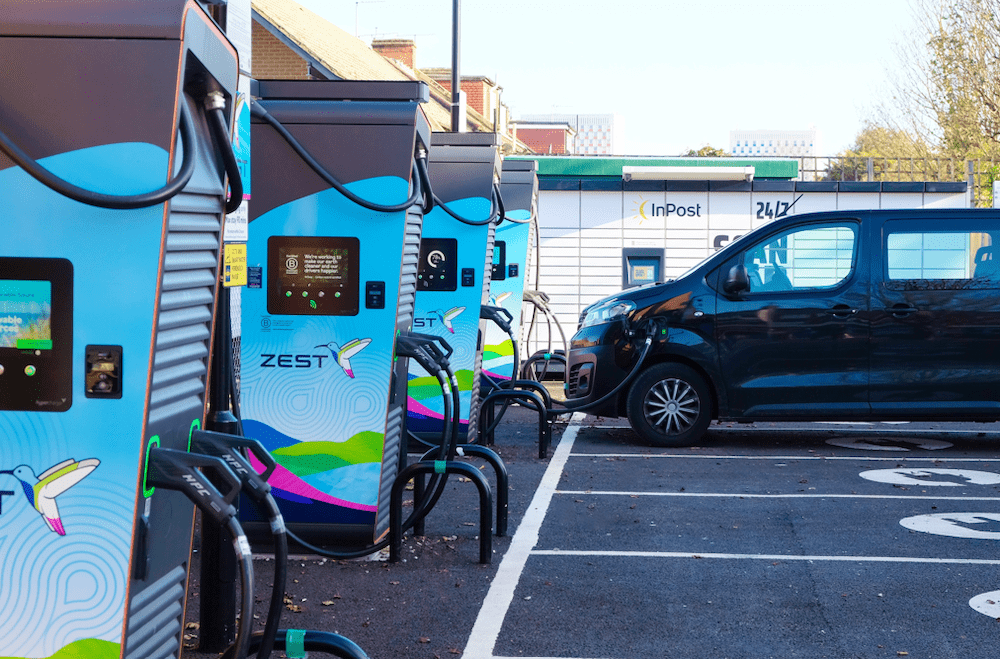
Image courtesy of Zest