The UK Government has published its consultation response on the new pay per mile charge for electric vehicle (EV) drivers – with groups and organisations from the transport and energy sectors providing a mixed response.
Last year Chancellor of the Exchequer Rachel Reeves confirmed that the UK Government will introduce ‘pay-per-mile’ rules for electric vehicles as a result of falling revenue from fuel duty.
Reeves said that the tax charge will raise around £1.2bn as a result of a the new mileage-based charge on electric and plug-in hybrid cars from April 2028, which will be set at around half the fuel duty rate paid by drivers of petrol cars. EVs will also still have to pay Vehicle Excise Duty. Electric vans will be exempt from the rules.
To inform the design of eVED, the government consulted on the delivery of the new tax from 26 November 2025 until 18 March 2026. The consultation received over five thousand responses from a broad range of stakeholders.
The full consultation response can be read here.
In the executive summary, the government says: “There was support for the principle that motorists who drive more should make a greater contribution. The key concerns raised were around the potential impact on electric vehicle uptake and the administrative complexity for motorists, businesses, fleets, leasing companies and MOT garages.
“The government has carefully considered the consultation responses and refined the proposed design. In particular, the government will not proceed with the proposed requirement for vehicles under three years old, which are not currently required to have an annual MOT, to have additional mileage checks. The government has also significantly simplified the arrangements for fleets and leasing companies to reflect the way these businesses manage large vehicle fleets. This includes allowing the use of estimated mileage readings, introducing bulk licensing arrangements and providing greater payment flexibility.
“Together, these changes will make eVED simpler to comply with while ensuring it remains a a fair, proportionate and sustainable approach to motoring taxation.”
The BVRLA was an active participant in the consultation process. It conducted multiple working groups with members, industry stakeholders and government representatives, and gave evidence to the Transport Select Committee in March.
During that consultation, the BVRLA estimated that eVED as proposed would cost the fleet sector an estimated £260m per year in compliance alone, such was the friction that would be created by the scheme’s initial design.
According to the BVRLA, the response highlights that its views and many others from the sector have been acknowledged.
Toby Poston, BVRLA chief executive, said:
“When it comes to the Wrong Tax at the Wrong Time, eVED, the fleet sector has spoken loud and clear. This poorly designed and scheduled tax would pile extra cost and bureaucracy onto fleets and drivers and eviscerate EV demand just as the Government’s sales targets start ratcheting-up.
“It is great that the government has taken some of the roughest edges off its eVED plans. They’ve accepted that a tax designed around private motorists won’t work for the fleets that are driving the UK’s transition to electric vehicles.
“But there is no avoiding the fact that you can’t create a smooth switch to electric vehicles by making them more expensive to own. The mechanics of the tax may have improved, but the timing is still wrong.”
Vicky Edmonds, Chief Executive Officer of EVA England, says the policy does not work for drivers:
“The Government has made one welcome change for newer EVs, but the wider scheme remains too complex, risks leaving people out of pocket and fails to give drivers the confidence they need.
“At such a crucial point in the switch to electric, ministers should be making the system simpler, fairer and easier to understand, not pressing ahead with a policy whose key faults remain unresolved. This now piles pressure on the public charging review that must pave the way for affordable charging, or this transition simply won’t work for drivers.”
Colin Walker, Head of Transport at the Climate & Intelligence Unit (ECIU), said:
“While these mixed signals on EVs from government risk confusing drivers, eVED will not stop EVs remaining significantly cheaper to run than petrol cars, delivering savings of over £1000 a year.
“But a rumoured Government u-turn on EV sales targets would really put British drivers at a disadvantage, incentivising car companies to sell their electric cars elsewhere, leaving the UK more heavily reliant on hybrids which don’t do the mileage they claim, costing drivers more while at the same time continuing to emit air pollution.
“So far government policy to encourage EVs has broadly worked with targets hit and in June around a third of new cars being EVs. But with trouble still ongoing in the Middle East risking higher pump prices, any slowdown will ultimately hurt regular families struggling with a cost-of-living crisis and soaring fuel bills. New EVs today are second-hand EVs in a couple of years where huge savings on driving bills can be made, insulating drivers from price shocks.”
Peter Golding, CEO, FleetCheck, said:
“We welcome the fact the government has made a series of concessions on the practicalities of eVED implementation that could potentially make life easier for fleets but it doesn’t change the core objection that the whole idea is probably just too much, too soon when it comes to electrification for both fleet and private buyers. Just at the point in time when electric cars should be starting to feel like the natural choice for buyers, this is unwelcome expense and complication.”
Tanya Sinclair, CEO, Electric Vehicles UK, said:
“Government has listened where it matters. Dropping mandatory mileage checks for cars under three years removes a significant speed bump that would been a burden on new drivers and big fleets. The other changes it made recognise the practicalities of how fleet operators work.
“Where government still needs to do better is in how it communicates its policies to drivers. We still have a mix of incentives, taxes, grants and policies which don’t clearly echo its vision of an all-electric future.”
Ben Nelmes, CEO of New AutoMotive, said:
“If the government wants people to switch to EVs, it needs to make electric motoring easy, attractive and affordable.
“Today’s decision to drop mandatory mileage checks for brand-new cars is welcome. But much of the wider package remains untested and risks becoming an albatross around the neck of the next Chancellor and transport secretary.
“It is absurd that families heading off on holiday will be taxed by the UK government for driving on French roads. It is staggering that the DVLA’s legacy computers are unable even to process a simple automatic refund when someone sells or scraps their car – that in itself should be a massive red flag for the incoming government about the deliverability of this policy.
“With uncertainty over EV targets and a risky new tax on electric motoring, drivers, businesses and investors will question the UK’s commitment to the transition. New ministers should pause, take stock and get this right.”
Simon Smith, CEO of Voltempo, said:
“Scrapping the under-three-year mileage checks is the right call. That proposal meant leased and rental vehicles off the road for checks that added cost, not value. Government listened, and the fleet package – bulk licensing, bulk payment, estimated mileage – is built around how the industry runs, not how Whitehall assumed it runs.
“The next test will be delivery. Guidance, systems and the MOT network all need to be ready well before April 2028.”
Sue Robinson, Chief Executive of NFDA, said:
“The industry is working harder than ever to encourage greater EV uptake; eVED risks that additional costs for EV ownership could deter consumers from making the switch.
“We’re concerned at the overcomplexity, the burdening cost to the industry and the reliance on the accuracy of the data.
“Following eVED and the potential complications, it is essential that motorists are provided with clear guidance on how the new arrangements will work, allowing them to make informed decisions when purchasing electric vehicles.”
Dale Eynon, government affairs and policy lead, Association of Fleet Professionals:
“The AFP has long been concerned that the introduction of eVED could hit fleet operators with a substantial administrative burden, as they try to navigate their way around the complexities of managing the scheme and ensuring full compliance.
“Some of the specific concerns raised during the consultation, such as annual mileage checks and reconciliation of mileage both annually and at the end of the lease, have been addressed by the government’s announcement and we acknowledge these changes as a positive step forward.
“The promise of further engagement with fleet operators prior to the April 2028 start date will hopefully iron out further issues. However, it currently appears that wholesale revisions to the scheme are unlikely, so our advice to the fleet community is to prepare for the extra workload eVED will generate.
“We will, of course, continue to aim for further changes to the current proposals as well as pushing for a delay in implementation until at least 2030, when the electric car market will have further matured.”
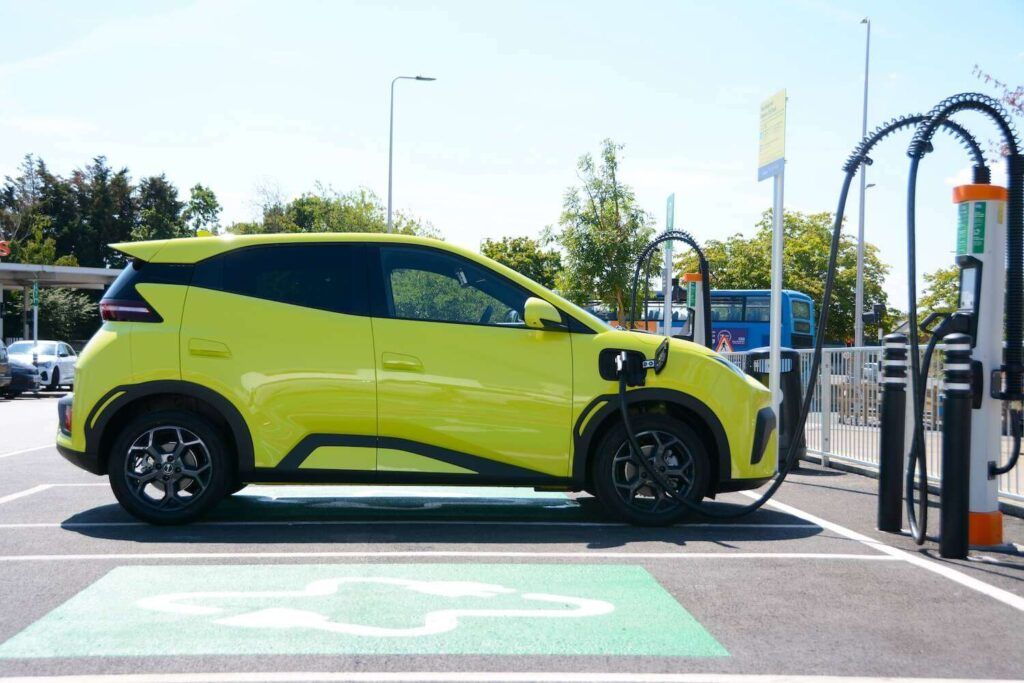
Image courtesy of Green Car Guide.