The UK Government is being urged to ensure Britain’s heavy goods vehicle (HGV) operators have access to every available technology to cut carbon emissions.
The Society of Motor Manufacturers and Traders (SMMT) has made the call at the Commercial Vehicle Show, and as the UK Government prepares new regulation to deliver a zero emission truck market.
The latest data from SMMT reveals around 0.9% of new HGV registrations this year so far were zero emission, which was down from 1.4% in 2025. It said the HGV transition “must accelerate rapidly to meet the UK’s ambition for a fully ZEV market by 2040”.
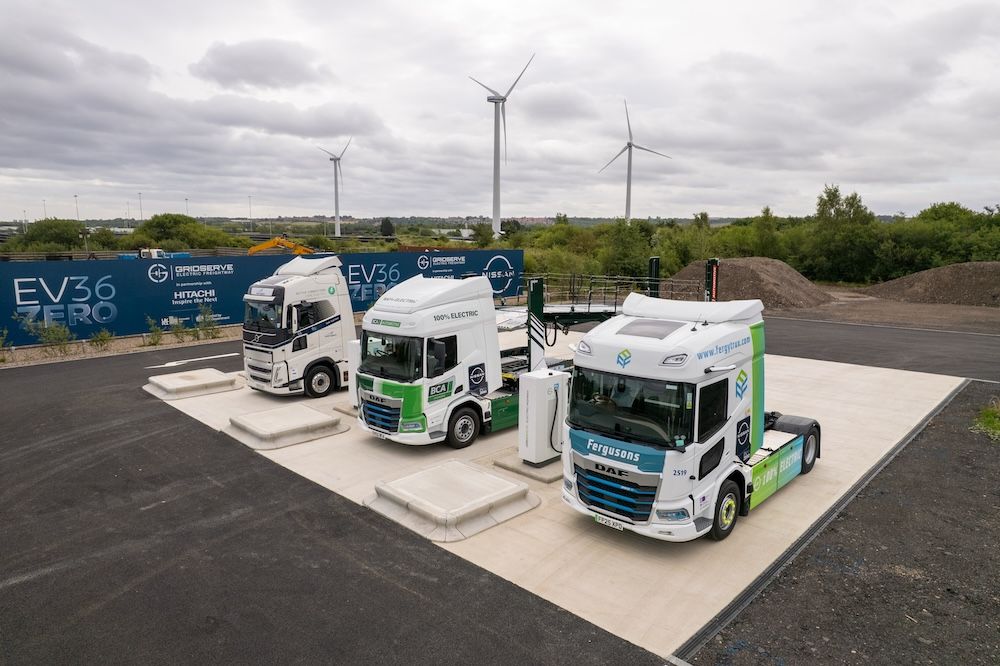
Yet, it noted that manufacturers offer around 40 ZEV models, covering a complex range of more than 70 different segments – from goods lorries and bulk tankers to concrete mixers, diggers, refuse trucks, tractors and ambulances.
The SMMT called for the UK to “build on existing HGV CO2 regulation”, which is on track to deliver a 30% reduction in emissions by 2030, by adopting a -64% target by 2035, and setting the pathway to full ZEV adoption by 2040.
It said that allowing operators to deploy a range of technologies would support faster emissions cuts, safeguarding business viability, and “reduce the impact of these investment requirements on cost of living” from limiting the sector to only zero emission vehicles (ZEVs).
Substantial market enablers such as the Plug-in Truck Grant and Depot Charging Scheme “will be vital throughout the transition”, the SMMT added, and should be “expanded to support every HGV segment and use case”.
The industry also called for a comprehensive national infrastructure strategy, including fast-tracked planning approval for HGV depot upgrades and accelerated rollout of public infrastructure.
“These measures are essential to ensure operators can transition to zero emissions while keeping the UK economy moving”, the SMMT added.
Mike Hawes, SMMT Chief Executive, said:
“The HGV industry is fully committed to decarbonisation, having already delivered zero emission models years ahead of natural demand. But while the goal of net zero by 2050 remains, we need a pathway that is realistic, affordable and delivers CO2 savings now.
“Government regulation must recognise the complexities of this critical market, which are far greater than the car or van sectors, and with so much of our economy dependent on freight, the priority must be to cut carbon in ways that accelerate fleet renewal without driving up costs.”
Image from Shutterstock