Motability Operations and Nissan will explore how Vehicle-to-Grid (V2G) technology could cut electricity costs for electric vehicle (EV) drivers through their new strategic partnership.
V2G technology enables electricity stored in an EV’s battery to be exported back to the grid during periods of high demand, such as early evening when energy use and prices are typically higher. For drivers, this could mean charging their vehicle when electricity is cheaper and exporting some of that stored energy back to the grid at times when electricity is more valuable, helping to manage household energy bills and reduce overall motoring costs.
The agreement covers vehicles manufactured at Nissan’s Sunderland facility. At a time when the UK automotive sector is transitioning to electric, the partnership demonstrates how British manufacturing and British-led innovation can directly support UK drivers with the cost of energy and mobility.
By combining British-built production with technology that reduces running costs, the partnership strengthens the case for UK-manufactured vehicles on the Scheme and supports Motability Operations’ ambition to increase their share over time. The organisation has set an ambitious commitment that one in every two vehicles on fleet will be British built by 2035.
Sunderland is one of the UK’s largest car manufacturing sites, supporting 6,000 direct jobs and thousands more across the domestic supply chain. In 2025, Motability Operations registered over 22,000 Nissan vehicles, reflecting Nissan’s important role in supporting the Scheme’s progress on UK-built vehicles. The Motability Scheme supports around 34,000 jobs across the UK and plays a significant role in sustaining demand for domestic vehicle manufacturing and the wider automotive sector.
Commenting on the partnership, Andrew Miller, CEO at Motability Operations, said:
“Our focus is on ensuring the Scheme remains a lifeline of independence that is affordable and fit for the future. By partnering with Nissan to explore Vehicle-to-Grid technology, we are looking at how we can help our customers get the most value out of their EVs.”
“By partnering with Nissan on Vehicle-to-Grid technology, we are taking deliberate steps to explore how British-built innovation can help reduce the long-term cost of running an EV for our customers.”
Jordi Vila, Divisional Vice President, Nissan Europe & Africa, AMIEO Aftersales and Brand. President Nissan Africa said:
“Nissan has long been at the forefront of electric vehicle and Vehicle-to-Grid innovation, and we are proud that our Sunderland-built LEAF continues to lead the way.
“Working with Motability Operations allows us to demonstrate how British-built EV technology can support customers, strengthen the energy system and contribute to a cleaner, more sustainable future.”
Keir Mather, Aviation, Maritime and Decarbonisation Minister said:
“We are determined to help families with the cost of living and that’s why we’re making it easier and cheaper to switch to electric, saving drivers up to £3,750 when they buy and unlocking savings of up to £1,400 on running costs.
“British innovation and manufacturing are central to this transition, and I’m proud to see Nissan and Motability leading the way – cutting costs for consumers while boosting jobs and production at its Sunderland plant. It’s a win for drivers, for industry and for the UK economy.”
At scale, V2G technology has the potential to support the wider energy system by reducing pressure on the grid during peak periods. By smoothing demand and making better use of stored electricity, V2G could play a role in lowering overall system costs and supporting more affordable energy in the future. This forms part of Motability Operations’ broader approach to energy innovation. Another recent example is the Power Wheels project, an Ofgem-funded initiative focused on disabled and medically dependent households in North East England, exploring how electric vehicle batteries could provide temporary backup power to help keep essential medical equipment running during power cuts.
This focus on running costs reflects what customers say matters most. Motability Scheme research shows running costs are the single most important factor when choosing a new vehicle (22%), while nearly one in five say confidence that EV running costs are no higher than petrol, diesel or hybrid models would make the biggest difference to their willingness to switch. Yet misconceptions remain, with 42% believing the overall lifetime cost of an EV is higher than a petrol or diesel vehicle, and more than a quarter thinking charging is more expensive than refuelling.
As the automotive sector transitions to electric vehicles, Motability Operations says supporting British-built vehicles and ensuring EVs remain affordable for disabled people must go hand in hand. Scheme customers rely on their vehicle to access work, education and medical appointments, and affordability remains central to maintaining independence.
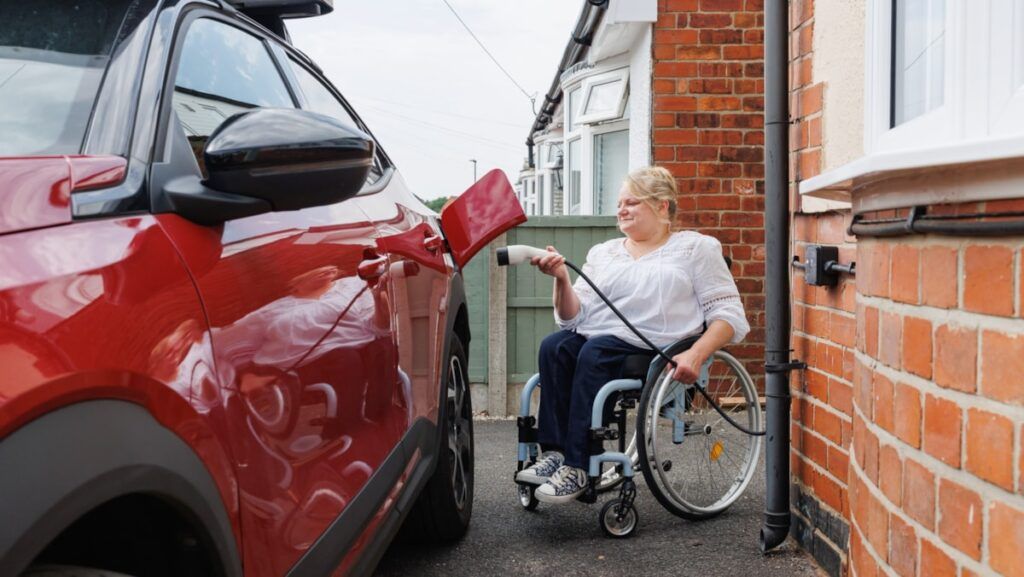
Image courtesy of Motability Operations.