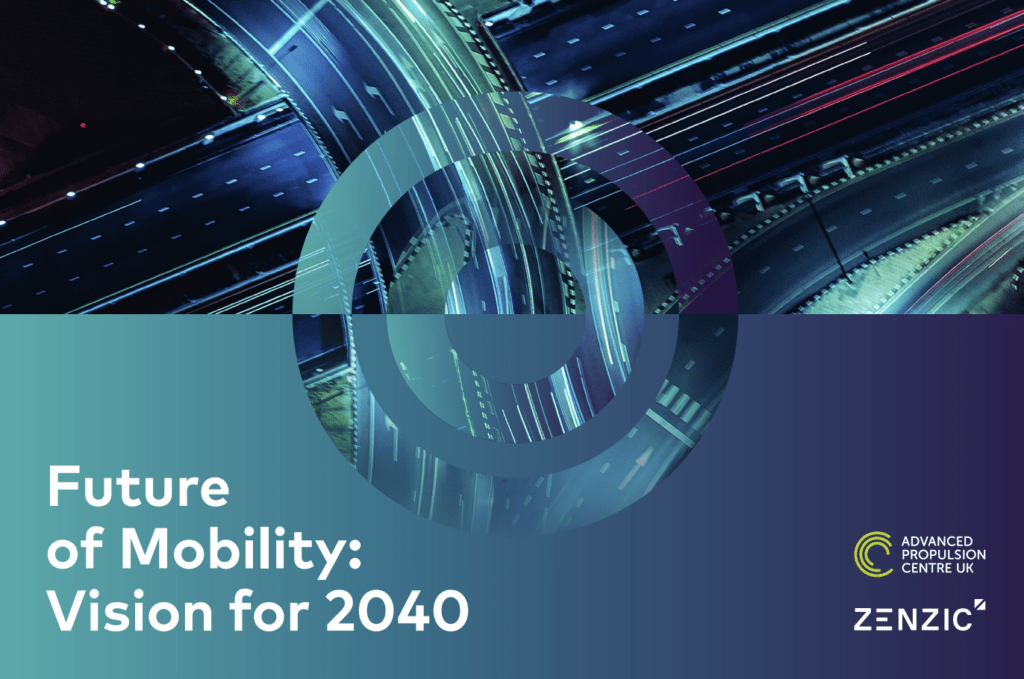
The Advanced Propulsion Centre UK (APC) and Zenzic have launched a report outlining a cross-sector strategy to decarbonise transport in accordance with net zero commitments.
The Future of Mobility: Vision 2040 report sets out a UK-centric strategy to “transform road-based transport into a seamless, integrated ecosystem that is safe, efficient, sustainable, and inclusive”, it said.
The study outlines a UK-centric strategy, which addresses the convergence of transport, energy, and digital systems, aiming to deliver economic growth, environmental regeneration, and universal access.
It said that by 2040, mobility “will no longer operate in silos”, and will function as a “unified, orchestrated system where
journeys are predictable, affordable, and accessible”
Achieving this requires three foundational shifts, according to the study: interoperability and open standards, integrated transport and energy systems – such as bidirectional charging, depot energy management, and renewable energy – and user-centric designs, including planning and payment through single platforms, and inclusive access.
It said: “The UK’s transport system will evolve from a vehicle-centric model to a systemic, adaptive network, delivering economic, social, and environmental value. This transformation positions mobility as a catalyst for sustainable growth and global competitiveness.”
Industry opportunities include OEMs and the automotive industry shifting to software-defined vehicles, energy integrating renewable generation and smart charging, digital twins and deploying cutting-edge computing, including AI, and fresh infrastructure.
Key enablers of the transition include AI assurance and certification frameworks, outcome-based funding and service models, circular economy principles embedded in design and operations, and policy alignment to manage short-term energy
demands and enable innovation.
Dr Hadi Moztarzadeh, Head of Technology Trends at APC, said:
“This joint initiative seeks to address the convergence of net zero and Connected Automated Mobility (CAM) missions towards a sustainable transport ecosystem, delivering economic growth, environmental regeneration, and universal access.
“By 2040, mobility will no longer operate in silos. Instead, it will function as a unified, orchestrated system where journeys are predictable, affordable, and accessible.
“Achieving this requires foundational shifts, which are enabled by four interconnected pillars outlined in the report that define the future ecosystem: Orchestrated Intelligence, Regenerative Mobility, Living Infrastructure, and Inclusive and Resilient Mobility.
“The future of mobility is about more than vehicles and technologies, but entire systems. By 2040 transport will converge with energy and digital infrastructure, creating a predictable, sustainable, and inclusive network.
“This report serves as a call to action for cross-sector collaboration, highlighting opportunities, and enabling technologies and policy priorities.”
Image of report courtesy of APC